RBSE Class 6 English Chapter 1 Question Answer A Bottle of Dew
PracticingRBSE Solutions Class 6 EnglishPoorvi Chapter 1 A Bottle of Dew Question Answer will help you achieve better results in your studies.
A Bottle of Dew Class 6 Question Answer
A Bottle of Dew Question Answer
Class 6 English A Bottle of Dew Question Answer
Let us do these activities before we read.
Question 1.
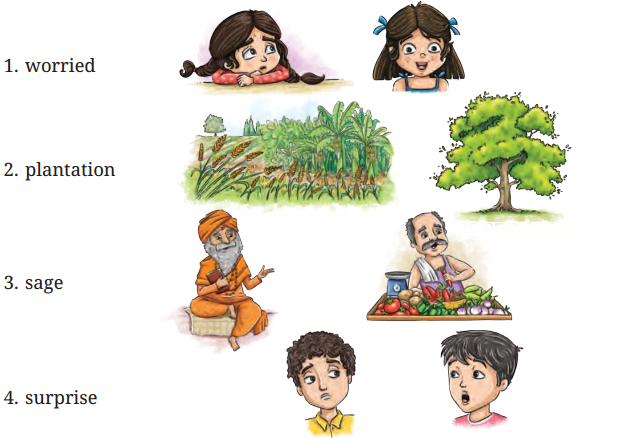
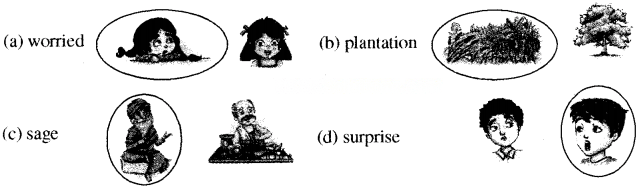
Circle the picture that matches with each word. Check your answers by sharing them with your classmates and teacher.
Answer:
Answer:
Question 2.
Answer these questions and discuss them with your classmates and teacher.
(a) Think of a time when you worked hard. What did you do then?
उस समय के बारे में सोचिए जब आपने कड़ी मेहनत की थी। तब आपने क्या किया था?
Answer:
Last year, when I was in 5th class, I lagged behind in my studies due to my long illness. I was much worried about my grades in internal exams. My class teacher motivated me and told me that I could still compensate for my loss if I worked harder. I prepared my Time-Table for self-study and studied accordingly for long hours. My class teacher also helped me whenever I needed his help.
पिछले वर्ष, जब मैं 5वीं कक्षा में था तो अपनी लंबी बीमारी के कारण मैं अपनी पढ़ाई में पिछड़ गया था। मैं इंटरनल एग्जाम में अपने ग्रेड को लेकर बहुत चिंतित था। मेरे कक्षा अध्यापक ने मुझे प्रेरित किया और कहा कि अगर मैं और कड़ी मेहनत करता तो मैं अपने नुकसान की भरपाई कर सकता था। मैंने स्वाध्याय के लिए अपनी समय-सारणी बनाई और उसके अनुसार लंबे समय तक पढ़ाई की। जब भी मुझे मदद की जरूरत पड़ी, मेरे कक्षा अध्यापक ने भी मेरी मदद की।
(b) How did it help you?
इसने किस तरह आपकी मदद की?
Answer:
It helped me fare well in my annual exams and makeup for the loss.
इससे मुझे अपनी वार्षिक परीक्षाओं में अच्छा प्रदर्शन करने और नुकसान की भरपाई करने में मदद मिली।
(c) How did it make you feel? इसने आपको कैसा महसूस कराया?
Answer:
It made me feel confident and happy.
इससे मुझे आत्मविश्वास और खुशी महसूस हुई।
Let us discuss (आइये चर्चा करें)
Question 1.
Why was Rama Natha angry?
राम नाथ क्रोधित क्यों था?
Answer:
Rama Natha was angry because he realized that the sage had played a trick on him as the magic potion did not work.
राम नाथ क्रोधित था क्योंकि उसे एहसास हुआ कि ऋषि ने उसके साथ छल किया था क्योंकि जादुई औषधि काम नहीं कर रही थी।
Question 2.
How did Rama Natha and Madhumati create wealth?
राम नाथ और मधुमती ने संपत्ति कैसे बनाई?
Answer:
Rama Natha worked hard on his land and created his plantation. While he looked after the trees, his wife sold the fruits in the market. That is how they created wealth.
राम नाथ ने अपनी ज़मीन पर कड़ी मेहनत की और अपना बागान बनाया। जब वह पेड़ों की देखभाल करता था, तो उसकी पत्नी बाजार में फल बेचती थी। इस तरह उन्होंने संपत्ति बनाई।
Let us discuss (आइये चर्चा करें)
Question 1.
What did Rama Natha believe?
राम नाथ का क्या विश्वास था?
Answer:
Rama Natha believed that there was a magic potion that could turn any object into gold.
रामनाथ को विश्वास था कि एक जादुई औषधि थी जो किसी भी वस्तु को सोने में बदल सकती थी।
Question 2.
How did the sage help Rama Natha?
ऋषि ने राम नाथ की मदद कैसे की?
Answer:
The sage helped Rama Natha by advising him to plant many banana plants and collect five litres of dew from their leaves. He, thus, made him work hard.
ऋषि ने राम नाथ को कई केले के पौधे लगाने और उनकी पत्तियों से पाँच लीटर ओस इकट्ठा करने की सलाह देकर उसकी मदद की। इस प्रकार, उन्होंने राम नाथ को कड़ी मेहनत करने के लिए प्रेरित किया।
Question 3.
Do you think Rama Natha will be able to collect the dew? Give a reason.
क्या आपको लगता है कि राम नाथ ओस एकत्रित कर पाएगा? कारण बताइए।
Answer:
Yes, I think Rama Natha will be able to collect the dew as he is very keen to get the magic potion and he can get it only by collecting the dew as told by the sage.
हाँ, मुझे लगता है कि राम नाथ ओस एकत्रित करने में सक्षम होगा क्योंकि वह जादुई औषधि पाने के लिए बहुत उत्सुक है और वह इसे केवल ओस एकत्रित करके ही प्राप्त कर सकता है जैसा कि ऋषि ने कहा था।
A Bottle of Dew Questions and Answers
Let us think and reflect (आइये सोचें और चिंतन करें)
Question 1.
Read the following lines and answer the questions that follow.
निम्नलिखित पंक्तियों को पढ़िए और नीचे दिए गए प्रश्नों के उत्तर दीजिए।
(a) He spent all his time to learn about the magic potion. People cheated him often, promising to tell him about it, but he did not give up. His wife, Madhumati, was tired of this and also worried because she saw how much money Rama Natha was spending. She was sure that soon they would be without money.
(i) Complete the sentence with a suitable reason.
Rama Natha did not ‘give up’ because ________________ .
Answer:
he was very keen to learn about the magic potion.
(ii) Read the column which shows ‘what happened’ and write the correct outcome in the next column.
Answer:
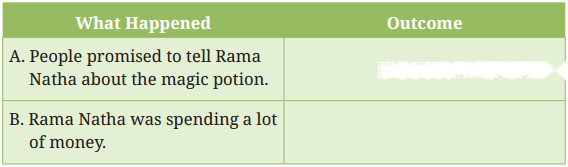
What Happened | Outcome |
a. People promised to tell Rama Natha about the magic potion. | Rama Natha spent a lot of money and time. |
b. Rama Natha was spending a lot of money. | His wife, Madhumati was worried that they would soon be without money. |
(iii) Write whether the following statements are True or False.
a. Madhumati was troubled about what her husband did.
b. Rama Natha was very happy digging his fields.
c. The sage wanted to show the right path to Rama Natha.
Answer:
a. True, b. False, c. True
(b) Carefully, he took the bottle to the sage. The sage smiled and muttered something over the water. Then he returned the bottle and said, “Try it out.” Rama Natha sprinkled a few drops on a copper vessel and waited for it to turn to gold. To his magic potion. surprise nothing happened!
(i) Choose the option that lists the events given below in the correct order.
a. The sage smiled.
b. Rama Natha gave the bottle to the sage.
c. Rama Natha dropped a few drops of water on a copper vessel.
d. He said something in a low voice over the water.
e. Rama Natha waited to see if the magic worked.
(1) a, e, d. b, c
(2) b, a, d, c,e
(3) c, d, a, b, e
(4) a, d, b. e, c
Answer:
(2) b. a. d. c, e
(ii) Fill in the blank with the correct word from the lines given above.
Seeing that the plant had dried up the gardener ________ some water on it.
Answer:
sprinkled
(iii) How might Rama Natha have felt when nothing happened to the copper vessel?
जब तांबे के बर्तन को कुछ नहीं हुआ तो राम नाथ को कैसा महसूस हुआ होगा?
Answer:
Rama Natha might have been annoyed with the sage and felt that he had wasted six precious years of his life.
राम नाथ शायद ऋषि से नाराज था और उसने महसूस किया कि उसने अपने जीवन के छह बहुमूल्य वर्ष बर्बाद कर दिए थे।
Question 2.
Answer the following questions.
(a) What did the sage ask Rama Natha to do to make the magic potion?
जादुई औषधि बनाने के लिए ऋषि ने राम नाथ से क्या करने को कहा?
Answer:
The sage asked Rama Natha to plant banana plants and water them regularly with his own hands. He asked Rama Natha to bring five litres of dew gathered during the winter months from banana leaves to make the magic potion.
ऋषि ने राम नाथ को केले के पौधे लगाने और उन्हें नियमित रूप से अपने हाथों से पानी देने को कहा। उन्होंने राम नाथ को जादुई औषधि बनाने के लिए सर्दियों के महीनों में केले के पत्तों से एकत्र की गई पांच लीटर ओस लाने को कहा।
(b) Why did the sage ask Rama Natha to do everything himself?
ऋषि ने राम नाथ को सब कुछ स्वयं करने के लिए क्यों कहा?
Answer:
The sage wanted Rama Natha to work hard and realize that wealth can be earned through hard work, it cannot be acquired through any magic potion. So, he asked Rama Natha to do everything himself.
ऋषि चाहते थे कि राम नाथ कड़ी मेहनत करे और समझे कि धन कड़ी मेहनत से कमाया जा सकता है, इसे किसी जादुई औषधि से हासिल नहीं किया जा सकता है। इसलिए, उन्होंने राम नाथ से कहा कि वह सब कुछ खुद ही करे।
(c) How could Rama Natha have a big banana plantation after six years?
छह वर्ष के बाद राम नाथ केले का बड़ा बागान कैसे प्राप्त कर सका?
Answer:
Rama Natha planted rows and rows of banana plants. He tended them carefully. His wife helped him too. Over the years. Rama Natha planted more and more plants and they had a big banana plantation after six years.
राम नाथ ने केले के पौधों की कतारें लगाई। वह उनकी देखभाल बहुत ध्यान से करता था। उसकी पत्नी भी उसकी मदद करती थी। सालों के दौरान राम नाथ ने ज़्यादा से ज़्यादा पौधे लगाए और छह साल बाद उनके पास केले का एक बड़ा बागान था।
(d) How did the sage make Rama Natha believe that there is no magic potion?
ऋषि ने राम नाथ को कैसे विश्वास दिलाया कि कोई जादुई औषधि नहीं होती है?
Answer:
The sage made Rama Natha believe that there is no magic potion by showing him that his wealth was created by his and his wife’s planting and selling bananas and not by a magic potion.
ऋषि ने राम नाथ को यह विश्वास दिलाया कि उसकी संपत्ति उसके और उसकी पत्नी के द्वारा केले उगाने और उन्हें बेचने से बनी थी, न कि किसी जादुई औषधि से।
(e) Fill in the ‘before’ and ‘after’ table about Rama Natha.
राम नाथ के बारे में ‘before ‘ एवं ‘ after तालिका की पूर्ति कीजिये।
Answer:
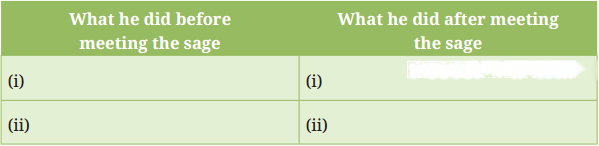
What he did before meeting the sage | What he did after meeting the sage |
1. He spent all his time to learn more about the magic potion. | 1. He started cleaning his large fields. |
2. He did not spend even one day looking after his land. | 2. He planted rows and rows of banana plants. |
Let us learn (आओ सीखें)
Question 1.
Read the following words from the story.
कहानी से निम्नलिखित शब्द पढ़ें।

Use the words correctly to complete the paragraph given below. There are two extra words in the box that you do not need.
नीचे दिए गए पैराग्राफ को पूरा करने के लिए शब्दों का सही इस्तेमाल करें। बॉक्स में दो अतिरिक्त शब्द हैं जिनकी आपको आवश्यकता नहीं है।
Answer:
There was a farmer who had ahugecoconut plantation. He worked hard and did not depend onluck. Every day wasdifficultbut he didn’t give up, One day, a man bought a bag of coconuts from him, andpromisedto pay him the money the next day. Days passed and the man did not pay him anything. The farmer feltcheated. About two months later, he met the same man and asked him about his money. The man said, “Oh! I had forgotten. Now, Irememberbuying coconuts from you.” And he paid the money.
Question 2.
Read the words from the story in Column A. Read the new words in Column B. Complete the meanings of the words given in Column B. Meanings of some words are given.
कॉलम A में कहानी के शब्द पढ़ें। कॉलम B में नए शब्द पढ़ें। कॉलम B में दिए गए शब्दों के अर्थ पूरे करें। कुछ शब्दों के अर्थ दिए गए हैं।
Answer:
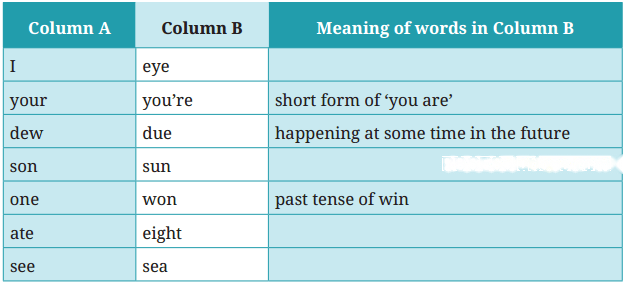
Column A | Column B | Meaning of words in Column B |
I | eye | an organ which is used to see things |
your | you’re | short form of ‘you are’ |
dew | due | happening at some time in the future |
son | sun | the star round which the earth moves |
one | won | past tense of win |
ate | eight | a number that is one more than seven |
see | sea | a particular large area of salt water. |
उपरोक्त तालिका की प्रत्येक पंक्ति में दिए गए शब्दों की ध्वनियाँ समान हैं, परन्तु वर्तनी और अर्थ भिन्न हैं। ऐसे शब्दों को समध्वनिक शब्द (homophones) कहा जाता है।
Question 3.
Choose four pairs of homophones from the table above, and for each pair write a sentence that uses both homophones in the same sentence. Check your answers by sharing them with your teacher and classmates. An example has been given below :
ऊपर दी गई तालिका से चार समध्वनिक शब्दों के जोड़े चुनें, और प्रत्येक जोड़े के लिए एक वाक्य लिखें जिसमें दोनों समध्वनिक शब्दों का एक ही वाक्य में उपयोग किया गया हो। अपने उत्तरों को अपने शिक्षक व सहपाठियों के साथ साझा करके जाँचें। नीचे एक उदाहरण दिया गया है :
I ate eight bananas for breakfast today.
Answer:
1. I-eye: I can see my image in your eye.
2. son-sun: One day my son will shine like the sun.
3. your-you’re Your father thinks you’re going to shine in your exams.
4. see-sea I went to see the sea with my father.
Question 4.
Match the phrases in Column A with the phrases in Column B. Use the connecting words given in the middle column to make meaningful sentences.
कॉलम A के वाक्यांशों का कॉलम B के वाक्यांशों से मिलान कीजिए। अर्थपूर्ण वाक्य बनाने के लिए मध्य के कॉलम में दिए गए संयोजक शब्दों का उपयोग करें।
Column A | Connecting words | Column B |
The children submitted their work (When?) | because | the bell rang. |
He did not want to try rock climbing (Why?) | before | there was a traffic jam. |
The children ran towards the gate (When?) | as soon as | the deadline. |
Nitin was late to school today (Why?) | as | of his fear of heights. |
Now, write the new sentences in your notebook.
अब नये वाक्यों को अपनी नोटबुक में लिखें।
Answer:
The children submitted their work before the deadline.
He did not want to try rock climbing because of his fear of heights.
The children ran towards the gate as soon as the bell rang.
Nitin was late to school today as there was a traffic jam.
Question 5.
Here are two sentences with letter ‘b’. Read them slowly the first time. As you read them a few more times, read them faster each time.
यहाँ ‘b’ अक्षर वाले दो वाक्य हैं।
उन्हें पहली बार धीरे-धीरे पढ़ें। जब आप उन्हें कुछ और बार पढ़ें, तो प्रत्येक बार उन्हें थोड़ी अधिक तेजी से पढ़ें।
Bunty bhaiya bought a big bunch of bananas.
A big bunch of bananas was bought by Bunty bhaiya.
Now, try to create a tongue twister on your own and share it with your peers.
अब अपनी तरफ से एक टंग ट्विस्टर ( जटिल उच्चारण वाला कथन) बनाने का प्रयास करें और इसे अपने सहपाठियों के साथ साझा करें।
Answer:
Sandhya sent a summer squash for her sweet sister.
A summer squash was sent for her sweet sister by Sandhya.
SEEN PASSAGES
Read the following passages carefully and answer the questions that follow :
निम्नलिखित गद्यांशों को ध्यानपूर्वक पढ़ें और नीचे दिए गए 6 प्रश्नों के उत्तर दें:
Passage-1
Rama Natha was the son of a rich landlord. His father left him large tracts of land when he died. But Rama Natha did not spend even one day looking after his land. This was because he had a funny idea-he believed there was a magic potion that could turn any object into gold. He spent all his time to learn more about this potion. People cheated him often, promising to tell him about Madhumati, was tired of this and also worried it, but he did not give up. His wife, because she saw how much money Rama Natha was spending. She was sure that soon they would be without money.
Question 1.
Choose the correct alternative- Rama Natha’s father was a-
(a) Merchant
(b) Shopkeeper
(c) Landlord
(d) Potter
2. What was the funny idea that Rama Natha had?
राम नाथ का वह अजीब विचार क्या था?
3. How did Rama Natha spend all his time?
राम नाथ अपना सारा समय कैसे व्यतीत करता था?
4. Why was Madhumati worried?
मधुमती क्यों चिंतित थी?
5. Write the opposite gender of the following word from the passage : ‘Husband’
6. Write the opposite of the following word from the passage- ‘Doubtful’
Answer:
1. (c) Landlord
2. He believed that there was a magic potion that could turn any object into gold.
उसका मानना था कि एक जादुई औषधि थी जो किसी भी वस्तु को सोने में बदल सकती थी।
3. Rama Natha spent all his time to learn about the magic potion.
राम नाथ अपना समस्त समय जादुई औषधि के बारे में जानने में बिताता था।
4. Madhumati was worried because Rama Natha was spending a lot of money.
मधुमती चिंतित थी क्योंकि राम नाथ बहुत पैसा खर्च कर रहा था।
5. ‘Wife’
6. ‘Sure’
Passage-2
One day, a famous sage called Mahipati came to their town. Rama Natha became his follower and asked him about the potion. To his surprise the sage answered, “Yes, in my travels in the Himalayas, I heard how you could make such a potion. But it is difficult.” “Tell me!” requested Rama Natha, not believing his luck.
Question 1.
Choose the correct alternative-
Who came to their town?
(a) Rama
(c) Sage
(b) His follower
(d) Natha
2. What did Rama Natha ask the sage?
राम नाथ ने ऋषि से क्या पूछा?
3. What was the name of the famous sage?
प्रसिद्ध ऋषि का नाम क्या था?
4. When and where did the sage hear about the potion?
ऋषि ने औषधि के बारे में कब और कहाँ सुना?
5. Find the word from the passage which means–‘popular’.
6. Write the opposite of the following word from the passage- ‘easy’
Answer:
1. (c) Sage
2. Rama Natha asked him about the potion.
राम नाथ ने उनसे औषधि के बारे में पूछा।
3. The name of the famous sage was Mahipati.
प्रसिद्ध ऋषि का नाम महीपति था।
4. He heard about the potion in his travels in the Himalayas.
उन्होंने हिमालय में अपनी यात्राओं के दौरान इस औषधि के बारे में सुना था।
5. ‘famous’
6. ‘difficult’
Passage-3
Rama Natha went home, and after talking to his wife started cleaning his large fields, which had been lying empty all these years. There he planted rows and rows of banana plants. He tended them carefully and during the winter months collected the dew that formed on them with great care. His wife helped him too.
Question 1.
Choose the correct alternative
Who helped Rama Natha in his work?
(a) The sage
(b) His friends
(c) His wife
(d) Villagers
2. What did Rama Natha do after talking to his wife?
राम नाथ ने अपनी पत्नी से बात करने के बाद क्या fanell?
3. What did he plant in his fields?
उसने अपने खेतों में क्या लगाया?
4. In which season did the dew form on banana leaves?
केले के पत्तों पर ओस किस मौसम में बनती थी ?
5. Find the word from the passage which means ‘began’.
6. Write the opposite of the following word from the passage ‘small’
Answer:
1. (c) His wife
2. After talking to his wife, he started cleaning his large fields.
अपनी पत्नी से बात करने के बाद वह अपने बड़े-बड़े खेतों की सफाई करने लगा।
3. He planted rows and rows of banana plants in his fields.
उसने अपने खेतों में केले के पौधों की कतारें लगाई थी
4. The dew drops formed on banana leaves during the winter months.
ओस की बूंदें केले के पत्तों पर सर्दी के मौसम में बनती हैं।
5. ‘started’
6. ‘large’
Passage-4
Carefully, he took the bottle to the sage. The sage smiled and muttered something over the water. Then he returned the bottle and said, “Try it out.” Rama Natha sprinkled a few drops on a copper vessel and waited for it to turn to gold. To his surprise nothing happened! “This is cheating,” he told the sage. “I have wasted six precious years of my life.”
Question 1.
Choose the correct alternative-
“Carefully, he took the bottle to the sage.” What does ‘he’ here refer to?
(a) The sage
(b) Rama Natha
(c) The villager
(d) None of these
2. Where did he take the bottle to?
वह बोतल कहां ले गया?
3. Why did the sage return the bottle to Rama Natha?
ऋषि ने राम नाथ को बोतल क्यों लौटा दी?
4. What happend when Rama Natha sprinkled a few drops on a copper vessel?
जब राम नाथ ने तांबे के बर्तन पर कुछ बूंदें छिड़कीं तो क्या हुआ?
5. Find out the plural form of the following word from the passage: ‘drop’
6. Write the opposite of the following word from the passage ‘death’।
Answer:
1. (b) Rama Natha
2. He took the bottle to the sage.
वह बोतल ऋषि के पास ले गया।
3. The sage returned the bottle to Rama Natha to try out.
ऋषि ने बोतल को आज़माने के लिए रामनाथ को लौटा दिया।
4. Nothing happened when Rama Natha sprinkled a few drops on a copper vessel.
जब राम नाथ ने तांबे के बर्तन पर कुछ बूंदें छिड़कीं तो कुछ नहीं हुआ।
5. ‘drops’
6. ‘life’
RBSE Class 6 English Chapter 1 Hindi Translation
Let us read (आइये पढ़ते हैं)
कठिन शब्दार्थ एवं हिन्दी अनुवाद
I
Rama Natha was ……………………………. without money. (page 2)
कठिन शब्दार्थ – Landlord (लैन्ड्लॉड्) = मकान-मालिक। Tracts (ट्रैक्ट्स्) = क्षेत्र। Look after (लुक् आफ़्ट (र्)) = देखभाल करना। Funny (फ़नि ) विचित्र या असाधारण। Believe (बिलीवू) विश्वास करना। Potion (पोशन्) = मिश्रित औषधि। Turn (टन्) = बदल देना। Object (ऑब्जिक्ट्) पदार्थ, वस्तु। Cheated (चीटिड्) = धोखा दिया; छल किया। Often (ऑफ़्टन्) = बार-बार Give up (गिवू अप) = हार मान लेना। Tired of (टाइअड् ऑव्) = किसी बात या काम से ऊबना। Worried (वरिड्) चिंतित। Spending (स्पेन्डिङ्) = खर्च कर रहा था।
हिन्दी अनुवाद – राम नाथ एक अमीर जमींदार का बेटा था। उसके पिता ने मरने से पहले उसके लिए बहुत ज़मीनें छोड़ी थीं। लेकिन राम नाथ ने अपनी ज़मीन की देखभाल में एक दिन भी नहीं बिताया था। ऐसा इसलिए था क्योंकि उसके मन में एक अजीब विचार था उसे विश्वास था कि एक जादुई औषधि थी जो किसी भी वस्तु को सोने में बदल सकती थी। उसने अपना सारा समय इस औषधि के बारे में और अधिक जानने में लगा दिया। लोग अक्सर उसे धोखा देते थे, उसे इसके बारे में बताने का वादा करके, लेकिन उसने हार नहीं मानी। उसकी पत्नी, मधुमती, इस बात से ऊब चुकी थी और चिंतित भी थी क्योंकि वह देखती थी कि राम नाथ कितना धन खर्च कर रहा था। उसे यकीन था कि जल्द ही वे धन से रहित हो जायेंगे।
One day, a famous sage ……………………………. his luck. (page 2)
कठिन शब्दार्थ – Famous (फ़ेमस्) = प्रख्यात। Sage (सैज्) = ऋषि। Town (टाउन्) = क़स्बा। Became (बिकेम्) = बन गया। Follower (फ़ॉलोअ ( र् ) = अनुयायी या समर्थक। Surprise (स ‘प्राइज़) आश्चर्य। Travels (ट्रैवल्स्) = यात्राएँ Heard (हड्) = सुना।
हिन्दी अनुवाद- एक दिन महीपति नामक एक प्रसिद्ध ऋषि उनके कस्बे में आए राम नाथ उनका अनुयायी बन गया और उनसे उस औषधि के बारे में पूछा। उसे आश्चर्य हुआ जब ऋषि ने उत्तर दिया, “हाँ, हिमालय में अपनी यात्राओं के दौरान मैंने सुना था कि तुम ऐसा औषधि कैसे बना सकते हो। किन्तु यह कठिन है। ”
“मुझे बताओ !” राम नाथ ने अपनी किस्मत पर यकीन न करते हुए प्रार्थना की।
“You have to plant ……………………………. own hands”. (pages 2-3) कठिन शब्दार्थ- Plant (प्लान्ट्) = पौधा लगाना। Regularly (रेग्यल ( र् ) ली) = नियमित रूप से। Dew (ड्यू) = ओस। Collect (कलेक्ट्) = इकट्ठा करना। Store (स्टॉ (र् )) = किसी वस्तु की आपूर्ति को सुरक्षित रखना। Bring (ब्रिङ्) = साथ लाना। Chant (चान्ट् ) = जपना, ऊँचे स्वर में बार-बार बोलना। Drop (ड्रॉप्) = बूँद। A few (अ’फ़्यू) = थोड़े-से।
हिन्दी अनुवाद- “तुम्हें केले का एक पौधा लगाना है और उसे नियमित रूप से अपने हाथों से सींचना है। सर्दियों में सुबह की ओस पत्तियों पर होती है। तुम्हें ओस को इकट्ठा करके एक बोतल में रखना है। जब तुम्हारे पास पाँच लीटर ओस हो जाए, तो उसे मेरे पास ले आना। मैं कुछ जादुई शब्दों का जाप करूँगा, जो इसे जादुई औषधि (काढ़ा) में बदल देंगे। औषधि की एक बूँद किसी भी वस्तु को सोने में बदल देगी।”
राम नाथ चिंतित था। “लेकिन सर्दी सिर्फ कुछ महीनों के लिए होती है। मुझे पाँच लीटर ओस इकट्ठा करने में सालों लग जाएँगे।”
“तुम जितने चाहो उतने केले के पौधे लगा सकते हो। लेकिन याद रखना, तुम्हें उनकी देखभाल खुद ही करनी होगी और ओस को अपने हाथों से इकट्ठा करना होगा।”
II
Rama Natha ……………………………. went litres of dew. (page 4)
कठिन शब्दार्थ- Started (स्टाटिड्) = आरम्भ किया। Lying (लाइङ्) = पड़े हुए होना। Empty (एम्प्ट) = खाली। Row (रो) = कतार Tended (टेन्डिड्) = देखभाल की। Carefully (केअफ़लि) = ध्यानपूर्वक, सावधानी से। Formed (फॉमिड् ) = विशेष आकार धारण किया। Great (ग्रेट्) = बहुत अधिक। Care (केअ ( र् ) ) = देखरेख| Gather (गैद (र्)) = एकत्रित करना। Crop (क्रॉप्) = फसल, उपज। Got (गॉट्) = प्राप्त किया। Plantation (प्लान्टेशन्) = बागान।
हिन्दी अनुवाद- राम नाथ घर गया और अपनी पत्नी से बात करने के बाद अपने बड़े खेतों की सफाई करने लगा, जो इतने सालों से खाली पड़े थे। वहाँ उसने केले के पौधों की कतारें लगाईं। उसने उनकी देखभाल बहुत ध्यान से की और सर्दियों के महीनों में उन पर जमने वाली ओस को बहुत सावधानी से इकट्ठा किया। उसकी पत्नी ने भी उसकी मदद की। मधुमती ने केले की फसल को इकट्ठा किया, उसे बाजार ले गई और इसकी उसे अच्छी कीमत मिली। इन सालों में, राम नाथ ने और भी पौधे लगाए और उनके पास केले का एक बड़ा बागान हो गया। छह साल के अंत में, आखिरकार उसके पास पाँच लीटर ओस थी।
Carefully he took ……………………………. gold coins! (page 5) कठिन शब्दार्थ – Mutter (मट (र्)) = बुदबुदाना | Sprinkle (स्प्रिङ्क्ल् ) = छिड़कना । Vessel (वेस्ल्) बर्तन। Surprise (स’प्राइज्) आश्चर्य, हैरानी Precious (प्रेशस् ) = क़ीमती, बहुमूल्य। Forward (फ़ॉवड्) = आगे। Shine (शाइन्) = चमकना, चमक बिखेरना। Stack (स्टैक्) = ढेर, अंबार।
हिन्दी अनुवाद – सावधानी से, वह बोतल को ऋषि के पास ले गया। ऋषि मुस्कुराए और पानी के ऊपर कुछ बुदबुदाया। फिर उन्होंने बोतल लौटा दी और कहा, “इसे आजमाओ।” राम नाथ ने तांबे के बर्तन पर कुछ बूँदें छिड़कीं और उसके सोने में बदल जाने का इंतजार किया। उसे आश्चर्य हुआ कि कुछ नहीं हुआ !
“यह धोखा है”, उसने ऋषि से कहा।” मैंने अपने जीवन के छह कीमती साल बर्बाद कर दिए हैं।” लेकिन ऋषि महीपति केवल मुस्कुराए और मधुमती को आगे आने के लिए कहा। वह एक बड़ा बक्सा लेकर आई। जब उसने उसे खोला, तो अंदर सोने के सिक्कों के ढेर चमके।
Now the sage turned ……………………………. that day on. (page 5) कठिन शब्दार्थ – Turn (टन्) = घूम जाना। Surprised (स ‘प्राइज़्ड्) = आश्चर्यचकित। Hard (हाड्) = कठिन। Created (क्रिएटिड्) = बनाया या अस्तित्व में लाया। Wealth (वेल्थ्) = धन-संपत्ति। Told (टोल्ड्) = बताया। Earlier (अलिअ (र् ) = अधिक जल्दी | Listened (लिस्न्ड्) = सुना। Trick (ट्रिक्) = चाल, दाँव-पेंच। Wisdom (विज्डम्) = समझदारी, बुद्धिमानी।
हिन्दी अनुवाद- अब ऋषि बहुत हैरान राम नाथ की ओर मुड़े और कहा, “ऐसी कोई जादुई औषधि नहीं है जो चीजों को सोने में बदल सकती है। आपने अपनी जमीन पर कड़ी मेहनत की और इस बागान को बनाया। जब आप पेड़ों की देखभाल करते थे, तब आपकी पत्नी बाजार में फल बेचती थी। इस तरह से आपको यह धन मिला। यह आपकी कड़ी मेहनत थी जिसने इस सम्पदा को बनाया, न कि जादू ने। अगर मैंने आपको इसके बारे में पहले बताया
होता, तो आप मेरी बात नहीं सुनते, इसलिए मैंने आपके साथ एक चाल चली है।”
राम नाथ ने इन शब्दों के पीछे की बुद्धिमत्ता को समझा और उस दिन से अपने बागान पर और ज़्यादा मेहनत की।