RBSE Class 6 Maths Chapter 9 Symmetry Solutions
PracticingRBSE Class 6 Maths Solutionsand Class 6 Maths Chapter 9 Symmetry Solutions Question Answer helps develop logical thinking and accuracy.
Symmetry Class 6 Solutions
Ganita Prakash Class 6 Chapter 9 Solutions Symmetry
Page 219
Question 1.
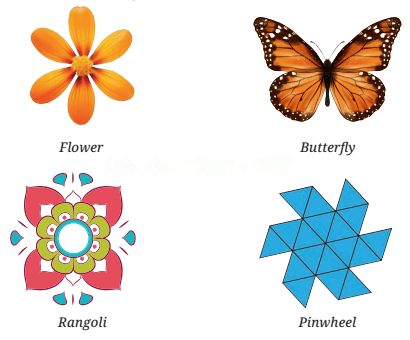
Do you see any line of symmetry in the figures at the start of the chapter? What about in the picture of the cloud?
Solution:
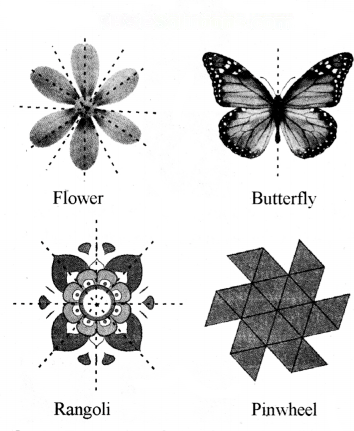
(1) Flower has 6 lines of symmetry.
(2) Butterfly has 1 line of symmetry.
(3) Rangoli has 4 lines of symmetry.
(4) Pinwheel has no line of symmetry.
(5) The picture of the cloud has no line of symmetry.
Question 2.
For each of the following figures, identify the line(s) of symmetry if it exists.
Solution:
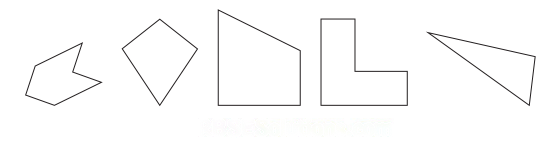
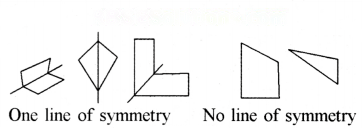
Figure Out (Page 223)
Punching Game
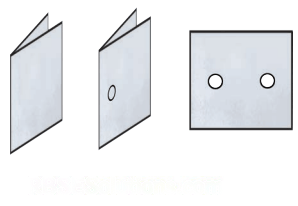
The fold is a line of symmetry. Punch holes at different locations of a folded square sheet of paper using a punching machine and create different symmetric patterns.
Question 1.
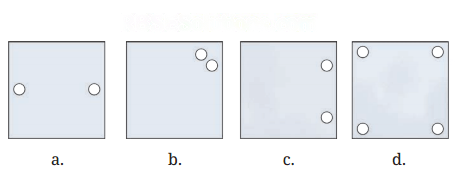
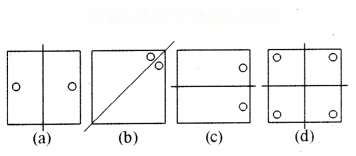
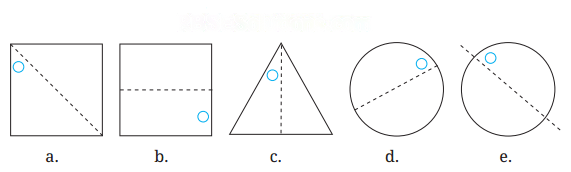
In each of the following figures, a hole was punched in a folded square sheet of paper and then the paper was unfolded. Identify the line along which the paper was folded.
Figure (d) was created by punching a single hole. How was the paper folded?
Solution:
Question 2.
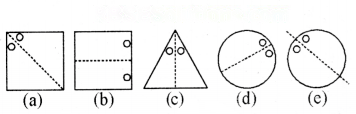
Given the line(s) of symmetry, find the other hole(s):
Solution:
Question 3.
Here are some questions on paper cutting.
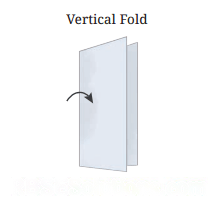
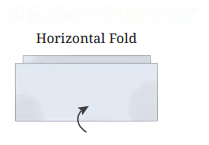
How will you represent a vertical fold and a horizontal fold?
Solution:
Consider a vertical fold. We represent it this way:
Similarly, a horizontal fold is represented as follows:
Question 4.
After each of the following cuts, predict the shape of the hole when the paper is opened. After you have made your prediction, make the cutouts and verify your answer.
Solution:
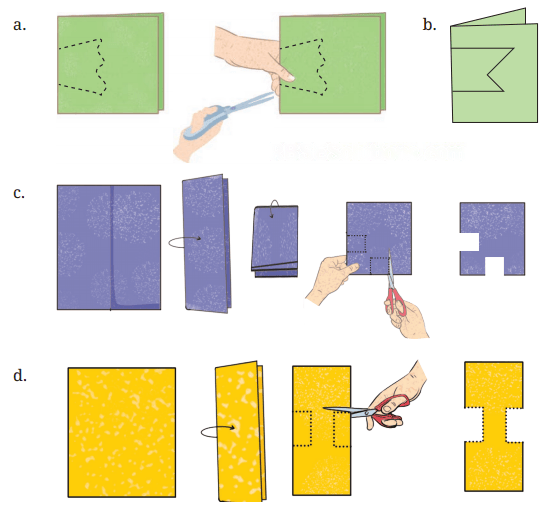
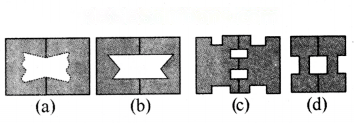
Question 5.
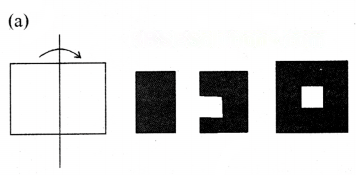
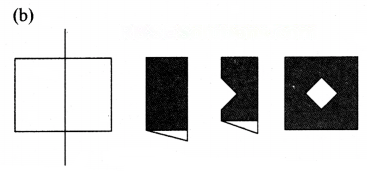
Suppose you have to get each of these shapes with some folds and a single straight cut. How will you do it?
(a) The hole in the centre is a square.
(b) The hole in the centre is a square.
Note : For the above two questions, check if the 4-sided figures in the centre satisfy both the properties of a square.
Solution:
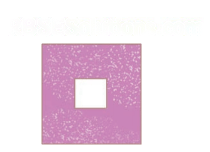
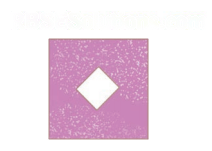
Question 6.
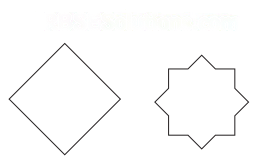
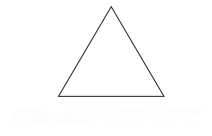
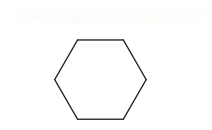
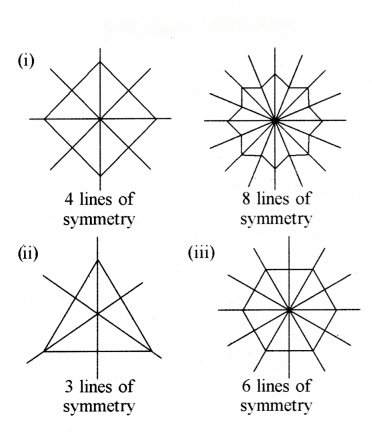
How many lines of symmetry do these shapes have?
(i)
(ii) A triangle with equal sides and equal angles.
(iii) A hexagon with equal sides and equal angles.
Solution:
Question 7.
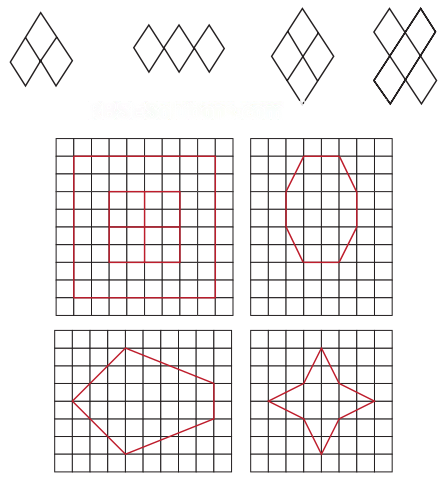
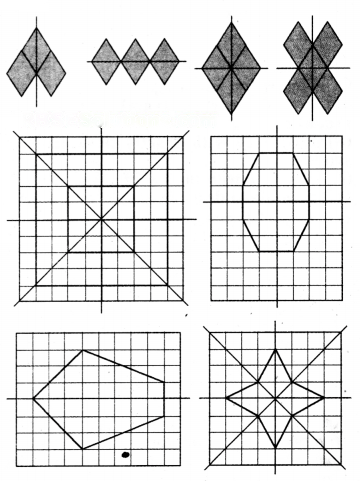
Trace each figure and draw the lines of symmetry, if any :
Solution:
Question 8.
Find the lines of symmetry for the kolam below.
Solution:
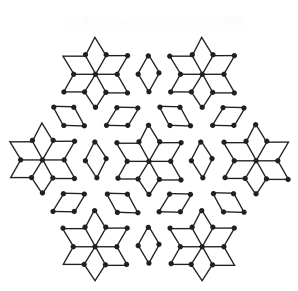
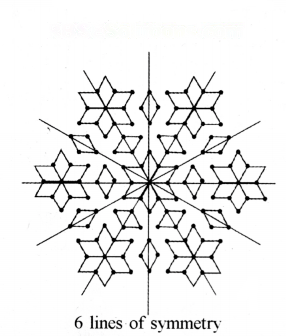
Question 9.
Draw the following.
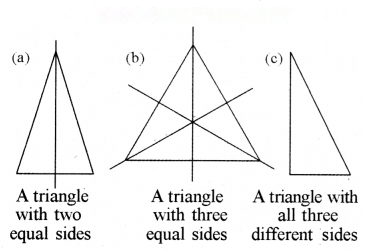
(a) A triangle with exactly one line of symmetry
(b) A triangle with exactly three lines of symmetry
(c) A triangle with no line of symmetry
Is it possible to draw a triangle with exactly two lines of symmetry?
Solution:
No, it is not possible to draw a triangle with exactly two lines of symmetry.
Question 10.
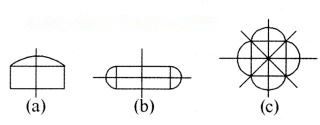
Draw the following. In each case, the figure should contain at least one curved boundary.
(a) A figure with exactly one line of symmetry
(b) A figure with exactly two lines of symmetry
(c) A figure with exactly four lines of symmetry
Solution:
Question 11.
Copy the following on squared paper. Complete them so that the blue line is a line of symmetry. Problem (a) has been done for you.
Hint : For (c) and (f), see if rotating the book helps!
Solution:
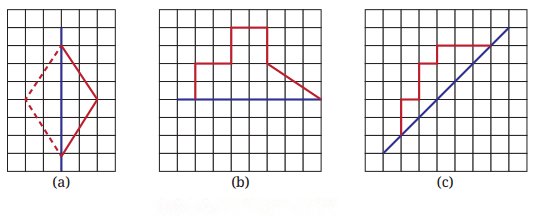
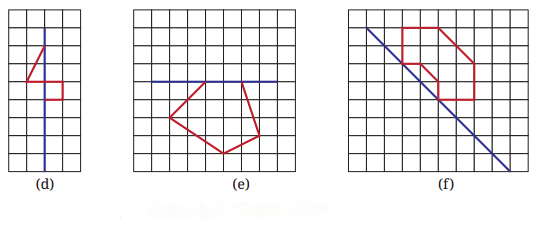
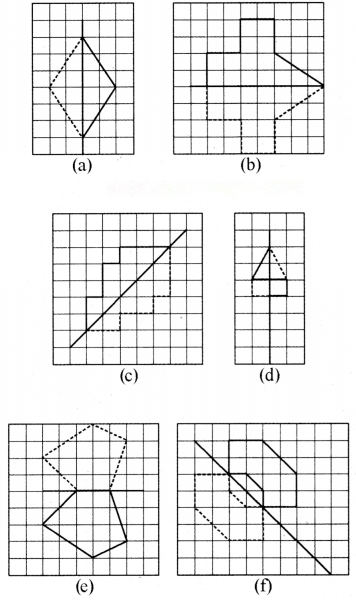
Question 12.
Copy the following drawing on squared paper. Complete each one of them so that the resulting figure has the two blue lines as lines of symmetry.
Solution:
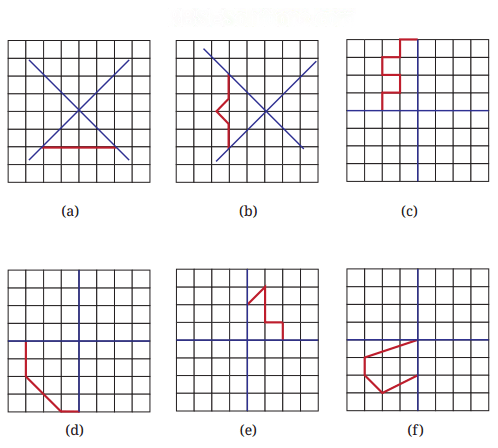
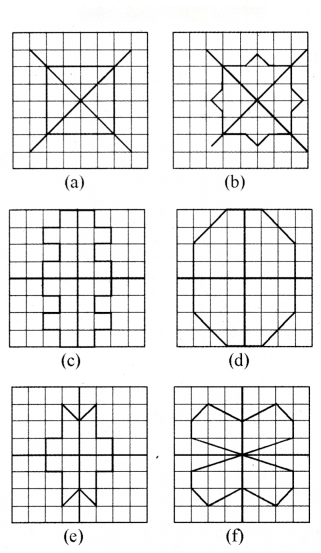
Question 13.
Copy the following on a dot grid. For each figure draw two more lines to make a shape that has a line of symmetry.
Solution:
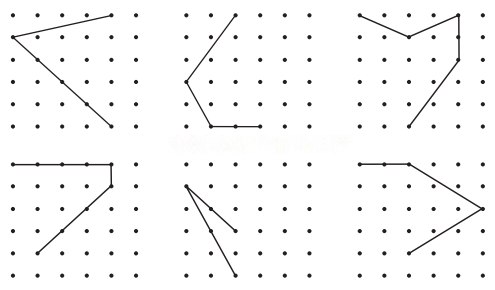
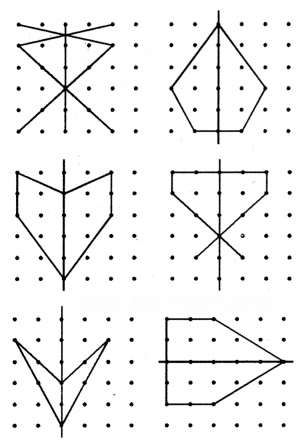
Figure it Out (Pages 235 – 236)
Question 1.
Find the angles of symmetry for the given figures about the point marked :
Solution:
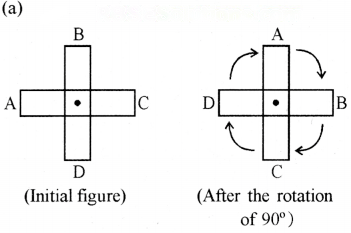
Let us rotate the figure by 90° to find the angles of symmetry.
(a)
Since, the figure after rotation of 90° is exactly the same, therefore 90° is the angle of symmetry.
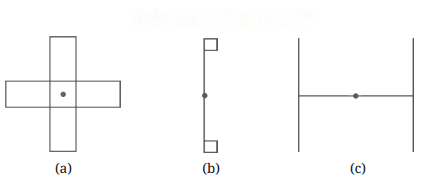
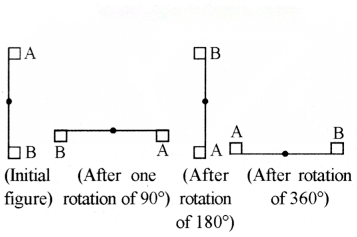
(b)
Since, the figure comes back to its original shape only after one complete rotation through 360°, therefore 360° is the angle of rotation.
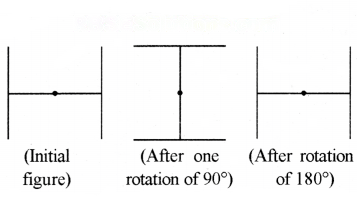
(c)
The figure after rotation of 180° is exactly the same, hence 180° is the angle of symmetry.
Question 2.
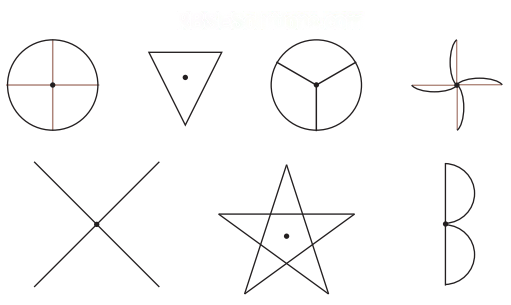
Which of the following figures have more than one angle of symmetry?
Solution:
Except the figure, all have more than one angle of symmetry.

Question 3.
Give the order of rotational symmetry for each figure :
Solution:
(a) 2
(b) 1
(c) 6
(d) 3
(e) 4
(f) 5
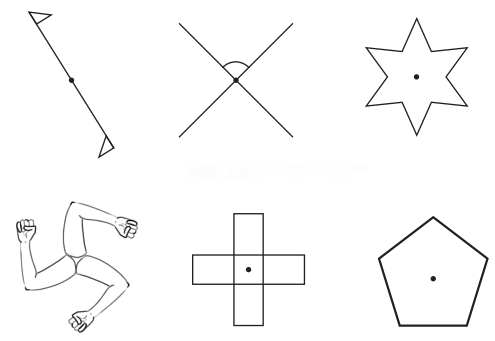
Figure it Out (Pages 238)
Question 1.
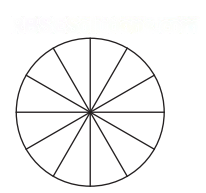
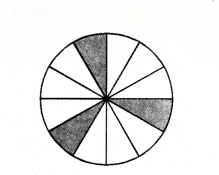
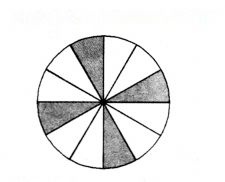
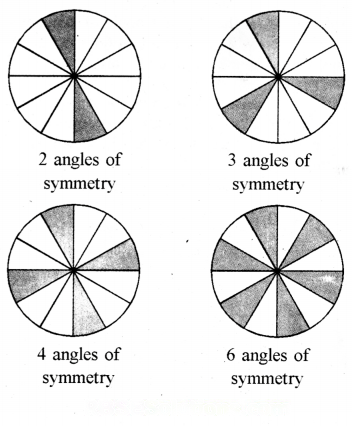
Color the sectors of the circle below so that the figure has (i) 3 angles of symmetry, (ii) 4 angles of symmetry, (iii) what are the possible numbers of angles of symmetry you can obtain by coloring the sectors in different ways?
Solution:
(i) Figure will look same after every rotation of 120°.
(ii) Figure will look same after every rotation of 90°.
(iii) Four ways are possible here—
Question 2.
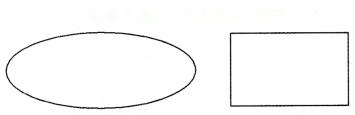
Draw two figures other than a circle and a square that have both reflection symmetry and rotational symmetry.
Solution:
Question 3.
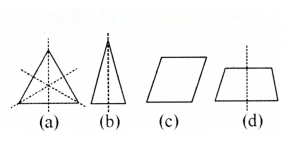
Draw, wherever possible, a rough sketch of—
(a) A triangle with at least two lines of symmetry and at least two angles of symmetry.
(b) A triangle with only one line of symmetry but not having rotational symmetry.
(c) A quadrilateral with rotational symmetry but no reflection symmetry.
(d) A quadrilateral with reflection symmetry but not having rotational symmetry.
Solution:
Question 4.
In a figure, 60° is the smallest angle of symmetry. What are the other angles of symmetry of this figure?
Solution:
As 60° is the smallest angle of symmetry. Other angles will be multiples of 60° till 360° are angles of symmetry, So. angles are : 120°. 180°, 240°. 300°, 360°
Question 5.
In a figure, 60° is an angle of symmetry. The figure has two angles of symmetry less than 60°. What is its smallest angle of symmetry?
Solution:
The smallest angle of svmmetrv = 60° ÷ 3 = 20°
Question 6.
Can we have a figure with rotational symmetry whose smallest angle of symmetry is –
(a) 45°
(b) 17°
Solution:
(a) Yes. as 360° is divisible by 45°, we can have a figure with rotational symmetry whose smallest angle of symmetry is 45°.
(b) No. as 360° is not divisible by 17°. we cannot have a figure with rotational symmetry whose smallest angle of symmetry is 17°.
Question 7.
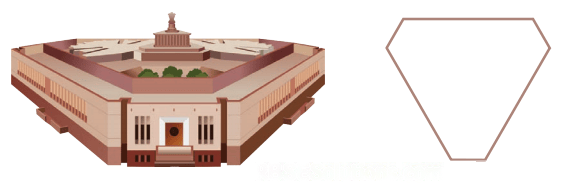
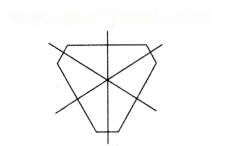
This is a picture of the new Parliament Building in Delhi.
(a) Does the outer boundary of the picture have reflection symmetry? If so, draw the lines of symmetries. How many are they?
(b) Does it have rotational symmetry around its centre? If so, find the angles of rotational symmetry.
Solution:
(a) The outer boundary shows reflection symmetry. Three lines of symmetry arc as follows :
(b) The outer boundary shows rotational symmetry about its centre.
Smallest angle of rotation = 360 ÷ 3 = 120°
Other angles of rotations are : 240°, 360°.
Question 8.
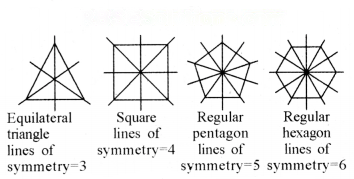
How many lines of symmetry do the shapes in the first shape sequence in Chapter 1, Table 3, the Regular Polygons, have? What number sequence do you get?
Solution:
Here, Number of sides in a regular polygon = Number of lines of symmetry
∴ Required sequence = 3, 4, 5, 6, ……………………..
Question 9.
How many angles of symmetry do the shapes in the first shape sequence in chapter 1, Table 3, the Regular Polygons, have? What number sequence do you get?
Solution:
Number of angles of symmetry = Number of lines of symmetry
∴ We get number sequence : 3, 4, 5, 6, 7 …………………
Question 10.
How many lines of symmetry do the shapes in the last shape sequence in Chapter 1, Table 3, the Koch Snowflake sequence, have? How many angles of symmetry?
Solution:
Here, lines of symmetry = 6
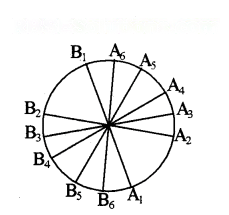
angles of symmetry = 6
Question 11.
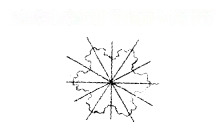
How many lines of symmetry and angles of symmetry does Ashoka Chakra have?
Solution:
The Ashoka Chakra has 12 lines of symmetry and 12 angles of symmetry.
The smallest angle of symmetry = 360° ÷ 12 = 30°
Other angles of symmetry are : 60°, 90°, 120°, 150° ………………. 360°

Symmetry Class 6 Question Answer
Symmetry Class 6 Extra Questions
Multiple Choice Questions—
Question 1.
The number of lines of symmetry in a scalene triangle is :
(a) 1
(b) 2
(c) 3
(d) None of these
Answer:
(d) None of these
Question 2.
The number of lines of symmetry in a regular polygon with n sides is :
(a) n
(b) 2n
(c)
(d) None of these
Answer:
(a) n
Question 3.
The sum of the number of lines of symmetry in a square and in an equilateral triangle is :
(a) 4
(b) 3
(c) 7
(d) 1
Answer:
(c) 7
Question 4.
The number of lines of symmetry in a circle is :
(a) 1
(b) 0
(c) 4
(d) infinite
Answer:
(d) infinite
Question 5.
How many lines of symmetry does the letter A has?
(a) 2
(b) 1
(c) 3
(d) 4
Answer:
(b) 1
Question 6.
How many lines of symmetry does the letter W has?
(a) 1
(b) 2
(c) 3
(d) 0
Answer:
(a) 1
Question 7.
A rectangle has angles of rotational symmetry :
(a) 1
(b) 2
(c) 3
(d) 0
Answer:
(b) 2
Question 8.
A half circle has lines of symmetry :
(a) 0
(b) 3
(c) 1
(d) 4
Answer:
(c) 1
Question 9.
A half circle has angle of rotational svmmetrv :
(a) 90°
(b) 180°
(c) 360°
(d) None of these
Answer:
(d) None of these
Question 10.
A square has angle of rotational symmetry :
(a) 90°
(b) 180°
(c) 270°
(d) 360°
Answer:
(a) 90°
Question 11.
Which of the following letters of English elphabets has no rotational symmetry?
(a) Z
(b) E
(c) N
(d) H
Answer:
(b) E
Question 12.
A kite has number of lines of symmetry :
(a) 1
(b) 2
(c) 3
(d) None of these
Answer:
(a) 1
Fill in the blanks—
1. When a figure is made up of parts that repeat in a definite pattern, then the figure has ……………….. .
Answer:
symmetry
2. A line that cuts a plane figure into two equal parts is called a …………………… .
Answer:
line of symmetry
3. A figure looks exactly the same when it is rotated about a fixed point, it is said to have ………………….. .
Answer:
rotational symmetry
4. In rotational symmetry, the point of figure about which file rotation occurs is called the ……………….. .
Answer:
centre of rotation
5. The shortest angle through which a figure can be rotated to look exactly the same is called an ……………….. .
Answer:
angle of symmetry
6. A regular pentagon has ……………….. lines of symmetry.
Answer:
5
Write True/False for the following statements—
1. Every figure will have 90° as an angle of symmetry. (True/False)
2. Symmetry is used in painting and architecture to enhance beauty. (True/False)
3. The centre of symmetry is only within the shape. (True/False)
4. In rotational symmetry, the figure can be rotated at any angle between 0° to 360°. (True/False)
Answer:
1. False
2. True
3. False
4. True
Make the right match—
Question 1.
Column – A | Column – B |
1. Symmetry | (A) Centre of rotation |
2. Line of symmetry | (B) Cuts a plane figure into two equal parts. |
3. Rotational symmetry | (C) Flower and butterfly in nature. |
4. Angle of symmetry | (D) Smallest angle of symmetry |
5. An example of symmetry. | (E) Property of equal parts of a plane figure. |
Answer:
1. – (E), 2. – (B), 3. – (A), 4. – (D), 5. – (C).
Column – A | Column – B |
1. Symmetry | (E) Property of equal parts of a plane figure. |
2. Line of symmetry | (B) Cuts a plane figure into two equal parts. |
3. Rotational symmetry | (A) Centre of rotation |
4. Angle of symmetry | (D) Smallest angle of symmetry |
5. An example of symmetry. | (C) Flower and butterfly in nature. |
Question 2.
Column – A | Column – B |
1. Axis of symmetry | (A) Line of symmetry |
2. Rotational symmetry | (B) Symmetry by rotating the figure |
3. Centre of rotation | (C) The fixed point about which the object is rotated |
4. Asymmetrical figure | (D) No symmetry |
5. Angle of symmetry | (E) Between 0° to 360° |
Answer:
1. – (A), 2. – (B), 3. – (C), 4. – (D), 5. – (E).
Column – A | Column-B |
1. Axis of symmetry | (A) Line of symmetry |
2. Rotational symmetry | (B) Symmetry by rotating the figure |
3. Centre of rotation | (C) The fixed point about which the object is rotated |
4. Asymmetrical figure | (D) No symmetry |
5. Angle of symmetry | (E) Between 0° to 360° |
Very Short Answer Type Questions—
Question 1.
At 90° rotation the figure will look same, what type of symmetry is this?
Solution:
Rotational symmetry.
Question 2.
On what does line of symmetry depend?
Solution:
On the shape and configuration of the figure.
Question 3.
Which plane figure has exactly one line of symmetry?
Solution:
Isosceles triangle.
Question 4.
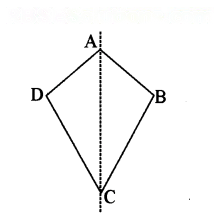
Write the name of the quadrilateral which has exactly one line of symmetry.
Solution:
Kite
Question 5.
Write the name of two figures which have both lines of symmetry as well as angles of symmetry.
Solution:
- Isosceles triangle
- Square
Question 6.
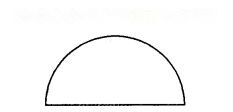
Give one example of a figure which has a line of symmetry but no rotational symmetry.
Solution:
A half circle
Question 7.
Give one example of a letter of English alphabet which has (i) no line of symmetry (ii) rotational symmetry of order 2.
Solution:
- Z
- N
Question 8.
Define the order of rotational symmetry.
Solution:
In a complete turn of 360°, the number of times an object looks exactly the same as the original object is called the order of rotational symmetry. For example, when we rotate a square about its centre, between 0° to 360° it looks four times exactly the same, so square has 4 order of rotational symmetry.
Short Answer Type Questions—
Question 1.
Complete the following table—
S.No | Geometrical figure | Centre of rotation | Order of rotation | Angle of rotation |
1. | Square | |||
2. | Rectangle | |||
3. | Regular hexagon | |||
4. | Equilateral triangle | |||
5. | Regular octagon | |||
6. | Circle | |||
7. | Half circle |
Solution:
S.No | Geometrical figure | Centre of rotation | Order of rotation | Angle of rotation |
1. | Square | Point of intersection of diagonals | 4 | 90° |
2. | Rectangle | Point of intersection of diagonals | 2 | 180° |
3. | Regular hexagon | Point of intersection of diagonals | 6 | 60° |
4. | Equilateral triangle | Central | 3 | 120° |
5. | Regular octagon | point of intersection of diagonals | 8 | 45° |
6. | Circle | Centre of circle | infinite | Any angle |
7. | Half circle | Mid point of diameter | 1 | 360° |
Question 2.
Discuss about the lines of symmetry and rotational symmetry of a circle.
Solution:
Let a circle with centre O, clearly it is symmetrical about every diameter. So, every diameter of the circle is a line of symmetry.
Thus, a circle has infinite lines of symmetry. If we rotate a circle about its centre by any angle, it coincides with itself. So, for a circle, every angle is an angle of symmetry. Therefore a circle has infinite angles of symmetry as well as order of rotational symmetry.
Essay Type Questions—
Question 1.
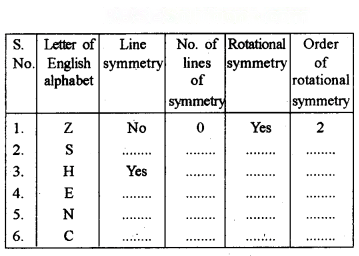
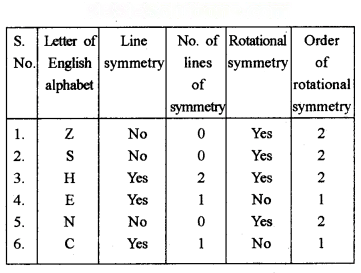
Complete the following table—
Solution:
Question 2.
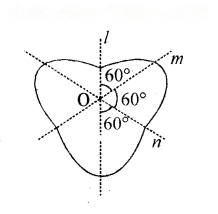
Explain the rotational symmetry in the figure given below—
Solution:
Here we can see that if we rotate the figure by 120°, 240° and 360°, it coincides with itself. Therefore, the figure has rotational symmetry of order 3. Here, /, m, and n are the lines of symmetry.