The Day the River Spoke Question Answer Summary Class 7 English Poorvi Chapter 1
Practicing RBSEClass 7 English Poorvi Solutionsand Class 7 English Chapter 1 The Day the River Spoke Question Answer Summary will help you achieve better results in your studies.
The Day the River Spoke Class 7 Question Answer
Class 7 English The Day the River Spoke Question Answer
Class 7 English Chapter 1 Question Answer
Let us discuss ( आइये चर्चा करें ) (Page 3)
Question 1.
What was Jahnavi’s dream? Was it important to her? Why?
जाह्नवी का सपना क्या था? क्या यह उसके लिए महत्त्वपूर्ण था? क्यों?
Answer:
Jahnavi’s dream was to go to school and learn to read like Ettan and Meena. Yes, it was very important to her because she was curious about many things. She wanted to know why spiders are yellow in yellow flowers, why bamboo trees rustle, and why the moon comes from behind the hills. She wanted education to get answers to her questions.
जाहृवी का सपना विद्यालय जाना और एट्टन तथा मीना की तरह पढ़ना सीखना था। हाँ, यह उसके लिए बहुत महत्त्वपूर्ण था क्योंकि वह कई चीजों के बारे में जिज्ञास थी। वह जानना चाहती थी कि पीले फूलों में मकड़ियाँ पीली क्यों होती हैं, बाँस के पेड़ सरसराते क्यों हैं, और चांद पहाड़ियों के पीछे से क्यों आता है। वह अपने सवालों के जवाब पाने के लिए शिक्षा चाहती थी।
Question 2.
Do you think the river can help her in fulfilling her dream? How?
क्या आपको लगता है कि नदी उसके सपने को पूरा करने में उसकी मदद कर सकती है? कैसे?
Answer:
Yes, the river can help Jahnavi. The river is her friend who listens to her problems. The river can encourage her and give her confidence to go to school. The river has already started teaching her by answering her questions. The river can help Jahnavi be brave and talk to her family about going to school.
हाँ, नदी जाह्नवी की मदद कर सकती है। नदी उसकी सहेली है जो उसकी समस्याएँ सुनती है। नदी उसे प्रोत्साहित कर सकती है और स्कूल जाने का आत्मविश्वास दे सकती है। नदी ने उसके सवालों के जवाब देकर उसे पहले से ही सिखाना शुरू कर दिया है। नदी उसकी साहसी बनने और अपने परिवार से विद्यालय जाने के बारे में बात करने में मदद कर सकती है।
Let us discuss ( आइये चर्चा करें ) (Page 6)
Complete the table given below with Jahnavi’s questions in Column 1 and the River’s answers in Column 2. Check your answers with the teacher.
Answer:
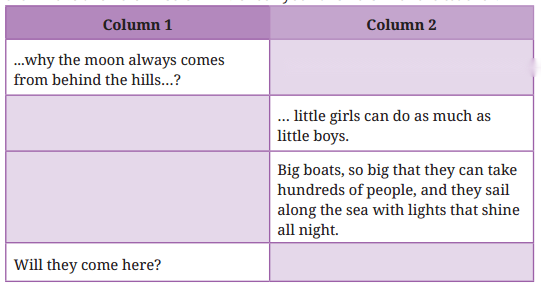
Column 1 | Column 2 |
why the moon always comes from behind the hills? | It goes down towards the sea. I’ve seen it always takes the same way – over the mountains and down to the sea, like me! |
Can I do something? | … little girls can do as much as little boys. Big boats, |
What are ships? | so big that they can take hundreds of people, and they sail along the sea with lights that shine all night. |
Will they come here? | I’m afraid not. Too large, you know. |
The Day the River Spoke Questions and Answers Class 7
I. Read the extracts given below and answer the questions that follow.
नीचे दिए गए अंश को पढ़ें और उसके बाद दिए गए प्रश्नों के उत्तर दें।
Question 1.
“You shouldn’t cry, you know,” the voice went on. “And you really shouldn’t be scared, when you have been coming here to see me everyday, well, almost every day.” She was puzzled. It was such a voice, like the river. It couldn’t be the river! “Well, tell me all about it,” said the River, for it was the River. “I’ve got to hurry to reach the sea, you know.”
(i) Complete the sentence with the correct option from those given in the brackets.
The tone of the River in the given extract is …………. (assuring/sympathising)
Answer:
assuring
(ii) Select a phrase from the extract which shows that Jahnavi was a frequent visitor to the spot.
गद्यांश में से वह वाक्यांश चुनिए जिससे पता चलता है कि जाहन्वी उस स्थान पर अक्सर आया करती थी।
Answer:
“when you have been coming here to see me everyday, well, almost every day.”
(iii) Choose the correct option to complete the sentence.
The use of an exclamation mark at the end of the line, ‘It couldn’t be the river!’ expresses …………
(A) excitement
(B) hesitation
(C) irritation
(D) disbelief
Answer:
(D) disbelief
(iv) Choose three qualities of the River highlighted in the extract from the words in the box given below.
नीचे दिए गए बॉक्स के शब्दों में से, गृद्यांश में दर्शाई गई नदी की तीन विशेषताओं को चुनिए।
affectionate, forgiving, thoughtful, impatient, kind-hearted
Answer:
affectionate, thoughtful, kind-hearted
Question 2.
“Can I do something?” asked Jahnavi. “Well, it’s up to you,” said the River. “Seems to me little girls can do as much as little boys-they swim as fast as little boys. You just slip along one morning and sit there in the school and listen to what’s going on, and may be the teacher will let you stay.” “I couldn’t,” gasped Jahnavi. “I couldn’t! They’d scare me! They’d chase me out.”
(i) Complete the sentence with an appropriate reason. According to the River, there was no difference between girls and boys because ……………………
Answer:
little girls can do as much as little boys – they swim as fast as little boys.
(ii) Identify whether the following statement is true or false. The River encourages Jahnavi to have faith in herself and fulfill her desire to go to school.
Answer:
True
(iii) Choose the correct option to complete the sentence.
When the River suggests that Jahnavi should ‘slip along’, it means that she should move.
(A) quickly
(B) casually
(C) quietly
(D) confidently
Answer:
(C) quietly
(iv) What does the repetition of the phrase ‘I couldn’t’ tell us?
वाक्यांश ‘I couldn’t’, का दोहरान हर्में क्या बताता है।
Answer:
The repetition of the phrase shows Jahnavi’s fear and lack of confidence about going to school as she always used to think that she would be scared or chased away.
II. Answer the following questions.
Question 1.
Why does the writer describe different aspects of nature in great detail at the beginning of the story? Why do you think the writer does this?
लेखक कहानी के आरम्भ में प्रकृति के विभिन्न पहलुओं का विस्तार से वर्णन क्यों करता है? आपके विचार से लेखक ऐसा क्यों करता है?
Answer:
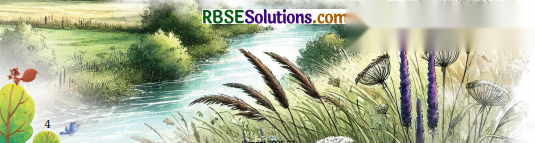
The writer describes different aspects of nature in great detail to create a peaceful, natural setting where Jahnavi feels comfortable and safe. This detailed description helps establish the River as a character and shows Jahnavi’s connection with nature. It also sets a calm mood before introducing the magical element of the talking River.
लेखक प्रकृति का विस्तृत वर्णन एक शॉतिपूर्ण, प्राकृतिक वातावरण बनाने के लिए करता है जहाँ जाहुवी सहज और सुरक्षित महसूस करती है। यह विस्तृत वर्णन नदी को एक पात्र के रूप में स्थापित करने में मदद्र करता है और जाहुव्री का प्रकृति के साथ जुड़ाव दिखाता है। यह बात करने वाली नदी के जादुई तत्त्व को प्रस्तुत करने से पहले एक शांत माहौल भी बनाता है।
Question 2.
How did the River know so much about Jahnavi?
नदी जाइवी के बारे में इतना कुछ कैसे जानती थी?
Answer:
The river knew so much about Jahnavi because she had been coming to visit the River everyday, or almost every day. The River observed her regularly and had been listening to her, so it understood her feelings and problems.
नदी आहुवी के बारे में इवना कुछ इसलिए जानती थी क्योंकि वह हर दिन या लगभग हर दिन नदी के पास आती थी। नदी नियमित रूप से उसे देखती थी और उसकी बातें सुनती थी, इसलिए वह उसकी भावनाओं और समस्याओं को समझती थी।
Question 3.
Jahnavi says, “And I’m so old now, they’ll never let me go.” What can you infer about Jahnavi and the school from this line? “जाहुवी कहती है, और अब में इतनी बड़ी हो गई हैं कि वे मुझे कभी जाने नहीं देगे।” इस पंक्ति से आप जाहवी और विधालय के बारे में क्या अनुमान लगा सकते हैं?
Answer:
From this line, we can infer that Jahnavi is now almost ten years old, which she considers too old to start school. She believes that schools might not admit older children who haven’t started their education earlier. This shows her fear and lack of confidence, as well as the common practice of admitting only younger children to school.
इस पंक्ति से हम यह अनुमान लगा सकते हैं कि जाहुवी अब लगभग दस साल की है, जिसे वह स्कूल शुरू करने के लिए बहुत बड़ी मानती है। वह मानती है कि स्कू उन बड़े बच्चों को प्रवेश नहीं देंगे जिन्होंने पहले अपन शिक्षा शुरू नहीं की है। यह उसके डर और आत्मविश्वार की कमी को दर्शाता है, साथ ही केवल छोटे बच्चों के स्कूल में प्रवेश देने की आम प्रथा को भी दिखाता है।
Question 4.
Why did the River laugh when Jahnav said she would be scared at school?
जाह्नवी ने कहा कि वह विद्यालय में डर जाएगी-यह सुनकर नदी क्यों हँसी?
Answer:
The River laughed because it found i amusing that Jahnavi was afraid of going to school when she wasn’t afraid of many other frightening things in nature-like the greer lizard, the snake in the bamboo clump, of the big trains rattling past the bridge. The River wanted to show her that she was braver than she thought.
नदी हँसी क्योंकि उसे यह मज़ेदार लगा कि जाह्नवी स्कूल जाने से डरती थी जबकि वह प्रकृति की कई अन्य डरावनी चीजों से नहीं डरती थी-जैसे हरी छिपकली, बाँस के झुरमुट में साँप, या पुल से गुजरती बड़ी रेलगाड़ियाँ। नदी उसे दिखाना चाहती थी कि वह अपने विचार से अधिक बहादुर थी।
Question 5.
Why should Jahnavi follow the River’s advice?
जाह्नवी को नदी की सलाह क्यों माननी चाहिए?
Answer:
Jahnavi should follow the River’s advice because the River is wise and encouraging. The River believes in her abilities and gives her practical advice to overcome her fear and achieve her dream of going to school. The River’s suggestion to simply go and sit in the class is a simple yet effective solution that could help Jahnavi take the first step towards her education.
जाह्नवी को नदी की सलाह का पालन करना चाहिए क्योंकि नदी बुद्धिमान और प्रोत्साहित करने वाली है। नदी उसकी क्षमताओं में विश्वास करती है और उसे अपने डर पर काबू पाने और स्कूल जाने के अपने सपने को पूरा करने के लिए व्यावहारिक सलाह देती है। कक्षा में जाकर बैठने का नदी का सुझाव एक सरल लेकिन प्रभावी समाधान है जो जाह्नवी को अपनी शिक्षा की ओर पहला कदम उठाने में मदद कर सकता है।
Question 6.
How does the conversation between Jahnavi and the River make the story more appealing?
जाहुवी और नदी के बीच बातचीत कहानी को अधिक आकर्षक कैसे बनाती है ?
Answer:
The conversation between Jahnavi and the River makes the story more appealing by adding a magical and imaginative element. It gives the River a personality and makes it a friend and mentor to Jahnavi. The dialogue is natural and comforting, showing the River’s wisdom and kindness. This unique friendship makes the story memorable and teaches the lesson in a gentle, engaging way.
जाहूवी और नदी के बीच बातचीत एक जादुई और कल्पनाशील तत्त्व जोड़कर कहानी को अधिक आकर्षक बनाती है। यह नदी को एक व्यक्तित्व देती है और उसे আहली का मित्र और मार्गदर्शक बनाती है। संबाद स्वाभाविक और सांत्वनादायक है, जो नदी की बुद्धिमत्ता और दयालुता को दर्शाता है। यह अनूठी दोस्ती कहानी को यादगार बनाती है और एक कोमल, आकर्षक तरीके से सीख देती है।
Question 7.
What is the main message that the writer intends to convey?
लेखक कौनसा मुख्य संदेश देना चाहता है?
Answer:
The main message of the story is that girls have the right to education just as much as boys do. The writer emphasizes the importance of courage, determination, and self-belief in achieving one’s dreams. The story also conveys that girls are equally capable as boys and should not be held back by fear or traditional gender roles. Education empowers everyone, regardless of gender.
कहानी का मुख्य संदेश यह है कि लड़कियों को भी लड़कों की तरह शिक्षा का अधिकार है। लेखक अपने सपनों को प्राप्त करने में साहस, दृढ़ संकल्प और आत्मविश्वास के महत्त्व पर जोर देता है। कहानी यह भी बताती है कि लड़कियाँ लड़कों के समान सक्षम हैं और उन्हें डर या पारंपरिक लैंगिक भूमिकाओं से पीछे नहीं रखा जाना चाहिए। शिक्षा लिंग की परवाह किए बिना सभी को सशक्त बनाती है।
Let us Learn
II. There are a few words related to sound in the text. Pick the words from the text and write them next to the correct definition.
पाठ में ध्वनि से संबंधित कुछ शब्द दिए गए हैं। पाठ से वे शब्द चुनिए और उन्हें सही परिभाषा के सामने लिखिए।
Answer:
1. made a high-pitched piercing soundshrieked
2. to cause liquid to strike or fall on somethingsplashed
3. a low continuous background noisemurmuring
4. cry with loud uncontrollable gaspssob
5. to make a soft dry sound, like paper or leaves movingrustled
6. took a short quick breath through the mouth due to surprise, pain or shockgasped
7. shaking rapidly to make continuous short, sharp soundsrattling
8. making a lot of noisenoisy
9. made a long, high cry, usually because of pain or sadnesswailed
Now, fill in the blanks with suitable sound words from exercise (II).
अब रिक्त स्थानों को अभ्यास (II) में दिए गए उपयुक्त ध्वनि-शब्दों से भरिए।
Answer:
The classroom grew
(i)noisyas the students noticed the teacher carrying the answer papers. As the teacher turned the pages with a
(ii)rustle, the children
(iii)gaspedwondering what comments awaited. Someone
(iv)wailedin frustration, and the
(v)murmuringof the students steadily increased. Finally, when the teacher praised the students for their excellent performance, the students
(vi)shriekedwith excitement.
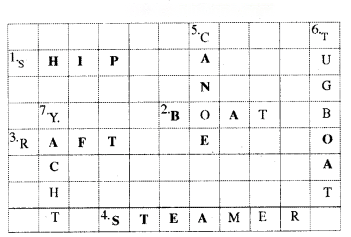
V. Solve the crossword puzzle based on words related to water transport.
जल परिवहन से संबंधित शब्दों पर आधारित क्रॉसवर्ड पहेली को हल करें :
Across
1. a large vessel used for transporting goods or passengers by sea
2. a small vessel for travelling on water, typically propelled by oars, sails, or an engine
3. a flat floating structure for travelling across water
4. a boat or ship driven by steam Down
5. a small, light, narrow boat, pointed at both ends and moved using a paddle
6. a boat with a powerful engine which can change direction easily and is used to pull large ships into and out of port
7. a boat with sails and sometimes an engine, used for either racing or travelling for pleasure, rhymes with ‘cot’
Answer:
VI. Fill in the blanks with suitable prepositions given within the brackets.
कोष्ठक में दिए गए उपयुक्त पूर्वसर्गों से रिक्त स्थानों को भरें।
Answer:
Jahnavi takes the River’s advice and goes to school. On her first day
1.at(at/ in/ on) school, Jahnavi stood nervously 2.outside(in/outside/above) the gate, clutching her bag close to her. The bell rang and she hurried 3.inside(outside/through/ inside) the bustling classroom. She found a seat 4.between(among/between/from) two friendly classmates. The teacher greeted them warmly and started the lesson. 5.about(about/in/for) numbers. Jahnavi listened attentively, feeling excited 6.about(at/about/ for) the new adventure ahead.
VII. Fill in the blanks with prepositions or adverbs.
रिक्त स्थानों को पूर्व सर्गों या क्रिया विशेषणों से भरें।
Answer:
1. The cat jumpedontothe table. (preposition)
2. The children playedoutsideuntil dark. (adverb)
3. She quickly ranthroughthe park. (preposition)
4. The helicopter was hoveringabove. (adverb)
5. We were just walkingalongchatting. (adverb)
6. After thoroughly wiping his shoes, he steppedinside. (adverb)
7. She drove slowlyaroundthe sharp curve. (preposition)
8. He placed the keysunderthe mat before leaving. (preposition)
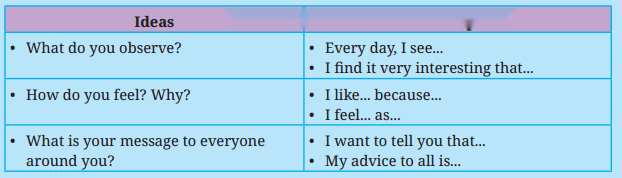
Let us Write:
Write a descriptive paragraph based on what you’ve observed. Highlight the colours, shapes, textures, and unique details that made an impression on you.
Give a title to your paragraph.
अपने Paragraph को एक शीर्षक दें।
Answer:
Title: The Beauty of Nature Around Me
Every day, I see the bright flowers blooming, the tall trees swaying gently, and colourful birds flying across the sky. I find it very interesting that each element of nature has its own unique beauty. The soft petals of flowers, the rippling water in the pond, and the fluttering wings of butterflies.
I like watching the birds because the make the surroundings lively with their sweet chirping. I feel calm and happy as I observe the greenery and listen to the sounds of nature.
I want to tell you that nature is a gift, and we must learn to treasure it. My advice to all is to spend some time every day in nature, for it refreshes our mind and teaches us to live in harmony with the world around us.
Seen Passages
Read the following passages carefully and answer the questions that follow :
Passage-1
Jahnavi was startled, because she was sure she had been quite alone. It couldn’t have been the lizard. And the kingfisher was up in the thicket of bamboo eating the fish it had caught. It couldn’t be the parrots, because parrots shrieked and this was such a sleepy voice. She looked around her. There wasn’t a soul in sight. She was rather scared and wanted to run away. “You shouldn’t cry, you know,” the voice went on. “And you really shouldn’t be scared, when you have been coming here to see me every day, well, almost every day.”
Question 1.
Why was Jahnavi startled?
(a) Because she saw a lizard
(b) Because she heard a voice when she thought she was alone
(c) Because the kingfisher flew away
(d) Because the parrots were making noise
Answer:
(b) Because she heard a voice when she thought she was alone.
Question 2.
Where was the kingfisher?
Answer:
The kingfisher was up in the thicket of bamboo eating the fish it had caught.
Question 3.
Why couldn’t the voice belong to the parrots?
Answer:
The voice couldn’t belong to the parrots because parrots shrieked and this was such a sleepy voice.
Question 4.
What did the voice tell Jahnavi not to do?
Answer:
The voice told Jahnavi not to cry and not to be scared.
Question 5.
Find one word from the passage for: “A dense group of bushes and trees.”
Answer:
Thicket
Question 6.
Find a word from the passage that means the same as “Surprised.”
Answer:
Startled
Passage-2
“Even little Ramu goes to school,” said Jahnavi, “pity, the school isn’t by the sea,” said the River. “Then I could take you along, you know. But, I suppose I couldn’t really. You’d get your feet wet. And that would never do! I’m afraid there’s only one thing you can do.” “Can I do something?” asked Jahnavi. “Well, it’s up to you,” said the River. “Seems to me little girls can do as much as little boys-they swim as fast as little boys. You just slip along one morning and sit there in the school and listen to what’s going on, and may be the teacher will let you stay.”
Question 1.
Who goes to school according to Jahnavi?
(a) Only Ettan
(b) Even little Ramu
(c) Only Meena
(d) Only girls
Answer:
(b) Even little Ramu
Question 2.
What suggestion did the River give to Jahnavi?
Answer:
The River suggested that Jahnavi should slip along one morning and sit in the school and listen to what’s going on, and may be the teacher will let her stay.
Question 3.
What did the River say about little girls?
Answer:
The River said that little girls can do as much as little boys and they swim as fast as little boys.
Question 4.
Why couldn’t the River take Jahnavi to school?
Answer:
The River couldn’t take Jahnavi to school because the school wasn’t by the sea, and if the River took her, she would get her feet wet.
Question 5.
Write the opposite of “Big” from the passage.
Answer:
Little
Question 6.
Find a word from the passage that means the same as “go quietly or quickly without being noticed.”
Answer:
Slip
Passage-3
Jahnavi gathered courage. The next day she reached the school, panting and out of breath and stood by the door listening while the teacher read out the lesson. It was a story about a prince called Ashoka, who became a great king. Little Appu had fallen asleep on her shoulder. She crept nearer and nearer till she was in the back row, squatting with the others on the earthen floor. Little Appu made no noise and she listened. “Where did you spring from, little girl?” asked the teacher. “And what is your name? You’re new in my class.” “She’s Gopi’s sister, Gopi is in the next class,” said one of the boys.
Question 1.
How did Jahnavi reach the school?
(a) Running slowly
(b) Panting and out of breath
(c) Walking calmly
(d) Riding a bicycle
Answer
(b) Panting and out of breath
Question 2.
What story was the teacher reading in the class?
Answer
The teacher was reading a story about a prince called Ashoka, who became a great king.
Question 3.
What did Jahnavi do when she reached the school?
Answer
When Jahnavi reached the school, she stood by the door listening while the teacher read out the lesson. Then she crept nearer and nearer till she was in the back row, squatting with the others on the earthen floor.
Question 4.
Who helped the teacher identify Jahnavi?
Answer
One of the boys helped the teacher identify Jahnavi by saying that she was Gopi’s sister and Gopi was in the next class.
Question 5.
Find one word from the passage for: “bravery or the ability to face danger or difficulty”
Answer
Courage
Question 6.
Find the word from the passage that means the same as “moved slowly and quietly.”
Answer
Crept
Passage-4
Jahnavi saw the teacher walking up the steps to their gate the next evening when she was lighting
the lamp. She could see her father scratching his cheek the way he did when he was worried and the teacher was nodding and saying something she couldn’t make out. And Mother said, “Little Jahnavi, I shall miss you when you go to school. Girls should learn as much as they want. When I was your age, I wanted to go to school, but your grandmother said ‘No’, but now, I am glad the teacher came to talk to your father.” And Jahnavi said, “Mother, when I grow up, I’ll be a teacher.”
Question 1.
When did the teacher visit Jahnavi’s house?
(a) In the morning
(b) At noon
(c) The next evening
(d) At midnight
Answer:
(c) The next evening
Question 2.
What was Jahnavi’s father doing when the teacher was talking?
Answer:
When the teacher was talking, Jahnavi’s father was scratching his cheek the way he did when he was worried.
Question 3.
What did Jahnavi’s mother say about girls learning?
Answer:
Jahnavi’s mother said that girls should learn as much as they want.
Question 4.
What was Jahnavi’s mother’s experience when she was young?
Answer:
When Jahnavi’s mother was young, she wanted to go to school, but her grandmother (Jahnavi’s grandmother) said ‘No’ and didn’t allow her to go.
Question 5.
Write the opposite gender of “Grandfather” from the passage.
Answer:
Grandmother
Question 6.
Find the word from the passage that means the same as “anxious or concerned.”
Answer:
Worried
The Day the River Spoke Summary Hindi Translation
A big bright tear …………… you know (Pages 2-3)
कठिन शब्दार्थ-
- bright ( ब्राइट् ) = चमकीला।
- tear (टिअ (र)) = आँसू।
- splashed (स्पलैश्ट्) = छलका (आँसू)।
- kingfisher (किड्फिश (र)) = चमकीला नीला पक्षी; कौड़िल्ला।
- lizard (लिज़ड्) = छिपकली।
- slithered (स्लिदई) = सरकी या रेंगी।
- bask (बास्क्) = धूप सेंकना।
- murmuring (ममरिंग्) = धीमी आवाज में बोलना,
- startled (स्टाट्ल्ड) = चौंक गई।
- thicket (थिकिट) = घना ज्ञाड़ीदार स्थान।
- shrieked ( श्रीक्ट् ) = चीख कर बोले।
- puzzled (पजूल्ड्) = उलझनग्रस्त।
हिन्दी अनुवाद:
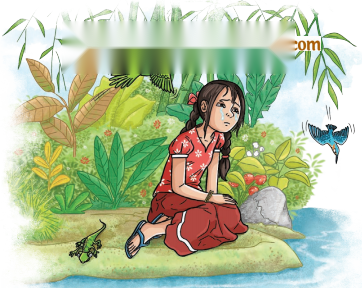
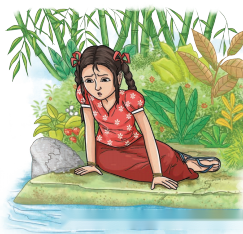
एक बड़ा चमकीला आँसू उसकी नाक से होकर टपक गया। और फिर एक और। एक किंगफिशर नीचे की ओर झपटा, इसके पंख धूप में नीले तीर की तरह थे। और एक हरी छिपकली धूप सेंकने के लिए नदी के किनारे तक सरक कर आई।
“अरे, अरे!” एक नींद भरी, बुदबुदाती आवाज़ ने कहा, “क्या बात है?”
जाह्नवी चौंक गई, क्योंकि उसे यकीन था कि वह बिल्कुल अकेली थी। यह छिपकली नहीं हो सकती थी और किंगफिशर तो बाँस के झुरमुट में ऊपर बैठा उस मछली को खा रहा था जिसे उसने पकड़ा था। यह तोते नहीं हो सकते थे, क्योंकि तोते तो चिल्लाते थे और यह इतनी नींद भरी आवाज थी। उसने अपने चारों ओर देखा। आस-पास कोई नजर नहीं आ रहा था। वह काफी डर गई थी और भाग जाना चाहती थी।
“तुम्हें रोना नहीं चाहिए, तुम जानती हो,” आवाज ने आगे कहा-“और तुम्हें वास्तव में डरना भी नहीं चाहिए, जबकि तुम यहाँ मुझसे मिलने हर दिन आती रही हो, ठीक है, लगभग हर दिन।”
वह असमंजस में थी। यह ऐसी आवाज़ थी, जैसे नदी की। यह नदी तो नहीं हो सकती।
“अच्छा, मुझे सब कुछ बता दो,” नदी ने कहा, क्योंकि वह नदी ही थी। “मुझे समुद्र तक पहुँचने के लिए जल्दी करनी है, तुम जानती हो।”
“They won’t let me like me!” (Page 3)
कठिन शब्दार्थ-
- replied (रिप्लाइड) = जवाब दिया।
- minding (माइन्डिंग) = देखभाल करना, संभालना।
- fields (फील्ड्ज़) = खेत, मैदान।
- nearly (निअली) = लगभग, करीब-करीब।
- sob (सॉब्) = सिसकना।
- scared (स्केअड्) = भयभीत।
- elder (एल्ड (र्)) = आयु में बड़ा।
- rustle (रस्ल) = सरसराना।
- frogs (फ़्रॉग्ज़) = मेंढक।
- breathless (ब्रेथ्लस्) = हाँफते हुए।
- conspiratorially (कन्स्परट(र्)ली) = भेद की बात बताते हुए, गुप्त रूप से।
- Mountains (माउन्टन्ज ) = पर्वत।
हिन्दी अनुवाद
“वे मुझे विद्यालय नहीं जाने देंगे,” जाह्ववी ने कहा। “मेंने अपनी माँ से पूछा, “मैं एट्टन और मीना की तरह स्कूल क्यों नहीं जा सकती?” और माँ ने जवाब दिया था, “तुम बहुत छोटी हो, बच्ची ! शायद बाद में।” लेकिन जब वह पाँच साल की थी, छोटा रामू पैदा हुआ और माँ ने तब भी कहा, “शायद अगले साल। जाह्नवी, अपने छोटे भाई का ध्यान रखना जब तक मैं खेतों में जाती हूँ।” अब वह लगभग दस साल की थी और छोटे अप्पू की देखभाल कर रही थी, जो सबसे छोटा था। “वे मुझे नहीं चाहते। वे केवल……”-वह सिसकी के साथ रुक गई…..
“मुझे स्कूल जाने में डर लगता है और अब मैं इतनी बड़ी हो गई हूँ, वे मुझे कभी नहीं जाने देंगे। लेकिन मैं जाना चाहती हूँ। मैं एट्टन और मीना की तरह पढ़ना सीखना चाहती हूँ।” जाह्नवी अपने भाई को ‘एट्न ‘ कहती थी। एट्टन का मतलब है ‘बड़ा भाई’, लेकिन उसका असली नाम गोपी था। “मैं जानना चाहती हूँ कि पीले फूलों में मकड़ियाँ पीली क्यों होती हैं, बाँस के पेड़ सरसराते क्यों हैं, चाँद हमेशा पहाड़ियों के पीछे से क्यों आता है, कभी दूसरी तरफ से क्यों नहीं, खेत के पानी में छोटी मछलियाँ मेंढक क्यों बन जाती हैं, क्यों…..”
” रुको!” नदी ने कहा। “तुम मुझे बेदम कर देती हो। इतने सारे क्यों!” मैं तुमें बता सकती हूँ कि चाँद कहा जाता है, “नदी ने भेद की बात बताते हुए कहा।” “वह समुद्र की ओर नीचे जाता है। मैंने देखा है; वह हमेशा वही रास्ता लेता है-पहाड़ों के ऊपर से और नीचे समुद्र की ओर, मेरी तरह!”
II “Even little Ramu ……………….. she listened. (Pages 4-5)
कठिन शब्दार्थ-
- pity (पिटि) = दया।
- suppose (सपोज्) = मान लेना, समझना।
- slipped (स्लिप्ट्) = फिसल गई, सरक गई।
- clump (क्लम्प्) = पौधों अथवा वृक्षों का कुंज, झुरमुट।
- rattling (रैट्लिड्) = खड़खड़ाने की आवाज्।
- prefer (प्रिफ़ (रु)) = अधिक पसंद करना।
- startled (स्टाट्ल्ड्) = चौंक गई।
- catamaran (कैटमरैन्) = दो पाटों वाली द्रुतगति नौका।
- wail (वेल्) = विलाप करना, रोना।
- panting (पैन्टिंग) = हाँफना।
- crept (क्रेप्ट्) = धीरे-धीरे चला।
- squatting (स्क्वॉंटिंड्) = उकडू बैठना।
- earthen (अथ्न) = मिट्टी का बना हुआ।
- gathered (गैद (र)ड्) = इकट्टा किया, जुटाया।
हिन्दी अनुवाद-
” छोटा रामू भी विद्यालय जाता है,” जाह्लवी ने कहा, “अफ़सोस, विद्यालय समुद्र के किनारे नहीं है,” नदी ने कहा। “तब मैं तुम्हें अपने साथ ले जा सकती, तुम जानती हो। लेकिन, मुझे लगता है मैं वास्तव में ऐसा नहीं कर सकती। तुम्हारे पैर भीग जाएँगे। यह कभी ठीक नहीं होगा ! मुझे डर है कि तुम सिर्फ एक ही काम कर सकती हो।”
“क्या मैं कुछ कर सकती हूँ?” जाह्लवी ने पूछा। “खैर, यह तुम पर निर्भर करता है”, नदी ने कहा। “मुझे लगता है छोटी लड़कियाँ उतना ही कर सकती हैं जितना छोटे लड़के-वे छोटे लड़कों जितनी ही तेज तैरती हैं। तुम बस एक सुबह चुपचाप चली जाओ और वहाँ विद्यालय में बैठ जाओ और सुनो कि क्या हो रहा है, और शायद शिक्षक तुम्हें रहने देंगे।”
“मैं नहीं कर सकती,” जाह्नवी ने हाँफते हुए कहा। “मैं नहीं कर सकती ! वे मुझे भगा देंगे।”
नदी हँसी। “तुम? डरी हुई?” नदी ने कहा, “जब तुम हरी छिपकली से नहीं डरती, या बाँस के झुरमुट में रहने वाले साँप से नहीं डरती, (जाहुवी चौंक गई) या उस पुल के पास से गड़गड़ाती हुई गुजरने वाली बड़ी ट्रेनों से नहीं डरती।” “ट्रेनें शोर करती हैं; मुझे जहाज़ पसंद हैं,” नदी ने कहा।
जाह्नवी को कभी पता नहीं था कि साँप बाँस के झुरमुट में रहता था। “जहाज क्या होते हैं?” उसने पूछा।
” बड़ी नावें, ” नदी ने कहा, ” इतनी बड़ी कि वे सैकड़ों लोगों को ले जा सकती हैं, और वे समुद्र में रोशनियों के साथ तैरती हैं जो पूरी रात चमकती हैं।”
जाह्नवी ने अपनी साँस रोक ली। “क्या वे यहाँ आएँगे?” उसने पूछा “मुझे डर है कि नहीं,” नदी ने कहा। “बहुत बड़े हैं, तुम्हें पता है। चंदू की कटमरैन मेरे लिए काफी अच्छी है। चंदू तुम्हें किसी दिन जहाज़ दिखाने ले जा सकता है।”
“वे मुझे कभी नहीं जाने देंगे!” जाह्नवी ने जोर से शिकायत की।
“पहले विद्यालय जाने की कोशिश करो,” नदी ने कहा। “याद रखो, यह तुम पर निर्भर करता है।”
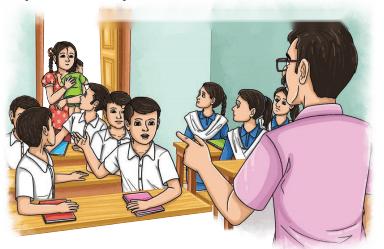
जाह्मवी ने हिम्मत जुटाई। अगले दिन वह विद्यालय पहुँची, हाँफती हुई और साँस फूलने के साथ और दरवाजे के पास खड़ी होकर सुनने लगी जबकि शिक्षक पाठ पढ़ रहे थे। यह अशोक नाम के एक राजकुमार के बारे में कहानी थी, जो एक महान् राजा बना। छोटा अण्पू उसके कंधे पर सो गया था। वह धीरे-धीरे और पास आती गई जब तक कि वह पिछली पंक्ति में नहीं थी, मिट्टी के फर्श पर दूसरों के साथ बैठी हुई। छोटे अप्मू ने कोई शोर नहीं किया और वह सुनती रही।
“Where did you spring ………….. sail the sea.”(Pages 5-6)
कठिन शब्दार्थ-
- spring (स्प्रिङ्) = अचानक प्रकट होना, उछलकर आना।
- lad (लैड्) = लड़का या युवक।
- scratching ( स्क्रैचिङ) = खुजलाना, नाखून से रगड़ना।
- nodding (नॉडिड्) = सिर हिलाना (सहमति में) |
- make out (मेक् आउट्) = समझ पाना, स्पष्ट रूप से सुन या देख पाना |
- path (पाथू) = रास्ता, पगडंडी।
- sums (सम्ज) = गणित के सवाल, जोड़-घटाव।
- chuckle (चक्ल्) = मुँह बंद करके हँसना।
- sail (सेल्) = समुद्र में नाव/जहाज चलाना।
हिन्दी अनुवाद-“तुम कहाँ से अचानक आ गई, छोटी लड़की?” शिक्षक ने पूछा। “और तुम्हारा नाम क्या है? तुम मेरी कक्षा में नई हो।” “वह गोपी की बहन है, गोपी अगली कक्षा में है,” एक लड़के ने कहा। “यह जाह्नवी है,” दूसरे ने कहा। “तो, तुम गोपी की छोटी बहन हो? अच्छा लड़का है, गोपी।”
“अगर तुम सचमुच, सचमुच मेरे विद्यालय में आना चाहती हो, जाह्लवी,” शिक्षक ने कहा था, ” हम तुम्हारे पिता से इस बारे में बात करेंगे। तुम चिंता मत करो। हम कोई रास्ता निकाल लेंगे।”
जाह्लवी ने अगली शाम शिक्षक को उनके घर की सीढ़ियों पर चढ़ते हुए देखा जब वह दीपक जला रही थी। वह अपने पिता को अपना गाल खुजलाते हुए देख सकती थी जैसा वे तब करते थे जब वे चिंतित होते थे और शिक्षक सिर हिला रहे थे और कुछ कह रहे थे जो वह समझ नहीं पा रही थी। और माँ ने कहा, ” छोटी जाह्लवी, जब तुम स्कूल जाओगी तो मुझे तुम्हारी याद आएगी। लड़कियों को उतना सीखना चाहिए जितना वे चाहें। जब मैं तुम्हारी उम्र की थी, मैं विद्यालय जाना चाहती थी, लेकिन तुम्हारी दादी ने ‘नहीं’ कह दिया था, लेकिन अब मुझे खुशी है कि शिक्षक तुम्हारे पिता से बात करने आए।”