Three Days to See Question Answer Summary Class 7 English Poorvi Chapter 3
Practicing RBSEClass 7 English Poorvi Solutionsand Class 7 English Chapter 3 Three Days to See Question Answer Summary will help you achieve better results in your studies.
Three Days to See Class 7 Question Answer
Class 7 English Three Days to See Question Answer
Class 7 English Chapter 3 Question Answer
Let us discuss ( आइये चर्चा करें )- (Page 31)
(I) Work in pairs. Identify the statements that are true from the ones given below. Share your answers with the teacher.
जोड़ों में काम करें। नीचे दिए गए कथनों में से जो कथन सही हैं, उन्हें पहचानें। अपने उत्तर शिक्षक के साथ साझा करें।
[1] The author expresses a deep longing to experience the world through the sense of hearing.
[2] The author would like exploring the city only to observe how people are suffering.
[3] The author would spend the first day seeing the people whose kind-heartedness and friendship have enriched her life.
[4] The author acknowledges that even in three days, she would not be able to see everything.
[5] The author feels that everyone can find the greatest joy merely by the sense of touch.
[6] The author advises those who can see to appreciate every moment as if they might lose their senses tomorrow.
[7] On the third day, the author would like to observe people in their daily lives and understand their experiences.
Answer:
True Statements are 3, 4, 6, and 7.
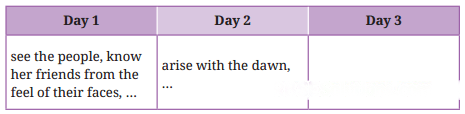
(II) Complete the table given below with what Helen Keller wanted to do on the three days if she had sight.
नीचे दी गई तालिका को इस बात से भरिए कि यदि हेलेन केलर को दृष्टि होती, तो वह तीन दिनों में क्या करना चाहती थीं?
Answer:
[Do it yourselves.]
(III) The author says that you need eyes to be able to ‘see’ the true self of a person. Therefore, she refers to the eye as ‘window of the soul’. How is the narrator able to understand the feelings of a person?
लेखिका का कहना है कि किसी व्यक्ति की असली पहचान को ‘देखने’ के लिए आपको आँखों की जरूरत होती है। इसलिए, वह आँख को ‘आत्मा की खिड़की’ कहती है। लेखिका किसी व्यक्ति की भावनाओं को कैसे समझ पाती है?
Answer:
Helen Keller understands people’s feelings through touch. She uses her fingertips to feel facial outlines and can detect emotions like laughter, sorrow, and other obvious feelings from facial expressions.
हेलेन केलर स्पर्श के माध्यम से लोगों की भावनाओं को समझती हैं। वह अपनी उँगलियों से चेहरे की रूपरेखा महसूस करती हैं और हँसी, दु:ख और अन्य स्पष्ट भावनाओं का पता लगा सकती है।
Three Days to See Questions and Answers Class 7
I. Read the extracts given below and answer the questions that follow.
नीचे दिए गए उद्धरण को पढ़ें और उसके बाद दिए गए सवालों के जवाब दें।
Question 1.
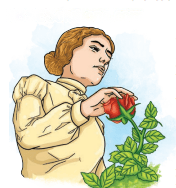
I feel the delicate symmetry of a leaf. I pass my hands lovingly about the smooth skin of a silver birch, or the rough, shaggy bark of a pine. In spring, I touch the branches of trees hopefully in search of a bud, the first sign of awakening Nature after her winter’s sleep. Occasionally, I am very fortunate; I place my hand gently on a small tree and feel the happy quiver of a bird in full song.
(i) What does the ‘delicate symmetry of a leaf’ symbolise?
‘पत्ती की नाजुक समरूपता’ किसकी प्रतीक है?
Answer:
The ‘delicate symmetry of a leaf’ symbolises the perfect balance, beauty, and intricate design found in nature. It represents the harmony and precision of natural creation, highlighting how even the smallest elements of nature possesses remarkable order and elegance.
‘एक पत्ती की नाजुक सममिति’ प्रकृति में पाए जाने वाले पूर्ण संतुलन, सौंदर्य और जटिल संरचना की प्रतीक है। यह प्राकृतिक सृष्टि की सामंजस्यपूर्ण व्यवस्था और सूक्ष्मता को दर्शाती है, और यह उजागर करती है कि प्रकृति के सबसे छोटे तत्त्वों में भी अद्भुत क्रम और सुरुचिपूर्ण सुंदरता निहित होती है।
(ii) List two phrases from the extract that describe the texture of objects in nature. इस उद्धरण से प्रकृति की वस्तुओं की बनावट का वर्णन करने वाले दो वाक्यांश लिखिए।
Answer:
The two phrases that describe the texture of objects in nature are :
- “The smooth skin of a silver birch.”
- “The rough, shaggy bark of a pine.”
(iii) Complete the sentence appropriately. वाक्य को उपयुक्त रूप से पूरा कीजिए।
The phrase ‘awakening Nature after her winter’s sleep’ refers to ………….
Answer:
…………. the arrival of spring, when plants begin to grow again and life returns to nature after the dormant winter period.
(iv) What is the tone of the writer in this extract?
(A) nostalgic
(B) proud
(C) admiring
(D) celebratory
Answer:
(C) admiring
Question 2.
The next day I should arise with the dawn and see the thrilling miracle by which night is transformed into day. I should behold with awe the magnificent panorama of light with which the sun awakens the sleeping earth. This day I should devote to a hasty glimpse of the world, past and present. I should want to see the pageant of man’s progress, and so I should go to the museums.
(i) The word ‘thrilling’ has been used with ‘miracle’.
Which of the following words does not match with the word “thrilling”?
(A) experience
(B) tale
(C) knowledge
(D) adventure
Answer:
(C) knowledge
(ii) Why does the writer refer to the earth as ‘sleeping earth’?
लेखक पृथ्वी को ‘सोती हुई पृथ्वी’ क्यों कहता है?
Answer:
The writer refers to the earth as “sleeping earth” because at night, when it is dark, the earth appears inactive, much like a person sleeping. The sun’s light “awakens” it and brings visibility, warmth, and renewed activity to the world.
लेखिका पृथ्वी को ‘सोती हुई पृथ्वी’ इसलिए कहती है क्योंकि रात में अँधेरा होने पर पृथ्वी निष्किय प्रतीत होती है, जैसे कोई व्यक्ति सो रहा हो। सूर्य का प्रकाश इसे ‘जगा’ देता है और संसार में रोशनी, ऊष्मा तथा नई सक्रियता ले आता है।
(iii) complete the sentence with an appropriate reason.
उपयुक्त कारण देकर वाक्य को पूरा कीजिए।
The writer wishes to dedicate the day to a brief look at the present and past world because …………
Answer:
………… she wants to understand humanity’s journey and progress, and know how far mankind has come and the achievements that have shaped civilization.
(iv) Why does the writer use ‘should’ multiple times in the extract?
लेखिका उद्धरण में ‘should’ शब्द का बार-बार प्रयोग क्यों करती है?
Answer:
The writer uses ‘should’ multiple times to express hypothetical or imagined actions, suggesting that these are the plans or desires for what she would do in a particular situation. It conveys a sense of intention and purpose and indicates what the writer believes would be the most meaningful way to spend that day.
लेखिका ‘should’ शब्द का बार-बार प्रयोग काल्पनिक या संभावित कार्यों को व्यक्त करने के लिए करती है। इससे यह संकेत मिलता है कि ये वे योजनाएँ या इच्छा हैं, जिन्हें वह किसी विशेष स्थिति में करना चाहती है यह लेखिका की भावना और उद्देश्य को दर्शाता है औ संकेत देता है कि वह उस दिन को सबसे अर्थपूर्ण ढंग से कैसे बिताना चाहती है।
II. Answer the Following Questions :

Question 1.
The sense of touch makes up for the loss of sight and hearing. Explain this statement with reference to the text.
स्पर्श की भावना दृष्टि और श्रवण की हानि की भरपाई करती है। पाठ के संदर्भ में इस कथन की व्याख्या कीजिए
Answer:
The author cannot see or hear, so she uses her sense of touch to experience the world. She touches leaves, tree bark, and branches to feel nature. She can even feel a bird singing by touching the tree it sits on. Touch helps her understand what she cannot see or hear.
लेखिका देख या सुन नहीं सकती, इसलिए वह दुनिया को अनुभव करने के लिए स्पर्श का उपयोग करती है। वह पत्तियों, पेड़ की छाल और शाखाओं को छूकर प्रकृति को महसूस करती है। वह पेड़ को छूकर पक्षी के गाने को भी महसूस कर सकती है। स्पर्श उसकी वह समझने में मदद करता है जो वह देख या सुन नहीं सकती।
Question 2.
Why does the author believe that the sense of sight is the most wonderful?
लेखिका क्यों मानती है कि दृष्टि का भाव सबसे अद्भुत है?
Answer:
The author thinks that sight is wonderful because it lets us see the beautiful sunrise, the world around us, and all the progress humans have made. Eyes show us so much beauty and provide us information.
लेखिका सोचती है कि दृष्टि अद्भुत है क्योंकि यह हमें सुंदर सूर्योदय, हमारे आस-पास की दुनिया और मनुष्यों द्वारा की गई समस्त प्रगति को देखने देती है। आँखें हमें बहुत अधिक सुंदरता दिखाती हैं और जानकारी उपलब्ध कराती हैं।
Question 3.
How might the author’s opinion on making the most of our senses guide us to be kinder towards people with special abilities?
हमारी इंद्रियों का अधिकतम उपयोग करने पर लेखिका की राय हमारा विशेष क्षमताओं वाले लोगों के प्रति दयालु बनने के लिए कैसे मार्गदर्शन करती है?
Answer:
The author teaches us to value and use our senses fully. When we realize how precious our senses are, we understand that people who lack certain senses face real challenges. This makes us more understanding, helpful, and kind towards people with disabilities instead of ignoring their needs.
लेखिका हमें सिखाती है कि हम अपनी इंद्रियों को पूरी तरह से महत्त्व दें और उपयोग करें। जब हम समझते हैं कि हमारी इंद्रियाँ कितनी कीमती हैं, तो हम यह समझते हैं कि जिन लोगों में कुछ इंद्रियाँ नहीं होती हैं वे वास्तवकि चुनौतियों का सामना करते हैं। यह हमें विकलांग लोगों के प्रति अधिक समझदार, मददगार और दयालु बनाता है, उनकी जरूरतों को नजरअंदाज करने के बजाय।
Question 4.
What is the significance of imagining the loss of a sense, according to the author?}
लेखिका के अनुसार, किसी इंद्रिय के खो जाने की कल्पना करने का क्या महत्त्व है?
Answer:
If we imagine losing a sense, we will value it more and use it better. It makes us thankful for what we have and helps us enjoy life more fully instead of taking things for granted.
यदि हम किसी इंद्रिय के खोने की कल्पना करें, तो हम इसे अधिक महत्त्व देंगे और इसका बेहतर उपयोग करेंगे। यह हमें जो कुछ भी हमारे पास है उसके लिए आभारी बनाता है और चीजों को हल्के में लेने के बजाय जीवन का अधिक आनद लेने में मदद करता है।
Question 5.
How does the author encourage people to approach their everyday sensory experiences?
लेखिका लोगों को अपने रोजमर्रा के संवेदी अनुभवों के प्रति कैसे दृष्टिकोण अपनाने के लिए प्रोत्साहित करती है?
Answer:
The author wants us to pay attention to everything around us. We should notice the beauty of nature, enjoy what we see, hear, and touch, and live each day as if it’s special. Don’t ignore the small, beautiful things in life.
लेखिका चाहती है कि हम अपने आसपास की हर चीज पर ध्यान दें। हमें प्रकृति की सुंदरता को ध्यान से देखना चाहिए, जो हम देखते,
सुनते और स्पर्श करते हैं उसका आनंद लेना चाहिए और हर दिन को विशेष समझकर जीना चाहिए। जीवन की छोटी, सुंदर चीजों को नजरअंदाज न करें।
Question 6.
What do the author’s choices for the three days tell us about her values and priorities?
तीन दिनों के लिए लेखिका के चुनाव हमें उसके मूल्यों और प्राथमिकताओं के बारे में क्या बताते हैं?
Answer:
The author values nature, learning, and human progress. She wants to see beautiful things like sunrise learn about history in museums, and understand how humans have grown. This shows that she loves beauty, knowledge, and meaningful experiences.
लेखिका प्रकृति, सीखने और मानव प्रगति को महत्त्व देती है। वह सूर्योदय जैसी सुंदर चीजें देखना चाहती है, संग्रहालयों में इतिहास के बारे में सीखना चाहती है, और समझना चाहती है कि मनुष्यों ने कैसे वृद्धि की है। यह दर्शाता है कि वह सुंदरता, ज्ञान और सार्थक अनुभवों से प्यार करती है।
Let us Learn:
I. Complete the following table with sensory words from the text in Column 2 for the five senses in Column 1. Add new words in Column 3.
नीचे दी गई सारणी को पूरा कीजिए। स्तंभ-1 में दी गई पाँचों इंद्रियों के लिए, स्तंभ 2 में पाठ से लिए गए संवेदी शब्द लिखिए। स्तंभ 3 में नए शब्द जोड़िए।
Answer:
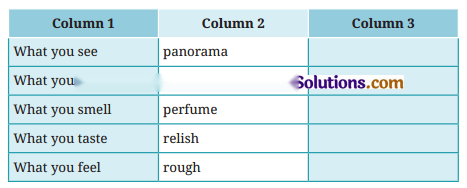
Column 1 | Column 2 | Column 3 |
What you see | panorama | Mural, vibrant, scenery, radiant, overhear |
What you hear | music | harmonic, echoing, perceive |
What you smell | perfume | Aroma, fragrant, smell, zesty |
What you taste | relish | Flavour, sweet, delicious, tangy |
What you feel | rough | Coarse, silky, weird, prickly |
II. Read the following sentences from the text and underline the verbs.
निम्नलिखित वाक्यों को पाठ से पढ़िए और क्रियाओं (verbs) को रेखांकित कीजिए।
Answer:
- Ishould dividethe period into three parts.
- On the first day,I should wantto see…
- The next day Ishould arisewith the dawn…
- Ishould beholdwith awe…
III. Identify the modal verbs in the following sentences. Choose the functions they express from those given in the box below.
निम्नलिखित वाक्यों में मॉडल क्रियाओं की पहचान कीजिए। नीचे दिए गए बॉक्स में से वे कौनसा कार्य व्यक्त करती हैं, यह चुनिए।
possibility, necessity, polite request, ability, moral , obligation
Question 1.
You can learn a lot from this experience.
Answer:
Modal Verb-can
Function-ability
Question 2.
They might arrive late due to traffic.
Answer:
Modal Verb-might
Function-possibility
Question 3.
She must finish her homework before dinner.
Answer:
Modal Verb-must
Function-necessity
Question 4.
They ought to apologise for their mistake.
Answer:
Modal Verb-ought to
Function-moral obligation
Question 5.
He would like to have some lassi, please.
Answer:
Modal Verb-would
Function-polite request
Let us Write (आइए लिखें) –
Question 1.
Write a descriptive paragraph describing a place that you visited recently.
Answer:
A Visit to the Beach
Last Sunday, I visited Juhu Beach in Mumbai, and it was like stepping into a completely different world. The golden sand stretched endlessly, sparkling under the bright sunshine like tiny diamonds scattered everywhere. The salty smell of the sea filled my nose as cool waves crashed against the shore with a soothing “whoosh-whoosh” sound.
I could taste the tangy sea breeze on my lips while walking barefoot on the warm, soft sand that tickled my feet. Colorful kites danced in the sky like happy butterflies, and children’s laughter echoed all around. Street vendors called out loudly, selling bhelpuri and pav bhaji that smelled delicious. The sunset painted the sky in shades of orange, pink, and purple, making everything look magical.
The beach truly came alive with joy and energy. I felt so peaceful and happy there that I didn’t want to leave. If you ever get a chance to visit a beach, go during sunset – it’s an experience you will never forget. The beauty of nature and the feeling of freedom at the beach is something everyone should experience at least once.
Seen Passages
Read the following passages carefully and answer the questions that follow :
Passage 1.
I, who cannot see, find hundreds of things to interest me through mere touch. I feel the delicate symmetry of a leaf. I pass my hands lovingly about the smooth skin of a silver birch, or the rough, shaggy bark of a pine. In spring, I touch the branches of trees hopefully in search of a bud, the first sign of awakening Nature after her winter’s sleep.
Question 1.
What does the author find through mere touch?
(a) Hundreds of boring things
(b) Hundreds of interesting things
(c) Nothing at all
(d) Only leaves
Answer:
(b) Hundreds of interesting things
Question 2.
What does the author feel when touching a leaf?
Answer:
The author feels the delicate symmetry of a leaf.
Question 3.
What are the two types of tree bark mentioned in the passage?
Answer:
The smooth skin of a silver birch and the rough, shaggy bark of a pine.
Question 4.
What is the first sign of awakening Nature after winter?
Answer:
A bud is the first sign of awakening Nature after winter.
Question 5.
Write the plural form of ‘branch’ from the passage.
Answer:
Branches
Question 6.
Find the word from the passage which means : ‘uneven or not smooth’.
Answer:
Rough
Passage 2.
On the first day, I should want to see the people whose kindness and companionship have made my life worth living. I do not know what it is to see into the heart of a friend through that ‘window of the soul’, the eye. I can only ‘see’ through my fingertips the outline of a face. I can detect laughter, sorrow and other obvious emotions. I know my friends from the feel of their faces.
Question 1.
What does the author call the eye?
(a) Mirror of the heart
(b) Window of the soul
(c) Door of emotions
(d) Light of life
Answer:
(b) Window of the soul
Question 2.
Whom does the author want to see on the first day?
Answer:
The author wants to see the people whose kindness and companionship have made her life worth living.
Question 3.
How does the author recognize her friends?
Answer:
The author recognizes her friends from the feel of their faces.
Question 4.
What emotions can the author detect through touch?
Answer:
The author can detect laughter, sorrow, and other obvious emotions.
Question 5.
Write the plural form of ’emotion’ from the passage.
Answer:
Emotions
Question 6.
Find the word from the passage which means : ‘sadness or grief’.
Answer:
Sorrow
Passage 3.
I who am blind can give one hint to those who can see: use your eyes as if tomorrow you would be stricken blind. And the same method can be applied to your other senses. Hear the music of voice, the song of a bird, the mighty strains of an orchestra, as if you would be stricken deaf tomorrow. Touch each object as if tomorrow your tactile sense would fail. Smell the perfume of flowers, taste with relish each morsel, as if tomorrow you could never smell and taste again.
Question 1.
What hint does the author give to those who can see?
(a) Close your eyes sometimes
(b) Use your eyes as if you would be blind tomorrow
(c) Don’t take your eyes for granted
(d) See everything carefully
Answer:
(b) Use your eyes as if you would be blind tomorrow
Question 2.
How should one listen to music according to the author?
Answer:
One should listen to music as if one would be stricken deaf tomorrow.
Question 3.
What should one do with flowers?
Answer:
One should smell the perfume of flowers.
Question 4.
What does the author mean by “tactile sense”?
Answer:
Tactile sense means the sense of touch.
Question 5.
Write the plural form of ‘sense’ from the passage.
Answer:
Senses
Question 6.
Find the word from the passage which means: ‘sweet smell’.
Answer:
Perfume
Three Days to See Summary Hindi Translation
I, who cannot see, ……………………. their faces. (Page 29)
कठिन शब्दार्थ:
- Delicate (डेलिकट्) = नाजुक, सूक्ष्म, कोमल।
- symmetry (सिमद्रि) = सममिति, संतुलन, समरूपता।
- Birch (बच्) = भुर्ज, भोज (वृक्ष)।
- shaggy (शैगि) = रूखा, खुरदरा।
- bark (बाक्) = पेड़ की छाल।
- awakening ( अ ‘वेकनिङ ) = जागृति।
- fortunate (फ़ॉचनट्) = भाग्यशाली।
- quiver (क्वि (र)) = कंपन, थरथराहट, सिहरन।
- longing (लॉन्गिंग) = लालसा, तीव्र इच्छा।
- revealed (रिवील्ड्) = प्रकट किया।
- companionship (कम् ‘पैनिअनशिप्) = संगति, मित्रता।
- fingertips (फ़िङ्गटिप्स्) = उँगलियों के सिरे।
- outline (आउट्लाइन्) = रूपरेखा।
- detect (डिटेक्ट्) = पता लगाना, भांपना।
- emotions (इमोशन्स) = भावनाएँ, संवेग।
हिन्दी अनुवाद:
मैं, जो देख नहीं सकती, केवल स्पर्श के माध्यम से सैकड़ों चीजें पाती हूँ जो मुझे रुचिकर लगती हैं। मैं एक पत्ती की नाजुक समरूपता को महसूस करती हूँ। मैं अपने हाथों को चाँदी के भोजपत्र की चिकनी त्वचा या देवदार की खुरदरी, झबरीली छाल पर प्रेमपूर्वक फेरती हूँ। वसंत में, मैं आशा से भरी हुई पेड़ों की शाखाओं को कली की खोज में छूती हूँ, जो प्रकृति की शीतकालीन निद्रा के बाद जागृति का पहला संकेत है। कभी-कभी, में बहुत भाग्यशाली होती हूँ; मैं अपना हाथ धीरे से एक छोटे पेड़ पर रखती हूँ और पूरे गाने में डूबे एक पक्षी की प्रसम्न थरथराहट को महसूस करती हूँ।
कभी-कभी, मेरा हृदय इन सभी चीजों को देखने की लालसा से पुकार उठता है। यदि मैं केवल स्पर्श से इतना आनंद प्राप कर सकती हूँ, तो दृष्टि द्वारा कितनी अधिक सुंदरता प्रकट होनी चाहिए और मैंने कल्पना की है कि यदि मुझे अपनी आँखों का उपयोग करने का अवसर मिले, मान लीजिए केवल तीन दिनों के लिए, तो मैं सबसे अधिक क्या देखना चाहूँगी?
मुझे इस अवधि को तीन भागों में विभाजित करना चाहिए। पहले दिन मैं उन लोगों को देखना चाहूँगी जिनकी दयालुता और साहचर्य ने मेरे जीवन को जीने योग्य बनाया है। मुझे नहीं पता कि ‘आत्मा की खिड़की’, आँख के माध्यम से किसी मित्र के हृदय में झाँकना क्या होता है?
मैं केवल अपनी उँगलियों के सिरों से किसी चेहरे की रूपरेखा को ‘देख’ सकती हूँ। मैं हँसी, दुख और अन्य स्पष्ट भावनाओं का पता लगा सकती हूँ। मैं मित्रों को उनके चेहरों के स्पर्श से जानती हूँ।
The next day ………………………………………….. I am compassionate. (Page 30)

कठिन शब्दार्थ:
- dawn (डॉन्) = भोर, प्रभात।
- thrilling (थ्रिलिड्) = रोमांचक।
- miracle (मिरक्ल्) = चमत्कार, अद्भुत घटना ।
- transformed (ट्रांसफॉम्ड) = रूपांतरित, परिवर्तित।
- behold (बिहोल्ड्) = देखना, निहारना।
- awe (ऑ) = विस्मय, भयमिश्रित आदर।
- magnificent ( मैग् निफ़िस्ट्) = भव्य, शानदार।
- panorama (पैनरामा) = विहंगम दृश्य।
- awakens (अवेकन्स्) = जाग्रत करता है।
- devote (डि’वोट्) = समर्पित करना, न्यौछावर करना।
- hasty (हेस्टि) = शीघ्रता से किया गया, त्वरित।
- glimpse (ग्लिम्स) = झलक।
- pageant ( पैजन्ट् ) = झांकी, शोभायात्रा।
- condensed (कन् ‘डेन्स्ड ) = संक्षिप्त, सारगर्भित।
- gigantic (जाइ’गैन्टिक्) = विशाल, विराट।
- carcasses (काकसिज़) = शव, मृत शरीर।
- mastodons (मैस्टडॉन्स) = मैस्टोडन (विलुप्त हाथी जैसा जानवर)।
- roamed (रोम्ड्) = विचरण किया, भटका।
- stature (स्टैचर) = कद, शारीरिक ऊँचाई।
- conquer (कॉन्कर) = जीतना, विजय प्राप्त करना।
- greet (ग्रीट) = अभिवादन करना, स्वागत।
- anxious (ऐंक्शस) = उत्सुक, व्यग्र।
- discover (डिस्कवर) = खोजना, पता लगाना।
- delights (डिलाइट्स) = आनंद, प्रसन्नता।
- revelations (रेव ‘लेश्न्स्) = प्रकटीकरण।
- amid (अ ‘मिड् ) = के मध्य।
- haunts (हॉन्ट्स) = अड्डे, अक्सर जाने वाले स्थान।
- destination (डेस्टि नेश्न्) = गंतव्य स्थान, मंजिल।
- determination (डिटमिनेश्न) = दृढ़ निश्चय।
हिन्दी अनुवाद:
अगले दिन मुझे भोर के साथ उठना चाहिए और उस रोमांचक चमत्कार को देखना चाहिए जिसके द्वारा रात-दिन में रूपांतरित हो जाती है। मुझे विस्मय के साथ प्रकाश के उस भव्य विहंगम दृश्य को निहारना चाहिए जिससे सूर्य सोती हुई पृथ्वी को जगाता है। इस दिन को मुझे विश्व की, अतीत और वर्तमान की, एक त्वरित झलक के लिए समर्पित करना चाहिए।
मुझे मनुष्य की प्रगति का भव्य प्रदर्शन देखना चाहिए और इसलिए मुझे संग्रहालयों में जाना चाहिए। वहाँ मेरी आँखें पृथ्वी का संघनित इतिहास देखेंगी-पशु और मनुष्य की प्रजातियाँ अपने मूल परिवेश में चित्रित; डायनासोर और मैस्टोडन के विशाल कंकाल जो मनुष्य के प्रकट होने से पहले पृथ्वी पर विचरण करते थे, अपने छोटे कद और शक्तिशाली मस्तिष्क के साथ, पशु साम्राज्य को जीतने के लिए।
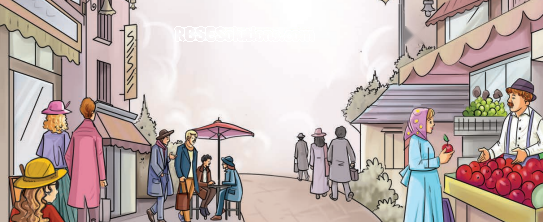
अगली सुबह, मुझे फिर से भोर का अभिवादन करना चाहिए, नए आनंद, सौंदर्य के नए प्रकटीकरण की खोज के लिए उत्सुक। आज, यह तीसरा दिन, मैं साधारण कामकाजी दुनिया में बिताऊँगी, जीवन के व्यवसाय में लगे लोगों के पसंदीदा स्थानों के मध्य। शहर मेरी मंजिल बन जाता है। सबसे पहले, मैं एक व्यस्त कोने पर खड़ी होती हुँ, केवल लोगों को देखते हुए, उन्हें देखकर उनके दैनिक जीवन के बारे में कुछ समझने का प्रयास करते हुए। मैं मुस्कानें देखती हूँ, और मैं प्रसन्न हूँ। मैं गंभीर दृढ़ संकल्प देखती हूँ, और मुझे गर्व होता है। मैं पीड़ा देखती हूँ, और मैं करुणामय हो जाती हूँ।
At midnight, permanent night ……………………. delightful. (Page 31)
कठिन शब्दार्थ:
- permanent (पमनन्ट्) = स्थायी, सदा के लिए।
- decended (डिसेन्डिड्) = उतरा, नीचे आया।
- realise (रिअलाइज़्) = अनुभव करना, समझना, अहसास होना।
- unseen (अनसीन) = अनदेखा।
- hint (हिन्ट्)= संकेत, सुझाव।
- stricken (स्ट्रिकन्) = पीड़ित, ग्रस्त।
- method (मेथड़) = तरीका, विधि।
- applied (अप्लाइड) = प्रयुक्त, लागू किया गया।
- senses (सेन्सिज़) = इंद्रियाँ, संवेदनाएँ।
- mighty (माइटी) = शक्तिशाली, विशाल।
- strains (स्ट्रेन्स) = धुनें, स्वर।
- orchestra (ऑकिस्ट्रा) = वाद्यवृंद।
- deaf (डेफ्) = बहरा।
- tactile (टैक्टाइल) = स्पर्श सम्बंधी।
- perfume (पफ़्यूम्) = सुगंध, खुशबू।
- morsel (मॉस्ल) = भोजन का कौर, ग्रास।
- glory (ग्लॉरि) = आनंद लेना, गर्व करना।
- facets (फ़ैसिट्स्) = पक्ष, पहलू ।
- pleasure (प्लेश(₹)) = आनंद, सुख।
- reveals (रिवील्स्) = प्रकट करता है।
- several (सेव्रल्) = अनेक, कई।
- delightful (डिलाइटफुल) = आनंददायक।
हिन्दी अनुवाद:
आधी रात को, स्थायी रात्रि मुझ पर फिर से छा जाएगी। स्वाभाविक रूप से उन तीन छोटे दिनों में मुझे वह सब नहीं दिख पाएगा जो मैं देखना चाहती हूँ। केवल जब अंधकार फिर से मुझ पर उतर आएगा, मुझे यह अहसास होगा कि मैंने कितना कुछ अनदेखा छोड़ दिया है।
मैं जो अंधी हुँ, उन लोगों को एक संकेत दे सकती हूँ जो देख सकते हैं : अपनी आँखों का उपयोग ऐसे करें मानो कल आप अंधे हो जाएँगे। और यही विधि आपकी अन्य इंद्रियों पर भी लागू की जा सकती है। आवाज़ का संगीत, पक्षी का गीत, वाद्यवृंद की शक्तिशाली धुनें सुनिए, मानो कल आप बहरे हो जाएँगे। प्रत्येक वस्तु को ऐसे छुएँ मानो कल आपकी स्पर्श इंद्रिय समास हो जाएगी। फूलों की सुगंध लें, प्रत्येक ग्रास का स्वाद लेकर आनंद उठाएँ, मानो कल आप फिर कभी सूँघ और स्वाद नहीं ले पाएँगे।
प्रत्येक इंद्रिय का भरपूर उपयोग करें; आनंद और साँदर्य के सभी पहलुओं में गर्व करें, जो संपर्क के विभिन्न माध्यमों से विश्व आपके समक्ष प्रकट करता है, जो प्रकृति प्रदान करती है। लेकिन सभी इंद्रियों में से, मुझे विश्वास है कि दृष्टि सबसे अधिक आनंददायक होनी चाहिए।