Animals Birds and Dr Dolittle Question Answer Summary Class 7 English Poorvi Chapter 4
Practicing RBSEClass 7 English Poorvi Solutionsand Class 7 English Chapter 4 Animals Birds and Dr Dolittle Question Answer Summary will help you achieve better results in your studies.
Animals Birds and Dr Dolittle Class 7 Question Answer
Class 7 English Animals Birds and Dr Dolittle Question Answer
Class 7 English Chapter 4 Question Answer
Let us discuss ( आइये चर्चा करें ) (Page 46)
I. Complete the following sentence by selecting a suitable reason.
The Cat’s-food-Man suggests to Doctor Dolittle that he should become an animal doctor because he believes that Dolittle ………….
1. earns less fee by treating human patients
2. enjoys the company of animals as they speak less
3. dislikes spending time with human patients
4. knows more about animals than the local veterinarians
Answer:
4. knows more about animals than the local veterinarians
II. Fill in the blanks by choosing the suitable option given in the brackets.
Doctor Dolittle reacts to Polynesia’s information about animal languages with both excitement and ………… (certainty/curiosity). He rushes to ………… (write/memorise) the bird words she provides and is interested in learning more.
Answer:
curiosity, write
III. Do you think Doctor Dolittle would be famous as an animal doctor? If yes, why? If not, why not?
क्या आपको लगता है कि डॉक्टर डूलिटल एक पशु चिकित्सक के रूप में प्रसिद्ध होंगे? यदि हाँ, तो क्यों? यदि नहीं तो क्यों नहीं?
Answer:
“In my opinion, Dr. Dolittle would be famous as a doctor of animals. The reason behind it is that he understood animals and birds well. After learning the language of animals. he would be able to treat them easily. As birds flew and travel all over the world, they would spread this news across the world. In this way birds and animals would come to him from all nooks and corners to get themselves treated”.
“मेरी राय में, डों. हुलिटल जानकरों के डॉक्टर के रूप में प्रसिद्ध होंगे। इसके पीछे का कारण यह है कि वे जानवरों और पक्षियों को अच्छी तरह समझते थे। जानवरों की भाषा सीखने के बाद, वे उनका इलाज आसानी से कर सकेंगे। चूकि पक्षी उड़ते हैं और पूरी दुनिया में घूमते हैं, इसलिए वे इस खबर को दुनिया भर में फैला देंगे। इस प्रकार, पक्षी और जानवर अपना इलाज कराने के लिए दुनिया के कोने-कोने से उनके पास आएंगे।”
Let us discuss ( आओ चर्चा करें ) (Pages 49-50)
I. What became a common sight in Puddleby after Doctor Dolittle started treating animals?
1. Humans talking to farm animals
2. Farm animals wearing glasses
3. Farm animals learning bird language
4. Birds riding atop farm animals
Answer:
2. Farm animals wearing glasses
II. What challenges do you think Doctor Dolittle might face if more and more animals come to him for help?
यदि अधिक से अधिक जानवर डॉक्टर डूलिटल के पास मदद के लिए आएँ तो आपको क्या लगता है कि उन्हें किन चुनौतियों का सामना करना पड़ सकता है?
Answer:
Doctor Dolittle might face challenges like lack of time, overcrowding in his garden, shortage of money for his medicines, difficulty managing different species, and handling emergency cases simultaneosly.
डॉक्टर डूलिटल को समय की कमी, बगीचे में भीड़भाड़, दवाओं के लिए धन की कमी, विभित्र प्रजातियों का प्रबंधन और आपातकालीन मामलों को एक साथ संभालने जैसी चुनौतियों का सामना करना पड़ सकता है।
Question 1.
How might he overcome these challenges to ensure that he provides good treatment?
वह इन चुनौतियों को कैसे पार कर सकता है ताकि वह अच्छा इलाज प्रदान कर सके?
Answer:
He could train assistants to help, create a proper schedule for appointments, charge small fees for treatment. expand his facilities and organize animals by the severity of their conditions to treat emergencies first.
वह मदद के लिए सहायकों को प्रशिक्षित कर सकता है, नियुक्तियों के लिए उचित समय-सारणी बना सकता है, इलाज के लिए छोटे शुल्क ले सकता है, अपनी सुविधाओं का विस्तार कर सकता है, और आपात स्थितियों को पहले संभालने के लिए जानवरों को उनकी स्थिति की गंभीरता के अनुसार व्यवस्थित कर सकता है।
III. Arrange the following events in correct order according to the story. Two have been done for you. Share your answers with your classmates and the teacher.
निम्नलिखित घटनाओं को कहानी के अनुसार सही क्रम में व्यवस्थित करें। दो आपके लिए पहले से कर दिए गए हैं। अपने उत्तर अपने सहपाठियों और शिक्षक के साथ साझा करें।
Answer:
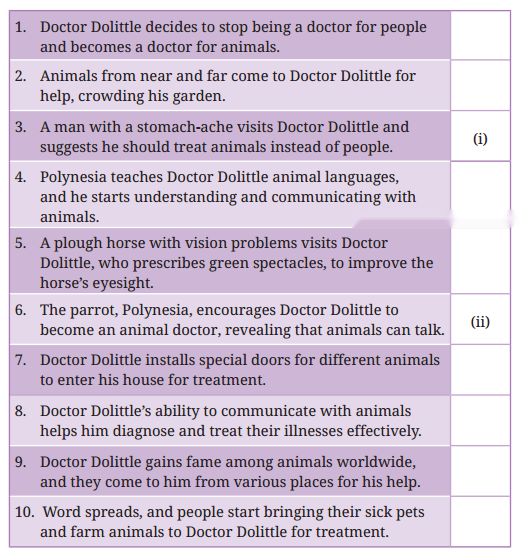
1. Doctor Dolittle decides to stop being a doctor for people and becomes a doctor for animals. | (iv) |
2. Animals from near and far come to Doctor Dolittle for help, crowding his garden. | (viii) |
3. A man with a stomach-ache visits Doctor Dolittle and suggests he should treat animals instead of people. | (i) |
4. Polynesia teaches Doctor Dolittle animal languages, and he starts understanding and communicating with animals. | (iii) |
5. A plough horse with vision problems visits Doctor Dolittle, who prescribes green spectacles, to improve the horse’s eyesight. | (vi) |
6. The parrot, Polynesia, encourages Doctor Dolittle to become an animal doctor, revealing that animals can talk. | (ii) |
7. Doctor Dolittle installs special doors for different animals to enter his house for treatment. | (ix) |
8. Doctor Dolittle’s ability to communicate with animals helps him diagnose and treat their illnesses effectively. | (vii) |
9. Doctor Dolittle gains fame among animals worldwide, and they come to him from various places for his help. | (x) |
10. Word spreads, and people start bringing their sick pets and farm animals to Doctor Dolittle for treatment. | (v) |
Animals Birds and Dr Dolittle Questions and Answers Class 7
I. Read the extracts given below and answer the questions that follow.
आगे दिए गए गद्यांशों को पढ़िए और उनके बाद आने वाले प्रश्नों के उत्तर दीजिए।
1. “If I say, ‘Polly wants a cracker’, you understand me. But hear this: Ka-ka oi-ee, fee-fee?”
“Good Gracious!” cried the Doctor. “What does that mean?”
“That means, ‘Is the porridge hot yet?’-in bird language.”
“My! You don’t say so!” said the Doctor. “You never talked that way to me before.”
“What would have been the good?” said
Polynesia, dusting some cracker crumbs off her left wing.
“You wouldn’t have understood me if I had.”
(i) Complete the sentence by choosing the correct option.
In the line, “Good Gracious!” cried the Doctor, the expression ‘Good Gracious’ can be replaced by ……………!
(A) bravo
(B) gosh
(C) alas
(D) hurray
Answer:
(i) (B) gosh
(ii) Why had Polynesia never used bird language with the Doctor earlier?
पॉलीनेशिया ने पहले डॉक्टर से पक्षियों की भाषा में बात क्यों नहीं की थी?
Answer:
Polynesia had never used bird language with the Doctor earlier because she was well acquainted with the fact that the Doctor would not understand her language if she spoke.
पॉलीनेशिया ने पहले डॉक्टर से पक्षियों की भाषा में इसलिए बात नहीं की थी क्योंकि वह इस तथ्य से भलीभाँति परिचित थी कि यदि वह अपनी भाषा में बोलेगी तो डॉक्टर उसे समझ नहीं पाएँगे।
(iii) Identify whether the following statement is true or false.
Polynesia had been munching on a food item while talking to Doctor Dolittle.
Answer:
False
(iv) How did Doctor Dolittle feel according to the extract?
(A) anxious
(B) surprised
(C) angry
(D) relaxed
Answer:
(B) surprised
Question 2.
“I would like a pair like yours,” said the horse-“only green. They’ll keep the Sun out of my eyes while I’m ploughing the field.” “Certainly,” said the Doctor, “Green ones you shall have”
“You know, the trouble is, Sir,” said the plough horse as the Doctor opened the front door to let him out-“the trouble is that anybody thinks he can doctor animals-just because the animals don’t complain. As a matter of fact, it takes a much cleverer man to be a really good animal doctor than it does to be a good people’s doctor.”
(i) Choose a word from the extract to complete the analogy.
digging: flower bed :: …………: field
Answer:
ploughing
(ii) Choose the correct word to complete the sentence.
Doctor Dolittle’s attitude in the extract is …………..
(A) respectful
(B) sentimental
(C) understanding
(D) careful
Answer:
(C) understanding
(iii) Complete the sentence with an appropriate reason.
Based on the extract, we can conclude that doctors take animals for granted because …………
Answer:
………………… animals do not complain or express their pain openly.
(iv) Do you agree with the concluding sentence of the extract? Why/why not?
क्या आप गद्यांश के अंतिम वाक्य से सहमत हैं? क्यों/क्यों नहीं?
Answer:
Yes, I agree. Being a good animal doctor requires greater understanding and intelligence because animals can not speak about their problems.
हाँ, मैं सहमत हूँ। एक अच्छा पशु चिकित्सक बनने के लिए अधिक समझ और बुद्धिमत्ता की आवश्यकता होती है क्योंकि जानवर अपनी समस्याओं के बारे में बोल नहीं सकते।
II. Answer the following questions.
Question 1.
How can we say that Polynesia was a good trainer of animal language?
हम कैसे कह सकते हैं कि पॉलीनेशिया जानवरों की भाषा की एक अच्छी प्रशिक्षक थी?
Answer:
Polynesia was a good trainer because she patiently taught Doctor Dolittle bird language the whole afternoon. She explained that animals talk using their ears, tails, feet, and nose, not just their mouths. She gave clear examples to help the Doctor understand easily.
पॉलीनेशिया एक अच्छी प्रशिक्षक थी क्योंकि उसने पूरी दोपहर धैर्य से डॉक्टर डूलिटल को पक्षियों की भाषा सिखाई। उसने समझाया कि जानवर केवल मुँह से नहीं बल्कि अपने कान, पूँछ, पैर और नाक से भी बात करते हैं। उसने डॉक्टर को आसानी से समझने के लिए स्पष्ट उदाहरण दिए।
Question 2.
Explain how Doctor Dolittle gave equal and individual attention to each animal who came to him for treatment.
समझाइए कि डॉक्टर डूलिटल ने इलाज के लिए आने वाले प्रत्येक जानवर पर समान और व्यक्तिगत ध्यान कैसे दिया?
Answer:
Dr. Dolittle made separate doors for different animals like horses, cows, and sheap. He even made a tiny tunnel for mice. Each animal waited in rows in their own area. He talked to every animal in their own language to understand their problem and treated each one carefully.
डॉक्टर डूलिटल ने विभिन्न जानवरों जैसे—घोड़े, गाय और भेड़ के लिए अलग-अलग दरवाजे बनाए। उन्होंने चूहों के लिए एक छोटी सुरंग भी बनाई। हर जानवर अपने क्षेत्र में पंक्तियों में प्रतीक्षा करता था। उन्होंने हर जानवर से उनकी अपनी भाषा में बात की ताकि उनकी समस्या समझ सके और हर एक का सावधानी से इलाज किया।
Question 3.
How does Doctor Dolittle’s readiness to follow the parrot’s advice highlight the importance of listening to different viewpoints?
डॉक्टर डूलिटल की तोते की सलाह मानने की तत्परता विभित्र दृष्टिकोणों को सुनने के महत्त्व को कैसे उजागर करती है?
Answer:
Doctor Dolittle listened to Polynesia’s advice and became an animal doctor, which made him successful and happy. This shows that listening to other’s ideas, even if they seem different, can help us make better decisions and discover new opportunities in life.
डॉक्टर डूलिटल ने पॉलीनेशिया की सलाह सुनी और जानवरों के डॉक्टर बन गए, जिससे वे सफल और खुश हुए। यह दिखाता है कि दूसरों के विचारों को सुनना, भले ही वे अलग लगें, हमें बेहतर निर्णय लेने और जीवन में नए अवसरों की खोज करने में मदद कर सकता है।
Question 4.
Which qualities of Doctor Dolittle made him famous among the animals? Explain with evidence from the text.
डॉक्टर डूलिटल के कौनसे गुणों ने उन्हें जानवरों के मध्य प्रसिद्ध बनाया? पाठ से प्रमाण देकर समझाइए।
Answer:
Doctor Dolittle became famous because of his kindness, patience, and ability to understand animal language. He listened carefully to animals problems in their own language. For example, when the plough horse told him about needing spectacles, he immediately understood and got green glasses for him. He gave equal attention to all animals, making separate doors for different species and treating everyone with care and respect.
डॉक्टर डूलिटल अपनी दयालुता, धैर्य और जानवरों की भाषा समझने की क्षमता के कारण प्रसिद्ध हुए। उन्होंने हर जानवर की समस्या को उनकी अपनी भाषा में ध्यान से सुना। उदाहरण के लिए, जब हल खींचने वाले घोड़े ने उन्हें चश्मे की जरूरत के बारे में बताया, तो उन्होंने तुरंत समझ लिया और उसके लिए हरे रंग के चश्मे लाए। उन्होंने सभी जानवरों पर समान ध्यान दिया, विभिन्न प्रजातियों के लिए अलग दरवाजे बनाए और सभी के साथ देखभाल और सम्मान से व्यवहार किया।
Question 5.
What changes do you think would happen in the world if people suddenly gained the ability like Doctor Dolittle, to understand and communicate with animals?
आपको क्या लगता है कि दुनिया में क्या बदलाव होंगे यदि लोग अचानक डॉक्टर डूलिटल की तरह जानवरों को समझने और उनसे बात करने की क्षमता प्राप्त कर लें?
Answer:
If people could understand animals, they would know their feelings and problems, treat them with kindness, protect wildlife, reduce cruelty and create a more caring and peaceful world for all.
यदि लोग जानवरों की बात समझ सकते, तो वे उनकी भावनाएँ और समस्याएँ जान पाते, उनके साथ दया से पेश आते, वन्यजीवों की रक्षा करते और एक अधिक संवेदनशील और शांतिपूर्ण दुनिया बना पाते।
Let us Learn ( आओ सीखें )
I. Complete the following table correctly by choosing words from the box given below. An example has been done for you.
नीचे दी गई तालिका को नीचे दिए गए बॉक्स में से शब्द चुनकर सही ढंग से पूरा कीजिए। एक उदाहरण आपके लिए कर दिया गया है।
Answer:

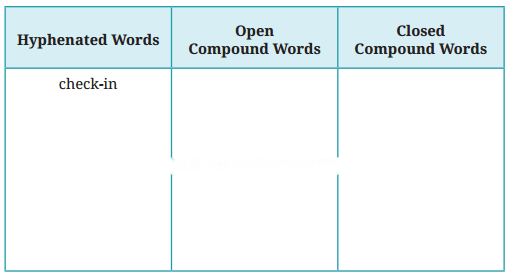
Hyphenated Words | Open Compound Words | Closed Compound Words |
check-in,well-bred | sailor song, harvest mice, plough horse | teatime,windowsill |
II. Create compound words from the table given below.
आगे दी गई तालिका से संयुक्त शब्द बनाइए।
Answer:
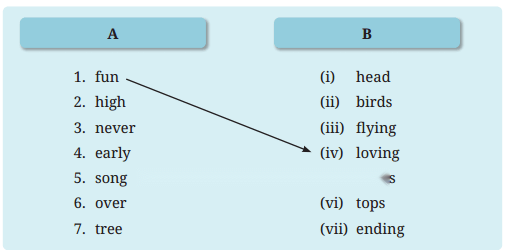
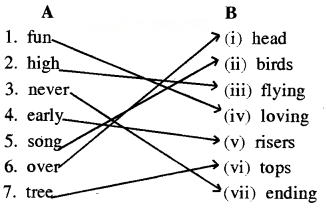
Now, complete the paragraph with suitable compound words from the table. An example has been done for you.
अब तालिका से उपयुक्त संयुक्त शब्दों का प्रयोग करते हुए अनुच्छेद पूरा कीजिए। एक उदाहरण आपके लिए कर दिया गया है।
Answer:
After being treated by Doctor Dolittle, the A.fun-lovingdolphins danced playfully in his sanctuary. The B.never endingchatter of monkeys echoed through the C.tree-tops, their ailments cured. D.High flyingeagles soared gracefully E.overheadtheir health restored. F.Song birdsamong the G. Early risers chirped joyfully from the branches. All creatures were happy with Doctor Dolittle’s care.
III. Underline the names of animals that are hidden in the sentences given below. Clues are given within the brackets. An example has been done for you.
नीचे दिए गए वाक्यों में छिपे हुए जानवरों के नामों को रेखांकित कीजिए। संकेत (Clues) कोष्ठकों में दिए गए हैं। एक उदाहरण आपके लिए कर दिया गया है।
Question 1.
Dr. Dolittle was eating oatmeal for his breakfast. (a farm animal)
Answer:
Goat
Question 2.
Old ladies began to bring him their pets. (an insect)
Answer:
ant
Question 3.
The author sees the connection between humans and animals. (a farm animal)
Answer:
horse
Question 4.
The three baby dinosaurs are from ice age. (field animal)
Answer:
mice
Question 5.
The patients who came late didn’t know where to go. (ship of the desert)
Answer:
camel
IV. Read the sentences below and identify the palindrome words and sentences.
नीचे दिए गए वाक्यों को पढ़िए और पैलिन्ड्रोम शब्दों तथा वाक्यों की पहचान कीजिए।
Answer:
- Step on no pets.
- Naman saw arace carat the show.
- Nitinspeaks inMalayalam.
- The engineer used arotatorto check the surface level.
- The pilot relied on theradarto navigate safely.
- Eva can I see bees in a cave?
Now, create your own palindrome and share it with your classmates and the teacher.
अब अपना स्वयं का पैलिन्ड्रोम बनाइए और उसे अपने सहपाठियों तथा शिक्षक के साथ साझा कीजिए।
Answer:
- madam
- rotor
- civic – refer
- Was it a car or a cat I saw?
- Able was I ere I saw Elba
- Evil is a name of a foeman, as I live.
- Evil rats on no star live.
- Never odd or even.
- Eva, can I see bees in a cave?
- Evil rats on no star live.
- Yo, banana boy!
- A dog! A panic in a pagoda.
- Sir, I demand, I am a maid named Iris.
- Too hot to hoot.
V. Underline the verbs and identify the tense form in the following sentences from the text.
पाठ से दिए गए निम्नलिखित वाक्यों में क्रियाओं को रेखांकित कीजिए और उनके काल (Tense) की पहचान कीजिए।
Answer:
- He isaskingyou a question. (Present Continuous)
- Oh, thereareplenty of animal doctors. (Simple present)
- I am goingblind in one eye. (Present continuous)
- …. the troubleisthat anybody thinks he can doctor animals. (Simple present)
VI. Fill in the blanks using the correct form of verbs (present perfect) given within brackets.
Answer:
1. He is asking you a question. (Present Continuous)
2. Oh, there are plenty of animal doctors. (Simple present)
3. I am going blind in one eye. (Present continuous)
4. …. the trouble is that anybody thinks he can doctor animals. (Simple present)
VI. Fill in the blanks using the correct form of verbs (present perfect) given within brackets.
कोष्ठकों में दी गई क्रियाओं के उचित रूप का प्रयोग करते हुए रिक्त स्थान भरिए।
Answer:
Since becoming an animal doctor, Doctor Dolittle 1.has learnt(learn) to communicate with all animals and birds. He 2.has treated(treat) countless farm animals and pets with care. The parrot, Polynesia, 3.has taught(teach) him bird- language, and he 4.has written(write) books about his adventures. Many people 5.have brought(bring) their sick animals to his door. Over the years, Dolittle 6.has become(become) renowned worldwide for his unique abilities.
Seen Passages
Read the following passages carefully and answer the questions that follow :
Passage-1
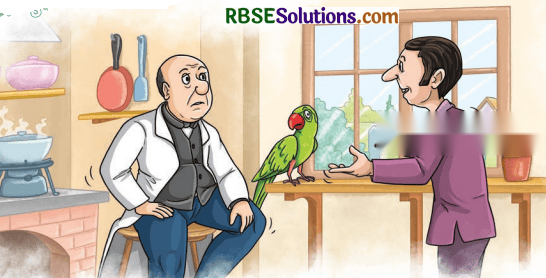
Doctor Dolittle was sitting in his kitchen talking with the Cat’s-food-Man who had come to see him with a stomach-ache. “Why don’t you give up being a people’s doctor, and be an animal doctor?” asked the Cat’s-food-Man. The parrot, Polynesia, was sitting in the window looking out at the rain and singing a sailor song to herself. She stopped singing and started to listen. “You sce, Doctor,” the Cat’s-food-Man went on, “you know all about animals-much more than what these vets here do.”
Question 1.
Why did the Cat’s-food-Man come to Doctor Dolittle?
(a) To read a book
(b) To treat animals
(c) Because he had a stomach-ache
(d) To listen to Polynesia
Answer:
(c) Because he had a stomachache.
Question 2.
What suggestion did the Cat’s-food-Man give to Doctor Dolittle?
Answer:
He suggested that the Doctor should become an animal doctor.
Question 3.
Where was Polynesia sitting?
Answer:
Polynesia was sitting in the window.
Question 4.
What was Polynesia doing before she started listening?
Answer:
She was singing a sailor song to herself.
Question 5.
Find from the passage the one-word for ‘person who sails a boat’.
Answer:
sailor
Question 6.
Find a word from the passage similar in meaning to : “physicians”.
Answer:
vets
Passage 2.
“When the Cat’s-food-Man had gone the parrot flew off the window on to the Doctor’s table and said, “That man’s got sense. That’s what you ought to do. Be an animal doctor. Give the silly people up-if they haven’t brains enough to see you re the best doctor in the world. Take care of animals instead- they’ll soon find it out. Be an animal doctor.” “Oh, there are plenty of animal doctors,” said John Dolittle, putting the flowerpots outside on the windowsill to get the rain.”
Question 1.
Who said, “That man’s got sense”?
(a) John Dolittle
(b) The Cat’s-food-Man
(c) Polynesia
(d) Jip
Answer:
(c) Polynesia
Question 2.
What did the parrot advise the Doctor to do?
Answer:
She advised him to become an animal doctor.
Question 3.
Why did she call people “silly”?
Answer:
Because people could not recognise that he was the best doctor.
Question 4.
What was John Dolittle doing while speaking?
Answer:
He was putting the flowerpots outside on the windowsill.
Question 5.
Find from the passage the plural of ‘doctor’.
Answer:
doctors
Question 6.
Find a word from the passage similar to “intelligence”.
Answer:
sense
Passage 3.
After a while, with the parrot’s help, the Doctor got to learn the language of the animals so well that he could talk to them himself and understand everything they said. Then he gave up being a people’s doctor altogether. As soon as the Cat’sfood-Man had told everyone that John Dolittle was going to become an animal doctor, old ladies began to bring him their pet pugs and poodles who had eaten too much cake.
Question 1.
What helped the Doctor learn animal language?
(a) Books
(b) Farmers
(c) The parrot
(d) Vets
Answer:
(c) The parrot
Question 2.
What could the Doctor do after learning animal language?
Answer:
He could talk to animals and understand them.
Question 3.
What profession did he give up?
Answer:
He gave up being a people’s doctor.
Question 4.
Why did old ladies bring their pets to him?
Answer:
Because their pets had eaten too much cake.
Question 5.
Find from the passage the plural of ‘lady’
Answer:
ladies
Question 6.
Find a word similar to ‘completely’ from the passage.
Answer:
altogether
Animals Birds and Dr Dolittle Summary Hindi Translation
I. Doctor Dolittle …………. animal doctor. (Page 44)
कठिन शब्दार्थ:
- stomach-ache ( स्टमक् एक् ) = पेट दर्द।
- parrot (पैरट्) = तोता।
- sailor (सेल (र्) ) = नाविक।
- vet ( वेट् ) = पशु चिकित्सक।
- wonderful (वनङफ़ल्) = अद्भुत।
- scholar (स्कॉल(इ) ) = विद्वान।
- silly (सिलि) = नासमझ, बेवकूफ।
- brains (ब्रेन्ज्र) = दिमाग।
- instead (इन् ‘स्टेड्) = इसके बजाय।
- find out (फ़ाइन्ड् आउट्) = पता लगाना, खोज करना।
हिन्दी अनुवाद-
डॉक्टर डूलिटल अपनी रसोई में बैठे थे और बिल्ली के भोजन वाले व्यक्ति से बात कर रहे थे, जो पेट दर्द के साथ उनसे मिलने आया था।
“आप लोगों के डॉक्टर बनना क्यों नहीं छोड़ देते, और जानवरों के डॉक्टर क्यों नहीं बन जाते?” बिल्ली के भोजन वाले व्यक्ति ने पूछा। तोता, पॉलीनेशिया, खिड़की पर बैठी बाहर बारिश को देख रही थी और अपने आपको एक नाविक गीत गा रही थी। उसने गाना बंद कर दिया और सुनना शुरू कर दिया।
“देखिए, डॉक्टर,” बिल्ली के भोजन वाला व्यक्ति बोलता रहा, “आप जानवरों के बारे में सब कुछ जानते हैं-यहाँ के इन पशु चिकित्सकों से कहीं अधिक।
वह किताब जो आपने लिखी-बिल्लियों के बारे में, अरे, वह अद्भुत है! में खुद पढ़ या लिख नहीं सकता-मेरी पत्नी, थियोडोसिया, एक विद्वान है, और उसने मुझे आपकी किताब पढ़कर सुनाई। आप खुद एक बिल्ली हो सकते थे। आप जानते हैं कि वे कैसे सोचते हैं।”
जब बिल्ली के भोजन वाला व्यक्ति चला गया तो तोता (मादा) खिड़की से उड़कर डॉक्टर की मेज पर आ गई और बोली, “उस आदमी में समझ है। यही आपको करना चाहिए। एक जानवरों के डॉक्टर बनें। मूर्ख लोगों को छोड़ दे। अगर उनमें इतनी बुद्धि नहीं है कि वे देख सके कि आप दुनिया के सबसे अच्छे डॉक्टर हैं। इसके बजाय जानवरों की देखभाल करें-वे जल्द ही इसे पता लगा लेंगे। एक जानवरों के डॉक्टर बनें।”
“Oh, there are plenty of ……………………………….. slowly now”. (Pages 44-45)
कठिन शब्दार्थ-
- plenty (प्लेनट्) = बहुत सारा, प्रचुर मात्रा में।
- flowerpot (फ़्लाउअपॉट्) = फूलदान।
- windowsill (विन्डोसिल्) = खिड़की की दहलीज।
- proudly (प्राउड्लि) = गर्व से।
- cracker (क्रैक (र)) = पतला कुरकुरा बिस्कुट।
- gracious (ग्रेशस्) = दयालु (यहाँ विस्मय प्रकट करने के लिए)।
- porridge (पॉरिज्) = दलिया।
- dusting (डस्टिङ्) = झाड़ना, धूल साफ करना।
- crumbs (क्रम्ज़्) = टुकड़े, चूरा।
- wing (विङ্) = पंख।
- excited (एक्साइटिड्) = उत्साहित, उत्तेजित।
- rushed (रश्ट्) = जल्दी से गया, दौड़ा।
- drawer (ड्रॉ (रु)) = दराज।
हिन्दी अनुवाद-
“ओह, बहुत सारे जानवरों के डॉक्टर हैं,” जॉन डूलिटल ने कहा, खिड़की की दहलीज पर बाहर फूलों के गमले रखते हुए ताकि उन्हें बारिश का पानी मिल सके।
“हाँ, बहुत सारे हैं,” पॉलीनेशिया ने कहा। ” लेकिन उनमें से कोई भी बिल्कुल अच्छा नहीं है। अब सुनिए, डॉक्टर और मैं आपको कुछ बताती हूँ।” क्या आप जानते हैं कि जानवर बात कर सकते हैं?
“मुझे पता था कि तोते बात कर सकते हैं,” डॉक्टर ने कहा।
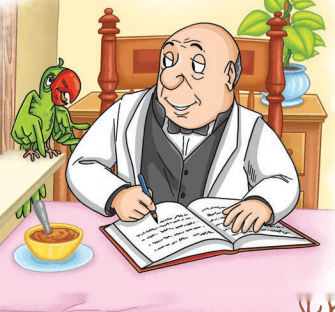
“ओह, हम तोते दो भाषाओं में बात कर सकते हैं-लोगों की भाषा और पक्षियों की भाषा”, पॉलीनेशिया ने गर्व से कहा।”अगर मैं कहुँ, ‘पॉली को बिस्कुट चाहिए’, तो आप मुझे समझ जाते हैं। लेकिन यह सुनिए : का- का ओई, फ़ी-फ़ी?”
“हे भगवान!” डॉक्टर चिल्लाया।”इसका क्या मतलब है?”
“इसका मतलब है, ‘क्या दलिया अभी तक गर्म है?’-पक्षियों की भाषा में।”
“अरे! आप ऐसा कह रही हैं।” डॉक्टर ने कहा।”आपने पहले कभी मुझसे इस तरह बात नहीं की।”
“इसका क्या फ़ायदा होता?” पॉलीनेशिया ने कहा, अपने बाएँ पंख से बिस्कुट के कुछ टुकड़ों को झाड़ते हुए। “अगर मैं ऐसा करती तो आप मुझे समझ नहीं पाते।”
“मुझे और बताओ,” डॉक्टर ने बहुत उत्साहित होकर कहा; और वह एक दराज़ की ओर दौड़ा और एक किताब और एक पेंसिल लेकर वापस आया।”अब बहुत तेज मत बोलो-और मैं इसे लिख लूँगा। यह दिलचस्प है-बहुत दिलचस्प-कुछ बिल्कुल नया। पहले मझे पक्षियों की वर्णमाला दो-अब धीरे-धीरे।”
So that was the way ………………………………………. altogether. (Pages 45-46)
कठिन शब्दार्थ-
- language (लैड्विज्ड) = भाषा।
- afternoon (ऑफ्टनून्) = दोपहर।
- teatime (टी टाइम) = चाय का समय।
- scratching (स्क्रैचिङ्) = खुजलाना।
- eyebrows (आइब्राउज्) = भौंहे।
- tail (टेल्) = पूँछ।
- noise (नॉइज्) = शोर, आवाज़।
- twitching (टिब्चिङ्) = फड़कना, हिलना।
- question (क्वेश्चन्) = सवाल, प्रश्न।
- nearly (निअलि) = लगभग, प्रायः।
- understand (अन्डस्टैन्ड्) = समझना।
- altogether (ऑल्टगेदर्) = पूरी तरह से।
- raising (रेजिड्) = उठाना।
हिन्दी अनुवाद:
तो इस तरह डॉक्टर को पता चला कि जानवरों की अपनी भाषा होती है और वे एक-दूसरे से बात कर सकते हैं और उस पूरी दोपहर, जब बारिश हो रही थी, पॉलीनेशिया रसोई की मेज़ पर बैठी रही और उन्हें किताब में लिखने के लिए पक्षियों के शब्द देती रही। चाय के समय, जब कुत्ता जिप, अन्दर आया, तो तोते ने डॉक्टर से कहा, “देखिए, वह आपसे वात कर रहा है।”
“मुझे तो ऐसा लग रहा है जैसे वह अपना कान खुजा रहा हो,” डॉक्टर ने कहा।
” लेकिन जानवर हमेशा अपने मुँह से बात नर्ही करते, ” तोते ने ऊँची आवाज में कहा, अपनी भौंहिं ऊपर उठाते हुए। ” वे अपने कानों से, अपने पैरों से, अपनी पूँछों से बात करते हैं-हर चीज़ से। कभी-कभी वे शोर नहीं मचाना चाहते। क्या अब आप देख रहे हैं कि वह अपनी नाक को एक तरफ कैसे फड़का रहा है?”
“इसका क्या मतलय है?” डॉक्टर ने पूछा।
इसका मतलब है, “क्या आप नहीं देख सकते कि बारिश रुक गई है?” पॉलीनेशिया ने जवाब दिया। “वह आपसे एक सवाल पूछ रहा है। कुते लगभग हमेशा सवाल पूछने के लिए अपनी नाक का उपयोग करते हैं।”
कुछ समय के बाद, तोते की मदद से डॉक्टर जानवरों की भाषा इतनी अच्छी तरह से सीख गए कि वे खुद उनसे बात कर सकते थे और वे जो कुछ भी कहते थे उसे समझ सकते थे। फिर उन्होंने लोगों का डॉक्टर बनना पूरी तरह से छोड़ दिया।
II. As soon as the ………… be ready. (Pages 46-47)
कठिन शब्दार्थ-
- pet (पेट्) = पालतू जानवर।
- pug (पग) = पग कुते की एक नस्ल।
- poodle (पूडल) पूडल कुत्ते की एक नस्ल।
- farmer (फ़ाम (र)) = किसी कृषि क्षेत्र का मालिक या प्रबंधक।
- plough (प्लाउ) = हल।
- terribly (टेरब्लि) = बहुत अधिक।
- treating (ट्रीटिहू) = इलाज करना।
- spectacles (स्पेक्टक्लूज्) = चश्मा।
- blind (ब्लाइन्ड्) = अंधा।
- stupid (स्टयूपिड्) = मूर्ख।
- pills (पिल्ज्) = गोलियाँ।
- pair (पेअर) = जोड़ा।
- field (फ़ील्ड) = खेत।
- certainly (सर्ट्लि), (सट्न्लि) = निश्चित रूप से।
- trouble (ट्रब्ल) = परेशानी, समस्या।
- complain (कम्प्लेन्) = शिकायत करना।
- matter of fact (मैटर ऑव फैक्ट्) = वास्तव में।
- cleverer (क्लेवरर) = अधिक चतुर।
हिन्दी अनुवाद-
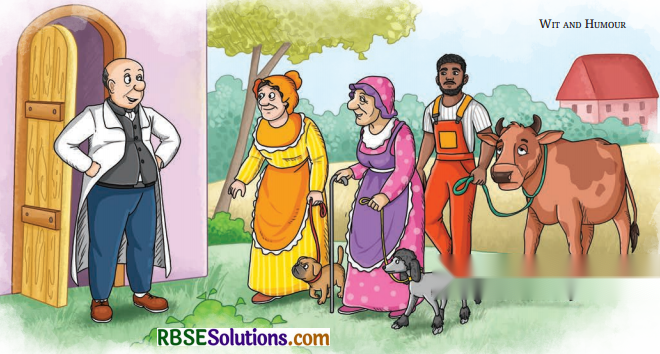
जैसे ही बिल्ली के भोजन वाले व्यक्ति ने सभी को बता दिया कि जॉन डूलिटल जानवरों का डॉक्टर बनने जा रहे हैं, बूढ़ी औरतें अपने पालतू पग्स और पूडल्स को लाने लगीं जिन्होंने बहुत ज्यादा केक खा लिया था; और किसान बीमार गायों और भेड़ों को दिखाने के लिए कई मील दूर से आने लगे। एक दिन एक हल खींचने वाला घोड़ा उसके पास लाया गया; और बेचारा (घोड़ा) एक ऐसे आदमी को पाकर बहुत खुश था जो घोड़ों की भाषा में बात कर सकता था।
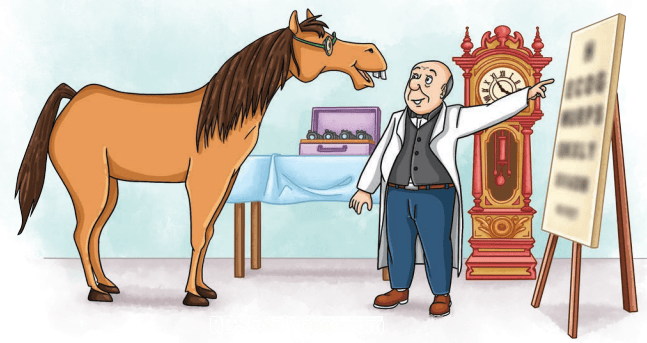
“आप जानते हैं, डॉक्टर,” घोड़े ने कहा, ” पहाड़ी के उस पार वाला पशु चिकित्सक कुछ भी नही जानता। वह अब छह हफ्से से मेरा इलाज कर रहा है-किसी न किसी चीजा के लिए। मुझे जिस चीज़ की जरूरत है, वह है चश्मा। मैं एक आँख से अँधा हो रहा हूँ। कोई कारण नर्हीं है कि घोड़े चश्मा क्यों नहीं पहन सकते, वैसे ही जैसे लोग पहनते है। लेकिन पहाड़ी के उस पार वाले उस मूर्ख आदमी ने कभी मेरी आँखों को भी नहीं देखा। वह मुझे बड़ी-बड़ी गोलियाँ देता रहा। मैंने उसे बताने की कोशिश की, लेकिन वह घोड़ों की भाषा का एक शब्द भी नहीं समझ सका। मुझे चश्मे की जरूरत है।”
“बिल्कुल-बिल्कुल” डॉक्टर ने कहा “मैं तुम्रें तुरंत कुछ ला दूँगा।”
“मुझे आपके जैसी एक जोड़ी चाहिए,” बोडे ने कहा-” केवल हरे रंग की। वे खेत में हल चलाते समय मेरी आँखों से धूप को दूर रखेंगे।”
“निश्चित रूप से,” डॉक्टर ने कहा। “तुम्हें हरे रंग के मिलेंगे।”
“आप जानते हैं, परेशानी यह है, साहब,” हल खींचने वाले घोड़े ने कहा, जब डॉक्टर उसे बाहर जाने देने के लिए सामने का दरवाजा खोल रहे थे-“परेशानी यह है कि कोई भी सोचता है कि वह जानवरों का इलाज कर सकता है-सिर्फ़ इसलिए कि जानवर शिकायत नहीं करते। वास्तव में, एक अच्छा जानवरों का डॉक्टर बनने के लिए एक अच्छे लोगों के डॉक्टर बनने की तुलना में कहीं अधिक चतुर आदमी की जरूरत होती है।”
“अच्छा, अच्छा!” डॉक्टर ने कहा।
“मेरा चश्मा कब तैयार होगा?”
“I’ll have them for you life very much. (Pages 48-49)
कठिन शब्दार्थ-
- next (नेक्स्ट) = अगला।
- week (वीक्) = सप्ताह।
- common (कॉमन्) = सामान्य, आम।
- sight (साइट) = दृश्य, नजारा।
- countryside (कन्ट्रिसाइड) = ग्रामीण इलाका, देहात।
- unknown (अनोन) = अज्ञात, अनजान।
- pain (पेन्) = दर्द, पीड़ा।
- cure (क्यूअ (र)) = इलाज करना।
- creatures (क्रीचर्ज) = प्राणी, जीव ।
- harvest (हाविस्ट्) = फसल।
- mice (माइस) = चूहे।
- badger (बैज (रु)) = बिज्जू (एक जानवर)।
- bat (बैद्र) = चमगादड़।
- crowded (क्राउडिड) = भीड़भाड़ वाला।
- special (स्पेशल्) = विशेष, खास।
- separate (सेप्रद्) = अलग।
- tunnel (टनल्) = सुरंग।
- celler (सेलर्) = तहखाना।
- patiently (पेशन्ट्लि) = धैर्य से।
- row (रो) = पंक्ति, कतार।
- foreign (फॉरन्) = विदेशी।
- troubles (दूब्ल्प्) = परेशानियाँ, मुसीबतें।
- famous (फेमस्) = प्रसिद्ध।
हिन्दी अनुवाद-
“मैं अगले सप्ताह तक तुम्हारे लिए तैयार कर दूँगा,” डॉक्टर ने कहा “मंगलआर को फिर से आना-सुप्रभात!”
फिर जॉन डूलिटल ने एक बढ़िया, बड़ा हरे रंग का चश्मा लिया; और हल खींचने वाले घोड़े की एक आँख से अंधा होना बंद हो गया और वह पहले की तरह अच्छी तरह से देख सकता था।
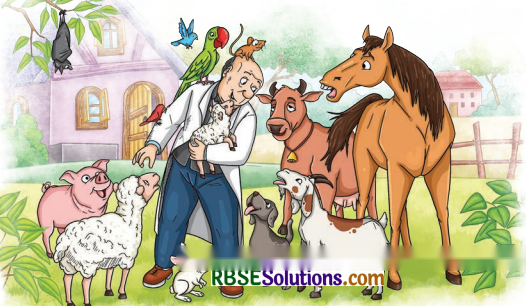
और जल्द ही पडलबी के आसपास के ग्रामीण इलाकों में चश्मा पहने खेत के जानवरों को देखना एक आम दृश्य बन गया; और एक अंथा घोड़ा एक अज्ञात चीज थी। और इसी तरह उनके पास लाए गए अन्य सभी जानवरों के साथ भी हुआ। जैसे ही उन्हें पता चला कि वह उनकी भाषा बोल सकते हैं, उन्होंने उन्हें बताया कि दर्द कहाँ था और वे कैसा महसूस कर रहे थे, और निश्चित रूप
से उनके लिए उनका इलाज करना आसान था। अब वे सभी जानबर वापस गए और अपने भाइयों और दोस्तों को बताया कि बड़े बगीचे वाले छोटे घर में एक डॉक्टर है जो वास्तब में एक डॉक्टर है। और जब भी कोई जीव बीमार पड़ता-न केवल घोड़े और गाय और कुते-बल्कि खेतों की सभी छोटी चीजें जैसे फसल के चूहे, बिज्जू और चमगादड़, सभी एक साथ शहर के किनारे पर उनके घर पर आते, ताकि उनका बड़ा बगीचा लगभग हमेशा उन्हें देखने के लिए अंदर जाने की कोशिश कर रहे जानवरों से भरा रहता।
इतने सारे जानवर आते थे कि उन्हें विभित्र प्रकार के लिए विशेष दरवाजे बनवाने पड़े। उन्होंने सामने के दरवाज़े पर ‘घोड़े’, बगल के दरवाज़े पर ‘गाय’ और रसोई के दरवाज़े पर 4 भेड़’ लिख दिया । हर प्रकार के जानवर के लिए एक अलग दरवाजा था-यहाँ तक कि चूहों के लिए भी तहखाने में एक छोटी सी सुरंग बनाई गई थी, जहाँ वे डॉक्टर के उनके पास आने का धैर्यपूर्वक पंक्ति में इंतजार करते थे।
और इस तरह, कुछ वर्षों में, मोलों-मीलों तक हर जीवित चीज़ को जॉन डूलिटल, एम.डी. के बारे में पता चल गया और जो पक्षी सर्दियों में दूसरे देशों में उड़ते थे, उन्होंने विदेशी भूमि के जानवरों को डूलिटल के बारे में बताया जो उनकी बात समझ सकते थे और उनकी परेशानियों में उनकी मदद कर सकते थे। इस तरह से वह जानवरों के बीच प्रसिद्ध हो गए-पूरी दुनिया में। वह खुश थे और अपने जीवन को बहुत पसंद करते थे।