A Funny Man Question Answer Summary Class 7 English Poorvi Chapter 5
Practicing RBSEClass 7 English Poorvi Solutionsand Class 7 English Chapter 5 A Funny Man Question Answer Summary will help you achieve better results in your studies.
A Funny Man Poem Class 7 Question Answer
Class 7 English A Funny Man Question Answer
Class 7 English Chapter 5 Question Answer
Let us discuss (आइये चर्चा करें) (Pages 61-62)
I. Work in pairs. Identify the true statements. Check your answers with the teacher.
जोड़ियों में काम करें। सही कथनों की पहचान करें। अपने उत्तरों को शिक्षक से जाँचें।
1. The poet says that she had never heard such an amusing song.
2. The funny man was quite ill-mannered.
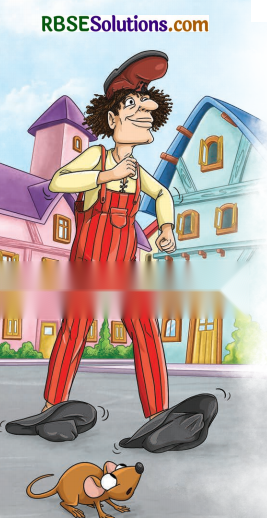
3. The funny man wore two hats on his feet.
4. The funny man hopped on his head to reach home.
5. The funny man gave a rose to the poet.
6. The funny man smiled at the poet.
Answer:
True Statements are :
3. The funny man wore two hats on his feet.
4. The funny man hopped on his head to reach home.
6. The funny man smiled at the poet.
II. Identify the words from the poem based on the meanings given. Share your answers with your classmates and the teacher.
कविता से दिए गए अर्थों के आधार पर शब्दों की पहचान करें। अपने उत्तर अपने सहपाठियों और शिक्षक के साथ साझा करें।
1. a small seedless raisin- C_R _ _ _T
2. moved unsteadily- S_ _GG_ _ _D
Answer:
1. CURRANT
2. STAGGERED
III. Complete the following sentences with a reason.
निम्नलिखित वाक्यों को कारण सहित पूरा करें।
Question 1.
The tone of the poem is ………… because ………….
Answer:
The tone of the poem is humorous because it describes an absurd and funny man who wears shoes on his head and hats on his feet, and does everything in a silly manner.
Question 2.
The rhyme scheme of the poem is ………… ; and it gives a ………… quality to the poem.
Answer:
The rhyme scheme of the poem is ABCB; and it gives a rhythmic quality to the poem.
Question 3.
The poet has frequently repeated the word ‘funny’ in order to ………….
Answer:
The poet has frequently repeated the word ‘funny’ in order to emphasize the absurdity and humorous nature of the man’s appearance and behaviour and create a playful and entertaining tone.
IV. Choose the correct answer from the options given in the brackets.
कोष्ठक में दिए गए विकल्पों में से सही उत्तर चुनें।
1. The poem uses vivid imagery to create a ………… (humorous and nonsensical/ confusing but thought-provoking) scene.
2. The structure of the poem is in ………… (monologue/dialogue) form.
3. The phrases ‘sounding sight’ and ‘hopped home’ are examples of ………… (alliteration/simile)
Answer:
1. humorous and nonsensical
2. dialogue
3. alliteration
V. Rewrite the following line from the poem in the correct order.
कविता की निम्नलिखित पंक्ति को सही क्रम में फिर से लिखें।
Question 1.
But never had I seen before
Such a funny sounding sight.
Answer:
But I had never seen such a funny sounding sight before.
Question 2.
Why has the poet used phrases like ‘funny sounding sight’ and ‘funny feeling sound’ with reference to the funny man?
अजीब आदमी के संदर्भ में कवयित्री ने ‘funny sounding sight’ और ‘funny feeling sound’ जैसे वाक्यांशों का उपयोग क्यों किया है?
Answer:
The poet used these mixed-up phrases to show how strange and confusing the funny man was. Just like he wore things in the wrong places, the poet mixed sight and sound to make the poem more funny and entertaining.
कवयित्री ने इन उलटे-पुलटे वाक्यांशों का उपयोग यह दिखाने के लिए किया कि वह आदमी कितना अजीब और भ्रमित करने वाला था। जैसे-उसने चीज़ें गलत जगह पहनी थीं, वैसे ही कवयित्री ने कविता को और मज़ेदार और मनोरंजक बनाने के लिए दृश्य और ध्वनि को मिला दिया।
VI. Can you think of any real-world situations where people do similar things for fun, entertainment, or performance? Share with your classmates and the teacher.
क्या आप किसी वास्तविक दुनिया की ऐसी स्थितियों के बारे में सोच सकते हैं जहाँ लोग मज़े, मनोरंजन या प्रदर्शन के लिए ऐसी ही चीज़ें करते हैं? अपने सहपाठियों और शिक्षक के साथ साझा करें।
Answer:
Yes, there are many real-world situations where people do funny and silly things for entertainment-such as circus clowns, street performers, comedians, TV comedy shows, school fancy dress competitions, April Fool’s Day pranks, and magic shows.
हाँ, कई वास्तविक स्थितियाँ हैं जहाँ लोग मनोरंजन के लिए मज़ेदार और हास्यास्पद चीज़ें करते हैं। जैसे-सर्कस के जोकर, सड़क पर प्रदर्शन करने वाले कलाकार, कॉमेडियन, टीवी कॉमेडी शो, स्कूल में फैंसी ड्रेस प्रतियोगिताएँ, अप्रैल फूल डे की शरारतें और जादू के खेल।
A Funny Man Poem Questions and Answers Class 7
I. Read the extracts given below and answer the questions that follow.
आगे दिए गए उद्धरण को पढ़िये और आगे आने वाले प्रश्नों के उत्तर दीजिए।
Question 1.
He said, “Allow me to present
Your Highness with a rose.”
And taking out a currant bun
He held it to my nose.
I staggered back against the wall
And then I answered, “Well!”

(i) Why does the funny man address the poet as ‘Your Highness’?
अजीब आदमी कवयित्री को ‘Your Highness’ क्यों कहता है?
Answer:
(i) The funny man addresses the poet as ‘Your Highness’ to show exaggerated politeness and to add humour to the situation. He is pretending to treat her like royalty, which makes his silly behaviour even funnier.
अजीब आदमी कवयित्री को ‘Your Highness’ इसलिए कहता है क्योंकि वह अतिशयोक्तिपूर्ण विनम्रता दिखाना चाहता है और स्थिति को हास्यपूर्ण बनाना चाहता है। वह उनके साथ राजसी व्यवहार का नाटक करता है, जो उसके मूर्खतापूर्ण व्यवहार को और भी मज़ेदार बना देता है।
(ii) Choose a phrase from the extract which indicates a polite request.
अंश से एक ऐसा वाक्यांश चुनें जो विनम्र अनुरोध को दर्शाता है।
Answer:
“Allow me to present.”
मुझे प्रस्तुत करने की अनुमति दें।
(iii) Choose the option which shows a ‘currant bun’.
वह विकल्प चुनें जो ‘currant bun’ को दर्शाता है।
Answer:
B. Image 2
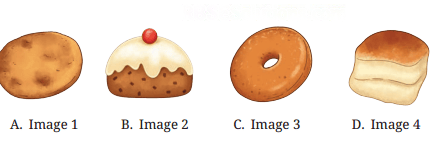
(iv) Complete the sentence with an appropriate reason.
When the poet says, ‘Well!’, it expresses surprise. This was so because ……………
Answer:
……………. the funny man called a currant bun a rose and held it to her nose, which was completely absurd and unexpected.
2. You never heard in all your life Such a funny feeling sound. “My friend, why do you wear two hats Upon your feet?” I said. He turned the other way about, And hopped home on his head.
(i) Choose the line from the extract which tells us that the sound was unique.
अंश से वह पंक्ति चुनें जो हमें बताती है कि ध्वनि अनोखी थी।
Answer:
“You never heard in all your life / Such a funny feeling sound.”
(ii) Complete the sentence with an appropriate reason.
The poet calls the funny man ‘my friend’ because
Answer:
she is being polite and friendly while asking him a question/she wants to address him in a kind and gentle manner.
(iii) What does the reaction of the funny man to the poet’s question tell us about him?
कवयित्री के प्रश्न पर अजीब आदमी की प्रतिक्रिया हमें उसके बारे में क्या बताती है?
Answer:
The funny man’s reaction tells us that he is playful, silly, and unpredictable. Instead of answering the question, he simply turns away and hops home on his head, showing that he enjoys being absurd and doesn’t follow normal behaviour.
अजीब आदमी की प्रतिक्रिया हमें बताती है कि वह खेलपूर्ण, मूर्खतापूर्ण और अप्रत्याशित है। प्रश्न का उत्तर देने के बजाय, वह बस मुड़ जाता है और अपने सिर के बल घर कूदता हुआ चला जाता है, जो दर्शाता है कि वह बेतुका होना पसंद करता है और सामान्य व्यवहार का पालन नहीं करता।
(iv) Choose the correct option to complete the sentence.
The last line of the extract makes the readers feel …………….
(A) dreamy
(B) impatient
(C) worried
(D) cheerful
Answer:
(D) cheerful
II. Answer the following questions.
Question 1.
Which character trait of the funny man was most appealing to you? Why?
मज़ेदार आदमी का कौन-सा चारित्रिक गुण आपको सबसे अधिक अच्छा लगा? क्यों?
Answer:
The funny man’s politeness was most appealing. Even though he behaved strangely, he spoke politely and smiled kindly.
उस मज़ाकिया आदमी की विनम्रता सबसे ज्यादा आकर्षक थी। भले ही वह अजीब तरह से बर्ताव कर रहा था, लेकिन वह विनम्रता से बात करता था और प्यार से मुस्कुराता था।
Question 2.
The funny man does unusual things in the poem. How does it affect the overall mood of the poem?
कविता में मज़ेदार आदमी अजीब चीज़ें करता है। यह कविता के पूरे मूड पर कैसे असर डालता है?
Answer:
His unusual actions make the poem humorous and playful, creating a light and funny mood.
उसके अजीब काम कविता को मज़ेदार और चंचल बनाते हैं, जिससे हल्का और मज़ेदार माहौल बनता है।
Question 3.
What alternative title would you suggest for the poem? Give reason(s) for your choice.
आप कविता के लिए कौन-सा दूसरा शीर्षक सुझाऐंगे? अपने चुनाव के पीछे कारण बताऐं।
Answer:
An alternative title could be “The Strange Funny Man” because the poem is about a man who behaves in a very strange but amusing way.
एक दूसरा शीर्षक “द स्ट्रैंज फनी मैन” भी हो सकता है, क्योंकि यह कविता एक ऐसे आदमी के बारे में है जो बहुत ही अजीब लेकिन मज़ेदार तरीके से व्यवहार करता है।
Question 4.
Why do you think the poet has included dialogues in the poem?
आपको क्या लगता है कि कवि ने कविता में संवाद क्यों शामिल किए हैं?
Answer:
The poet includes dialogues to make the poem lively and interesting and to show direct interaction.
कवयित्री ने कविता को सजीव और रोचक बनाने तथा प्रत्यक्ष बातचीत दिखाने के लिए संवादों को शामिल किया है।
Question 5.
What does the poet wish to convey by highlighting the unusual behaviour of the funny man?
मज़ेदार आदमी के असामान्य व्यवहार को दिखाकर कवि क्या संदेश देना चाहता है?
Answer:
The poet wants to show that being different can be joyful and can make life more cheerful.
कवि यह दिखाना चाहता है कि अलग होना खुशी दे सकता है और जीवन को और खुशनुमा बना सकता है।
Let us Learn (आइए सीखें)
I. Match the phrasal verbs in Column 1 with their correct meanings in Column 2.
Answer:
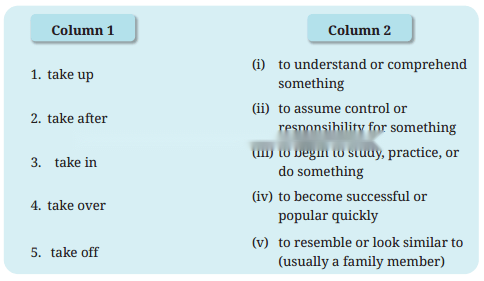
Column 1. | Column 2 |
1. take up | (iii) to begin to study, practice, or do something |
2. take after | (v) to resemble or look similar to (usually a family member) |
3. take in | (i) to understand or comprehend something |
4. take over | (ii) to assume control or responsibility for something |
5. take off | (iv) to become successful or popular quickly |
Now, fill in the blanks with suitable phrasal verbs from the table given in I. You may change the tense of the verb, if required.
अब, I में दी गई तालिका से उपयुक्त phrasal verbs का उपयोग करके रिक्त स्थानों को भरें। यदि आवश्यक हो तो आप क्रिया का काल बदल सकते हैं।
Question 1.
The new technology is set to ………… traditional methods of communication.
Answer:
take over
Question 2.
I tried hard to ………… what the writer wanted to say but was unsuccessful.
Answer:
take in
Question 3.
Arjun decided to ………… painting as a hobby.
Answer:
take up
Question 4.
The smartphone quickly ………… in the sales in the market.
Answer:
took off
Question 5.
Sheela ………… her father; they have the same smile.
Answer:
takes after
II. Match the verbs in Column 1 with any suitable adverbs or prepositions in Column
Question 2.
Write their meanings in Column 3. An example has been done for you.
स्तंभ 1 में दी गई क्रियाओं को स्तंभ 2 में दिए गए किसी भी उपयुक्त क्रिया-विशेषण या पूर्व सर्ग से मिलाएँ। स्तंभ 3 में उनके अर्थ लिखें। आपके लिए एक उदाहरण हल किया गया है।
Answer:
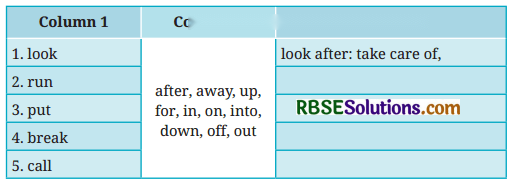
Column 1 | Column 2 (Chosen) | Column 3 (Meaning) |
1. look | after | look after : take care of |
2. run | away | run away : escape or leave suddenly |
3. put | off | put off : postpone or delay |
4. break | down | break down : stop working or fail |
5. call | off | call off : cancel something |
Now, frame sentences of your own using any five phrasal verbs.
अब, किन्हीं पाँच phrasal verbs का उपयोग करके अपने स्वयं के वाक्य बनाएँ।
Answer:
Here are five sentences using phrasal verbs:
- I look after my younger sister when my parents are at work.
- The thief tried to run away, but the police caught him.
- The teacher put off the test till next week.
- Our car broke down on the way to Jaipur.
- The school picnic was called off due to heavy rain.
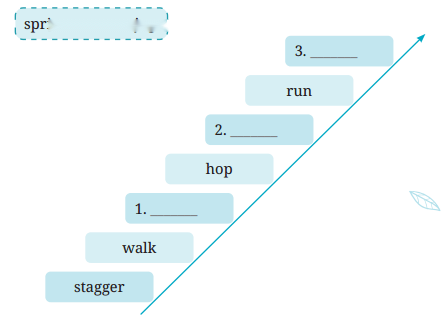
III. The given words denote the different ways of walking. Arrange the words given in the box in increasing order of pace.
दिए गए शब्द चलने के अलग-अलग तरीकों को दिखाते हैं। बॉक्स में दिए गए शब्दों को उनकी रफ़्तार के बढ़ते क्रम में लगाएँ।
Seen Extract
Read the following extract carefully and answer the questions that follow :
Extract-1
He said, “Allow me to present
Your Highness with a rose.”
And taking out a currant bun
He held it to my nose.
I staggered back against the wall
And then I answered, “Well!
I never saw a rose with such
A funny looking smell.”
Question 1.
Why does the funny man address the poet as ‘Your Highness’?
(a) Because she was a real princess
(b) To show exaggerated politeness and add humour
(c) Because he was her servant
(d) To insult her
Answer:
(b) To show exaggerated politeness and add humour
Question 2.
What did the funny man give to the poet instead of a rose?
Answer:
The funny man gave the poet a currant bun instead of a rose. He took it out and held it to her nose.
Question 3.
What was the poet’s reaction when the funny man held the currant bun to her nose?
Answer:
When the funny man held the currant bun to her nose, the poet staggered back against the wall in surprise and sarcastically said that she had never seen a rose with such a funny smell.
Question 4.
What does the poet express in the line ‘I never saw a rose with such a funny looking smell’?
Answer:
In this line, the poet is expressing in a humorous and sarcastic manner that what the funny man called a rose was actually a currant bun, which had a completely different and strange smell.
Question 5.
Find from the extract one-word for ‘a small round sweet cake’.
Answer:
‘bun’
Question 6.
Find a word from the extract which means : ‘replied’.
Answer:
‘answered’
A Funny Man Poem Summary Hindi Translation
One day a funny …………….. sounding sight. (Page 60)
कठिन शब्दार्थ:
- Funny (फनी) = अजीब।
- kind (काइन्ड) = किस्म।
- walking (वॉकिंग) = चलता हुआ।
- street (स्ट्रीट) = गली।
- wore (वॉर) = पहना हुआ था।
- hats (हैट्स) = टोपियाँ।
- feet (फीट) = पैर।
- raised (रेज़ड) = उठाया।
- manners (मैनर्ज़) = शिष्टाचार, व्यवहार।
- polite (पलाइट) = विनम्र, शिष्ट।
- never (नेवर) = कभी नहीं।
- seen (सीन) = देखा।
- before (बिफ़ॉर) = पहले।
- such (सच) = ऐसा।
- sounding (साउन्डिंग) = दिखने में : यहाँ सुनने में।
- sight (साइट) = दृश्य, नज़ारा।
- funny sounding (फ़नी साउन्डिंग) = अजीब लगने वाला।
हिन्दी अनुवाद:
एक दिन एक अजीब किस्म का आदमी इस सड़क पर चलता हुआ आया। उसने अपने सिर पर एक जूता पहना हुआ था और अपने पैरों पर टोपियाँ पहनी हुई थीं। उसने जूते को उठाया और मुझे देखकर मुस्कुराया, उसका व्यवहार विनम्र था; लेकिन मैंने पहले कभी ऐसा मज़ेदार (और अजीब) दृश्य नहीं देखा था।
He said, “Allow ……………… looking smell”. (Page 60)
कठिन शब्दार्थ:
- allow (अलाउ) = अनुमति देना, इजाज़त देना।
- present (प्रिज़ेन्ट्) = भेंट करना, देना।
- Highness (हाइनेस्) = महामहिम, उच्चता (सम्मानजनक संबोधन)।
- taking out (टेकिंग् आउट्) = निकालना।
- currant bun (करन्ट् बन्) = किशमिश वाला बन/ब्रेड।
- held (हेल्ड्) = पकड़ा, रखा।
- nose (नोज़्) = नाक।
- staggered (स्टैगड्) = लड़खड़ाया, डगमगाया।
- back (बैक्) = पीछे।
- against (अगेन्स्ट्) = के विरुद्ध, के सहारे।
- wall (वॉल्) = दीवार।
- answered (आन्सड्) = उत्तर दिया, जवाब दिया।
- well (वेल्) = खैर, अच्छा।
- saw (सॉ) = देखा।
- funny looking (फ़नी लुकिंग्) = अजीब दिखने वाला।
- smell (स्मेल्) = गंध, सुगंध, खुशबू ।
हिन्दी अनुवाद:
उसने कहा, “कृपया मुझे महामहिम को एक गुलाब भेंट करने की अनुमति दें।” और एक किशमिश वाला बन निकालकर उसने उसे मेरी नाक के पास रख दिया। मैं लड़खड़ाते हुए दीवार के सहारे पीछे हट गई और फिर मैंने उत्तर दिया, ” बैर! मैंने पहले कभी ऐसी अजीब खुशबू वाला गुलाब नहीं देखा।”
He then began ………… on his head. (Page 60)
कठिन शब्दार्थ:
- began (बिगैन्) = शुरू किया, आरंभ किया।
- sing (सिंग्) = गाना।
- song (सॉन्ग्) = गीत, गाना।
- sat down (सैट् डाउन्) = बैठ गया।
- ground (ग्राउन्ड्) = जमीन, धरती।
- heard (हड्) = सुना।
- life (लाइफ़्) = जीवन, ज़िन्दगी।
- such (सच्) = ऐसा।
- funny feeling (फ़नी फ़ीलिंग्) = अजीब सा लगने वाला।
- sound (साउन्ड्) = आवाज़,ध्वनि।
- friend (फ्रेन्ड्) = मित्र, दोस्त।
- wear (वेअ(र्)) = पहनना।
- upon (अपॉन्) = पर, के ऊपर।
- feet (फ़ीट्) = पैर।
- said ( सेड् ) = कहा।
- turned (टन्ड् ) = मुड़ा, घूमा।
- other way (अदा वे) = दूसरी तरफ।
- about (अबाउट् ) = के बारे में, चारों ओर।
- hopped (हॉप्ट् ) = कूदता हुआ गया, उछलता हुआ गया।
हिन्दी अनुवाद:
फिर वह एक गाना गाने लगा और ज़मीन पर बैठ गया; आपने अपनी पूरी ज़िन्दगी में कभी ऐसी अज़ीब सी लगने वाली आवाज़ नहीं सुनी होगी। मैंने कहा, ” मेरे मित्र, आप अपने पैरों पर दो टोपियाँ क्यों पहनते हो ? ” वह दूसरी तरफ मुड़ गया और अपने सिर के बल उछलता हुआ घर चला गया।