Infrastructure: Engine of India’s Development Class 7 Questions and Answers SST Part 2 Chapter 7
Start practicing theExploring Society India and Beyond Class 7 Solutionsand Class 7 SST Part 2 Chapter 7 Infrastructure: Engine of India’s Development Question Answer to consolidate your knowledge effectively.
Infrastructure: Engine of India’s Development Class 7 Questions and Answers SST Part 2 Chapter 7
The Big Questions (Page 169)
Question 1.
What is physical infrastructure, and how has it transformed over the years in India?
Answer:
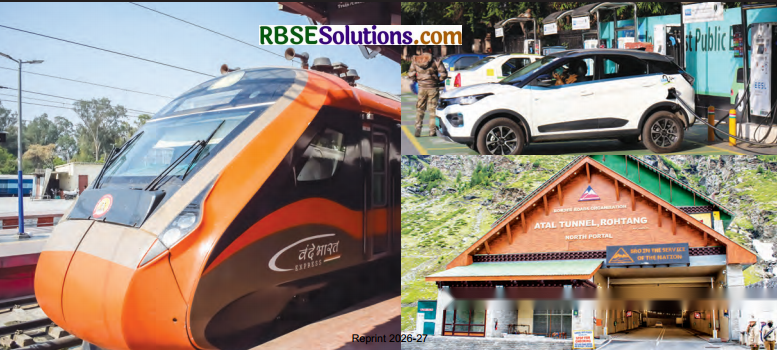
- Physical infrastructure is a vast network of tangible structures built to keep our cities and villages functioning.
- Physical infrastructure has transformed over the years in India. Now, we have expressways, modern airports, metro rail systems in cities and corridor.
- There is rapid expansion of internet connectivity and digital services.
- There is focus on smart city projects, waste management and sustainable water supply systems to support urbanization.
Question 2.
How has the expansion in infrastructure affected the quality of life for individuals and communities?
Answer:
- Better roads and transport have reduced travel time.
- Electricity, communication facilities have access to education and health care services even in remote areas.
- Infrastructure facilities are available during emergencies and disasters.
- It means, life is comfortable, easy and connected.
Question 3.
What is the role of infrastructure in the development and economic prosperity of the nation?
Answer:
- Infrastructure plays a very important role in the development and economic prosperity of a nation.
- Good roads, airports, ports help in the easy movement of raw materials and finished goods.
- Electricity, water supply, waste management, communication, etc. help industries to work smoothly.
- Good infrastructure attract domestic and foreign investors, which helps in economic growth.
Think About It (Page 173)
Question 1.
What might happen to Satish’s efforts if any part of the infrastructure is missing?
Answer:
If any part of the infrastructure is missing, Satish’s efforts may not succeed. Poor roads, lack of water, electricity or communication facilities would make work slow and inefficient.
Question 2.
What happens when a new highway is built near a village? How does it impact the lives of the people living nearby?
Answer:
- A new highway improves connectivity. It makes travel faster and help farmers to sell their goods in less time.
- It would also create job opportunities.
Question 3.
Imagine if there were no internet or phone services. How would this affect people’s ability to work or learn?
Answer:
Without internet or phone services, communication would become difficult. Online education, access to information, e-commerce. e-governance all the services will be negatively affected.
Think About It (Page 185)
Question 1.
Which parts of this process do you think are easiest to see in real life, and which are completely invisible?
Answer:
Parts easiest to see in real life-
- Mobile phones, computers, laptops, tablets, etc.
- TV screens and radio sets.
- Mobile towers and telephone poles.
Parts that are invisible-
- Radio waves, signals carrying voice and data.
- Data travelling through optical fibre cables.
- Signals sent and received from satellites in space.
Think About It (Page 188)
Question 1.
Do you see other types of infrastructure around you like schools, colleges, training centres, hospitals, health centres, police stations, fire stations, courts, parks, libraries, community centres and so on? This is known as social infrastructure. How do you think it supports the wellbeing and development of communities and society?
Answer:
Yes, we see social infrastructure around us.
- All these infrastructures are necessary for creating secure and healthy environment for communities and society.
- They are vital for improving standard of living, maintaining law and order in society.
- It means, they are necessary for personal well being, employment and economic growth.
Let’s Explore (Page 190)
Question 1.
Can you think of ways in which infrastructures can become more sustainable around you? For example, what changes would you make to your school to make it more ecofriendly?
Answer:
Ways to make infrastructure more sustainable around us are-
- Promoting public transport, cycling, etc.
- Energy efficient lighting.
- Use of solar panels and renewable energy.
Change to make school more eco-friendly-
- Planting trees to make campus green.
- Switch off lights, fans when not in use.
- Set up compost pit and rainwater harvesting structures.
Question 2.
Write down a list of five problems you have observed and their possible solutions on a sheet and discuss in class.
Answer:
Five problems and solutions-
1. Traffic congestion.
– Promote public transport and car pooling.
2. Water shortage.
– Rainwater harvesting and conservation.
3. Air pollution.
– Use of clean energy and more trees.
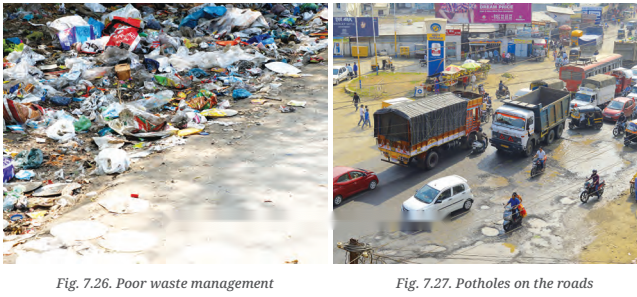
4. Poor waste management.
– Segregation and recycling of waste.
5. Electricity wastage.
– Use energy-efficient appliances.
Infrastructure: Engine of India’s Development Class 7 Solutions
Question 1.
Which form of physical infrastructure has been built in your area in the last decade? How do you think it has benefitted you or your family members? If you could build something for the community, what would it be?
Answer:
- In the last decade, better roads, metro and drainage have been built in our area.
- It benefitted us a lot because it reduced travel time and made transport safer.
- Local shops and market have grown.
- If I could build something, I would build a community park or a small health centre.
Question 2.
How does infrastructure like ports, highways, and airports create jobs in different parts of the country? Can you think of indirect ways people benefit from it?
Answer:
- Infrastructure projects create direct jobs for engineers, construction workers, drivers, technicians, etc.
- All these infrastructure provide employment in operations, maintenance, security and administration.
Indirect Benefits
- More business for local vendors and service providers.
- Growth of hotels, shops, restaurants, etc.
- Better connectivity leads to new schools, hospitals and offices.
Question 3.
Why is it important to think about the environment when building new infrastructure like roads or airports? Can infrastructure development and environmental protection go hand in hand? If yes, how?
Answer:
- Infrastructure construction can cause pollution and loss of trees.
- It may disturb flora and fauna of surrounding.
- Yes, both infrastructure development and environmental protection go hand in hand by
- Using eco-friendly and sustainable construction methods.
- Proper planning of projects to reduce harm to wildlife and natural resources.
Question 4.
How can better infrastructure (like roads, airports, communication systems) help during natural disasters like floods or earthquakes?
Answer:
- Better infrastructure allow emergency services, medical personnel and help in affected areas more quickly.
- Good communication system ensures that emergency alerts can be sent fast.
- Essential supplies such as food, water, medicines, ctc. can be supplied quickly.
Question 5.
Have you ever noticed people misusing public spaces, like scribbling on walls, breaking streetlights, or damaging benches? What are its consequences? Write your observations and suggest solutions to prevent it.
Answer:
- Yes, we have seen people misusing public spaces, like scribbling on walls, breaking streetlights, or damaging benches.
Consequences
- Repairing cost increases.
- Public money is wasted.
- Places look dirty and unsafe.
Solutions
- Creating awareness about public property.
- Fines and penalties.
- Community members should take responsibility.
Question 6.
Prepare ‘scenario posters’ for the following situations :
- A new factory is planned in an area. What form of infrastructure is required for its smooth operation?
- Self-cleaning roads, underground highways, and high-speed bullet trains could be part of a futuristic city! Imagine the kind of infrastructure that would be required in the future that could help ease the lives of the people and communities in your city, town or village for various day-to-day functions.
- Think about upgrades to the infrastructure near you, considering the terrain of your area, such as coastal, mountainous, plains, etc., and the type of natural calamities your region is prone to.
- If you could design a new railway or metro station, what would it look like and what features would you add to make it more fun and comfortable for the passengers?
Answer:
1. New Factory
- Electricity supply.
- Water supply and waste management system.
- Good communication facilities.
- Housing, schools, hospitals for workers.
2. Future City Infrastructure
- Self-clcaning roads.
- Smart sewage and waste management system.
- Smart traffic control management.
- Use of renewable sources of energy.
- Metro trains.
3. Infrastructure upgrades based on terrain
- Coastal areas: Strong embankments, cyclone shelters.
- Mountain areas: Tunnels, strong bridges.
- Plains: Flood control, drainage systems.
4. Designing a modern railway/metro station
- Clean platform, good waiting area.
- Clean washrooms.
- Digital boards, free wi-fi.
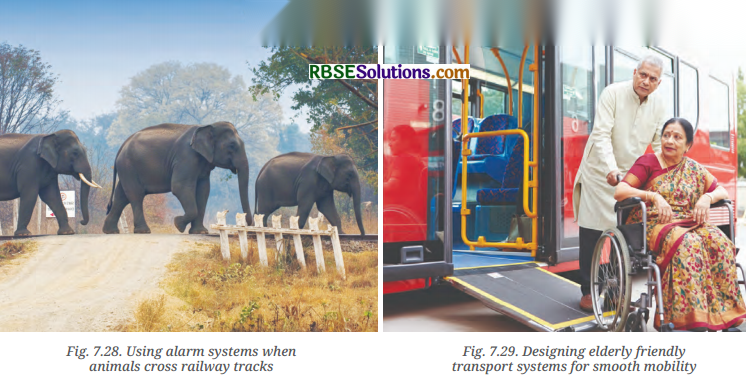
- Ramps and lifts for elderly and disabled.
- Food courts at reasonable cost.
Question 7.
Today’s modern infrastructure requires consistent technological innovations. For instance, electric vehicles are increasingly being used by people as a cheaper alternative to polluting fuel like diesel or petrol. Find out about other innovations in infrastructure that can improve ease of living or mobility for communities.
Answer:
- Smart traffic lights and sensors to reduce congestion.
- Electric vehicles and their charging stations.
- Pedestrian friendly pathways.
- Solar powered streetlights.
- High speed rail improves mobility.