Banks and the Magic of Finance Class 7 Questions and Answers SST Part 2 Chapter 8
Start practicing theExploring Society India and Beyond Class 7 Solutionsand Class 7 SST Part 2 Chapter 8 Banks and the Magic of Finance Question Answer to consolidate your knowledge effectively.
Banks and the Magic of Finance Class 7 Questions and Answers SST Part 2 Chapter 8
The Big Questions (Page 193)
Question 1.
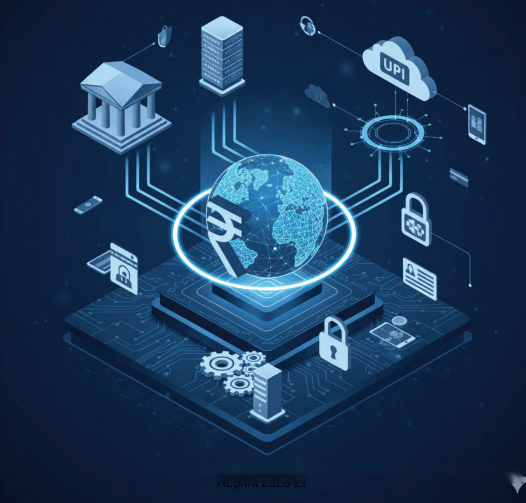
What is financial infrastructure, and what does it comprise?
Answer:
- Financial infrastructure means a network of banks, payment systems, stock markets and other financial institutions that helps people, businesses and the government facilitate financial transactions and manage money.
- It includes banks, post offices, ATMs, digital payment systems and stock markets.
- It also includes institutions like the Reserve Bank of India (RBI).
Question 2.
What are the main functions performed by banks and how do they impact people’s lives?
Answer:
- Banks help make monetary transactions easy by offering services such as saving, withdrawing, and borrowing money.
- Banks accept deposits and keep money safe, provide loans to people, farmers and businesses.
- Banks provide payment services like ATM, UPI and cheques.
- They make people’s lives easy, safe and more organised in terms of monetary transactions.
Question 3.
How does financial infrastructure contribute to a nation’s progress?
Answer:
- Banks and financial institutions encourage people to save money which is then used for productive investments.
- Availability of credit, loans helps to grow.
- Growth of businesses and industries creates more job opportunities.
- These institutions reduce financial risk and maintain economic stability.
- It means a strong financial infrastructure lays the foundation for sustained national progress and development.
Think About It (Page 196)
Question 1.
Why does Navdeep think that savings at the bank is better than keeping cash at home?
Answer:
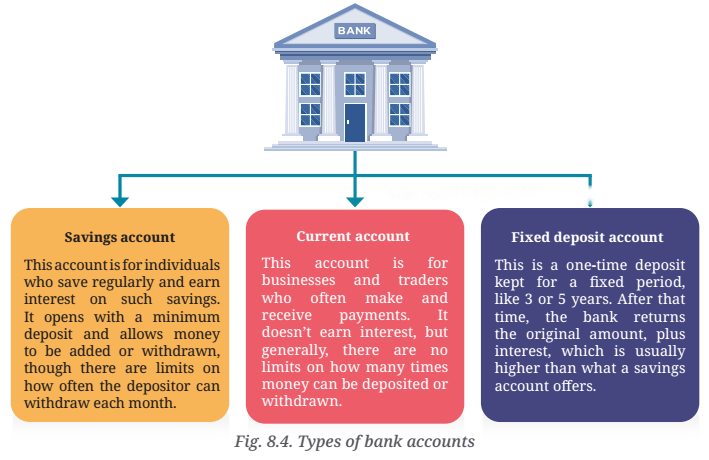
- Money kept in a bank is safe from theft, fire and loss.
- Banks give interest on deposits, so money will grow.
- It is easy to withdraw deposited money when required.
Question 2.
Can Navdeep and Rima lend to each other directly without the bank? What could happen in that case? Discuss.
Answer:
- Yes, they both can lend money to each other directly, but it may cause problem
- There is no written record, it may lead dispute.There may be risk of non-payment or delay in payment.
Think About It (Page 198)
Question 1.
How does one track so many transactions of deposits and withdrawals?
Answer:
The bank provides a diary-like document called a passbook that keeps a record of all the receipts and payment transactions. This can be updated regularly at the bank.
Question 2.
Look at the passbook in Fig 8.7 (See textbook page no. 199). Observe all the particulars under the expenses (debit) and income (credit). Why is keeping records of financial transactions important? Discuss in the class.
Answer:
Keeping record of financial transactions is important because-
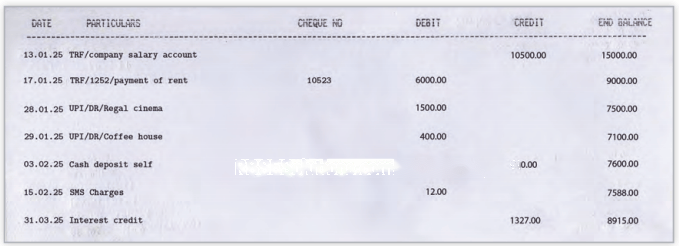
- We can have track of income and expenses.
- We can do financial planning.
- They are also useful in banking, audits and tax purposes.
Think About It (Page 209)
Question 1.
Why do companies issue shares, and why do people buy them? Are there any benefits of owning shares?
Answer:
Companies issue shares to raise money for their businesses. This money is used to start a company or run daily activities.
People buy shares because-
- They become part-owners of the company.
- They can earn dividends.
Benefits of owning shares-
- Chance of higher returns compared to saving money.
- Dividend income when company makes profit.
Banks and the Magic of Finance Class 7 Solutions
Question 1.
What is financial infrastructure? How does it complement physical infrastructure?
Answer:
• Financial infrastructure is a network of banks, payment systems, stock markets that help people, businesses and government facilitate financial transactions and manage money.
- It provides fund to build and maintain physical infrastructure.
- Banks and financial institutions give loans and investments for construction and building of physical infrastructure.
- Without financial infrastructure, physical infrastructure cannot be developed or sustained efficiently.
Question 2.
How does having a bank account help people? Should everyone be required to have a bank account?
Answer:
- Bank account keeps money safe from any loss.
- It provides interest on deposited amount and enables us to do digital payments like UPI, ATM, debit cards, etc.
- Bank account provides a record of transactions for better money management.
- Yes, everyone should be required to have a bank account.
Question 3.
What could be the possible advantages and disadvantages of compound interest for savers and borrowers?
Answer:
Advantages
- Savers earn money because they get interest on interest.
- Money grows faster over time.
Disadvantages
- Borrowers have to pay more money.
- Long-term loans become costly.
Question 4.
How does financial infrastructure enable the flow of money between households and businesses? Can you think of how the government can facilitate this flow?
Answer:
- Households save money in banks, banks use deposited amount to give loans to businesses.
- People invest in shares and bonds, provide funds directly to companies.
- Government collects taxes from households and businesses and spends on public services.Government provides pensions, subsidies and invests in welfare schemes through bank accounts.
Question 5.
What could be the reason for the higher interest rate earned on fixed deposits as compared to a savings account?
Answer:
In a fixed deposit, money is kept in the bank for a fixed period of time and cannot be withdrawn easily.
- Banks can use this money for longer period of time, it offers a higher interest rate.
- In a savings account, money can be withdrawn any time, so banks pay less interest on deposits.
Question 6.
Sahil received ₹ 10,000 as a prize in a poster-making competition. His father promises to pay him 12 per cent interest per year if he does not spend the amount. After 3 years, how much money would Sahil have?
Answer:
Principal amount =₹ 10,000
Rate = 12% per year
Time =3years
Calculation-
Year 1: 10,000+12 %=₹ 11,200
Year 2 : 11,200+12 %=₹ 12,544
Year 3 : 12,544+12 %=₹ 14049 (approx.)
Therefore, Sahil will get ₹ 14049 after 3 years.
Question 7.
How does the stock market help mobilise the savings of individuals? In what ways do companies benefit by issuing shares to people?
Answer:
- It provides a platform where people can invest their savings by buying shares.
- These savings are used for productive purposes or expansion of business.
- It motivates people to save and invest money.
- Companies get large amount of money for growth and development.
- Companies can expand business, buy machines, grow faster and become financially stronger.
Question 8.
How can we balance the convenience of digital payments with the risk of cyber fraud?
Answer:
- We should use strong passwords and PINs.
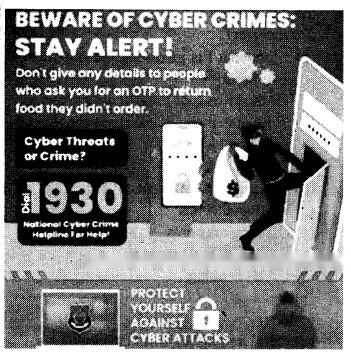
- We should not share our bank details or OTP.
- Report fraud immediately on 1930 or the National Cyber Cime Reporting Portal.
- Awareness helps to enjoy facilities of digital transactions.
Question 9.
Ask your family members or neighbours about-
- how they save money?
- whether they use UPI, ATM or cheques, the kinds of transactions they perform through UPI; do they find UPI better than using cash or not, and why.
- if they or their acquantaince have experienced digital fraud, for instance, through a fake call or message asking for bank details. What did they do when they realised it was a scam, and what did they learn from that experience?Summarise your findings in a table or short report. Share one surprising insight with your class.
Answer:
1. Most family members save money in bank’s savings accounts, by investing in fixed deposits and in post office saving schemes.
2.
- Family members use UPI and ATM cards.
- UPI is mainly used for paying bills, shopping and sending money.
- Cheques are used for school fees.
- Most people use UPI, they find it better than cash because it is fast, easy and involving cashless transaction.
3. My neighbour received a fake call asking for download an app and to share OTP.
- He realised that it was a scam and ended the call immediately. He also informed the bank about it machines, grow faster and become financially stronger.
Question 8.
How can we balance the convenience of digital payments with the risk of cyber fraud?
Answer:
- We should use strong passwords and PINs.
- We should not share our bank details or OTP.
- Report fraud immediately on 1930 or the National Cyber Cime Reporting Portal.
- Awareness helps to enjoy facilities of digital transactions.
Question 9.
Ask your family members or neighbours about-
- how they save money?
- whether they use UPI, ATM or cheques, the kinds of transactions they perform through UPI; do they find UPI better than using cash or not, and why.
- if they or their acquantaince have experienced digital fraud, for instance, through a fake call or message asking for bank details. What did they do when they realised it was a scam, and what did they learn from that experience?
Summarise your findings in a table or short report. Share one surprising insight with your class.
Answer:
1. Most family members save money in bank’s savings accounts, by investing in fixed deposits and in post office saving schemes.
2.
- Family members use UPI and ATM cards.
- UPI is mainly used for paying bills, shopping and sending money.
- Cheques are used for school fees.
- Most people use UPI, they find it better than cash because it is fast, easy and involving cashless transaction.
3.
- My neighbour received a fake call asking for download an app and to share OTP.
- He realised that it was a scam and ended the call immediately. He also informed the bank about it.
Survey Report/Summary Table
Aspect | Observation |
Saving Method | Bank accounts, fixed deposits |
Payment modes | UPI, ATM, cheques |
UPI use | Shopping, bill payments |
Digital fraud | Fake calls asking to download an app and for OTP |
Action taken | – Call ended a– Informed to bank immediately |
Question 10.
Create a Financial Safety Poster.
- Design a poster with dos and don’ts of digital banking safety (for example, not sharing OTPs, reporting frauds).
- Include emergency numbers or websites like https://cybercrime.govin or 1930 helpline.
- Hang the posters in school corridors or the library.
Answer:
A Financial Safety Poster
- The poster should raise awareness about digital banking safety.
- It should clearly mention the Dos and Don’ts of online financial transaction.
Dos :
- Keep your ATM, PIN, OTP, Passwords confidential
- Always check the website link before making payments
- Report any suspicious transaction immediately to the bank
Don’ts :
- Do not share OTP, PIN, CVV with anyone
- Do not click on unknown link or messages
- Avoid using public wi-fi for banking transactions
Emergency Help Details :
- Cyber Crime Helpline Number : 1930
- Cyber Crime Website :
https://cybercrime.govin.
The students will prepare poster with the given details and it should be hang in school corridors or the library.
Question 11.
Cheques are often used to pay utility bills. Ask your parents to allow you to fill out the cheques for a few monthly payments.
Answer:
Students will do themselves.
Question 12.
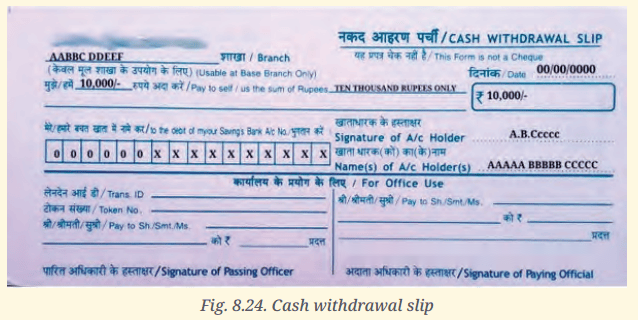
Suppose you have to withdraw ₹ 10,000 from your bank account, how would you fill out the cash withdrawal slip at your bank? Let us try below!
Answer:
Students will do themselves.